 Vietnamnet.vn

 Podcast



Among the 9,950 inmates granted amnesty in this year's presidential clemency program, 133 were convicted in cases monitored by the Central Steering Committee for the Prevention and Control of Corruption, Wastefulness and Negative Phenomena.
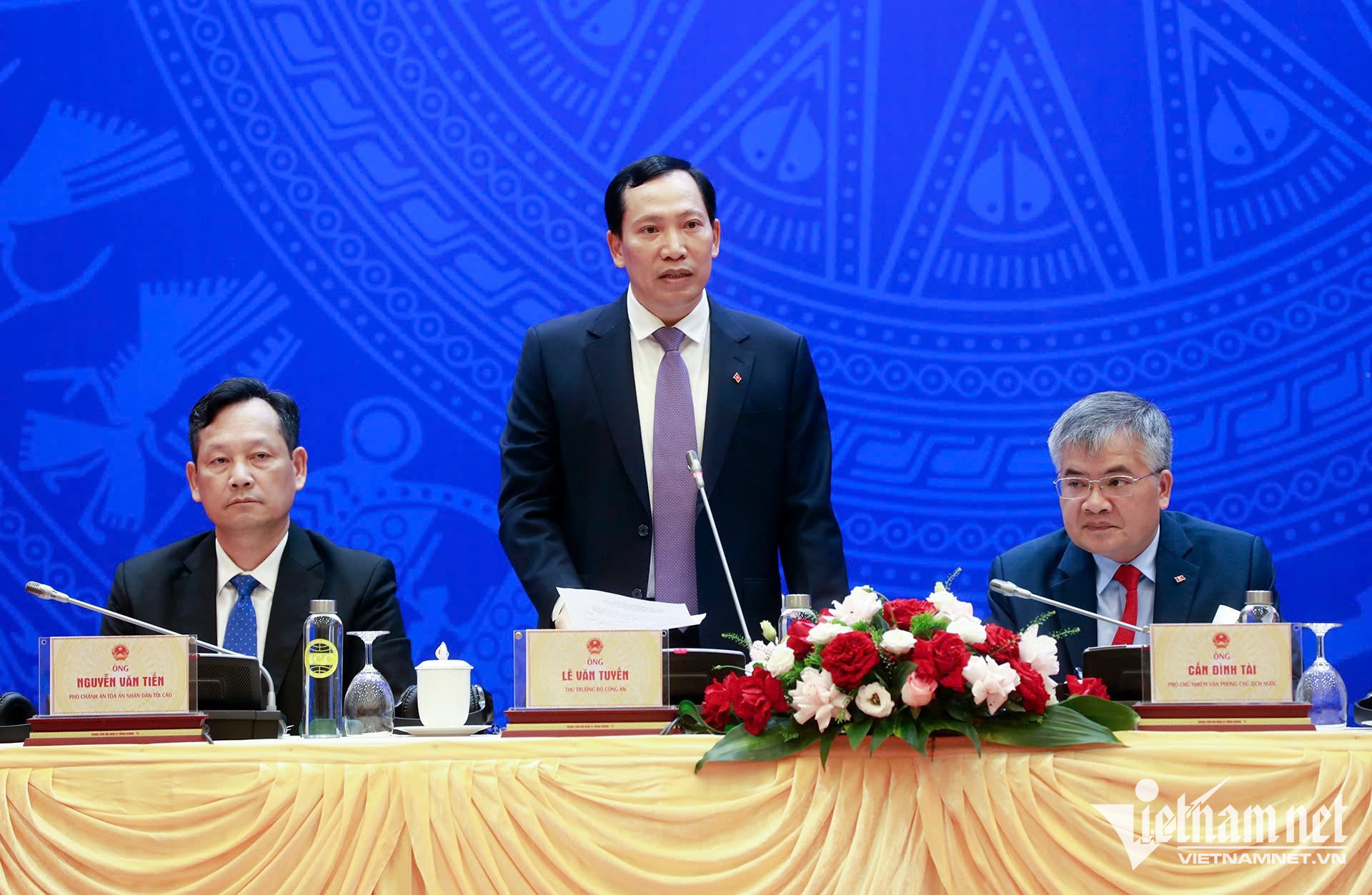
Speaking at a press conference on Friday announcing the President's 2026 amnesty decision, officials from the Ministry of Public Security and the Amnesty Advisory Council were asked whether individuals convicted in cases overseen by the Central Steering Committee would be eligible for release under this year's program.
Senior Lieutenant General Le Van Tuyen, Deputy Minister of Public Security, said amnesty is a special act of clemency by the State, under which the President grants early release to inmates serving fixed-term prison sentences, life sentences that have been commuted to fixed terms, and individuals whose prison terms have been temporarily suspended. Amnesty is granted during major national events or in special circumstances determined by the President.
Any inmate who satisfies the conditions set out in the President's decision and the guidance issued by the Amnesty Advisory Council is eligible for consideration.
As a result, individuals convicted of corruption-related offences may also receive amnesty if they fully meet the prescribed requirements, just like other inmates.
Regarding the review process, the Deputy Minister explained that after the President issues an amnesty decision, detention facilities publicly disseminate the decision and inform inmates about eligibility requirements, standards and conditions.
Based on those criteria, inmates conduct a self-assessment and submit applications for consideration. Internal review teams then evaluate each case before prison authorities and detention facilities hold meetings to review recommendations. Inter-agency appraisal teams subsequently conduct further assessments.
The Ministry of Public Security's steering committee reviews the dossiers before seeking opinions from ministries, government agencies and members of the Amnesty Advisory Council. The council then convenes to conduct a final review.
The Deputy Minister stressed that the process is carried out openly, transparently and rigorously in accordance with procedures and guidelines issued by the Chair of the Amnesty Advisory Council.
"The implementation of the President's amnesty decision is conducted in a transparent, objective and accurate manner. All cases proposed for amnesty received a high level of consensus within the Amnesty Advisory Council," Le Van Tuyen said.
He added that among the 9,950 inmates approved for amnesty this year, 133 were involved in cases monitored and directed by the Central Steering Committee for the Prevention and Control of Corruption, Wastefulness and Negative Phenomena.
Under established procedures, although these inmates met eligibility requirements, the Amnesty Advisory Council carried out an additional level of scrutiny and sought opinions from the Central Steering Committee before submitting recommendations to the President for a final decision.
The amnesty list also includes 644 inmates convicted of offences involving violations of economic management and economic order regulations.
In addition, 63 foreign inmates - including 56 men and seven women of various nationalities - were granted amnesty.
Vietnam carried out two rounds of amnesty in 2025, on April 30 and September 2, to mark the 50th anniversary of national reunification and the 80th anniversary of National Day.
The 2026 amnesty was granted to celebrate the successful conclusion of the 14th National Congress of the Communist Party of Vietnam and the elections for the 16th National Assembly and People's Councils at all levels. Authorities described the program as a demonstration of the State's humanitarian and lenient policy during significant national occasions.
Tran Thuong
.svg)
