 Vietnamnet.vn

 Podcast



According to the Ministry of Education and Training, all 34 provinces and cities have completed their education restructuring plans. The number of public education institutions has fallen by 18,975, equivalent to 50.6%, while more than 28,000 education administrators have been reassigned to teaching positions.
The remaining challenges mainly concern the management of large schools, staff deployment, operational readiness, coordination between government agencies and the implementation of the new education management model.
Following the restructuring, many institutions have become exceptionally large, with multiple campuses and satellite school sites located far apart. This has significantly expanded the scope and complexity of school administration.
Regarding the construction of multi-level boarding schools in border communes, 108 schools under the first phase have opened for the 2026-2027 academic year, including 40 where all construction components have been completed.
Meanwhile, 121 schools under the second phase, spread across 17 provinces and cities, have completed the procedures required to begin construction or hold groundbreaking ceremonies. The target is to complete these schools before August 30, 2027.
However, some border boarding schools are still conducting classes while construction continues. Many projects face shortages of building materials and workers, along with difficulties in land clearance. Newly opened schools are also struggling with staffing shortages in student supervision, psychological counseling, nutrition and academic administration.
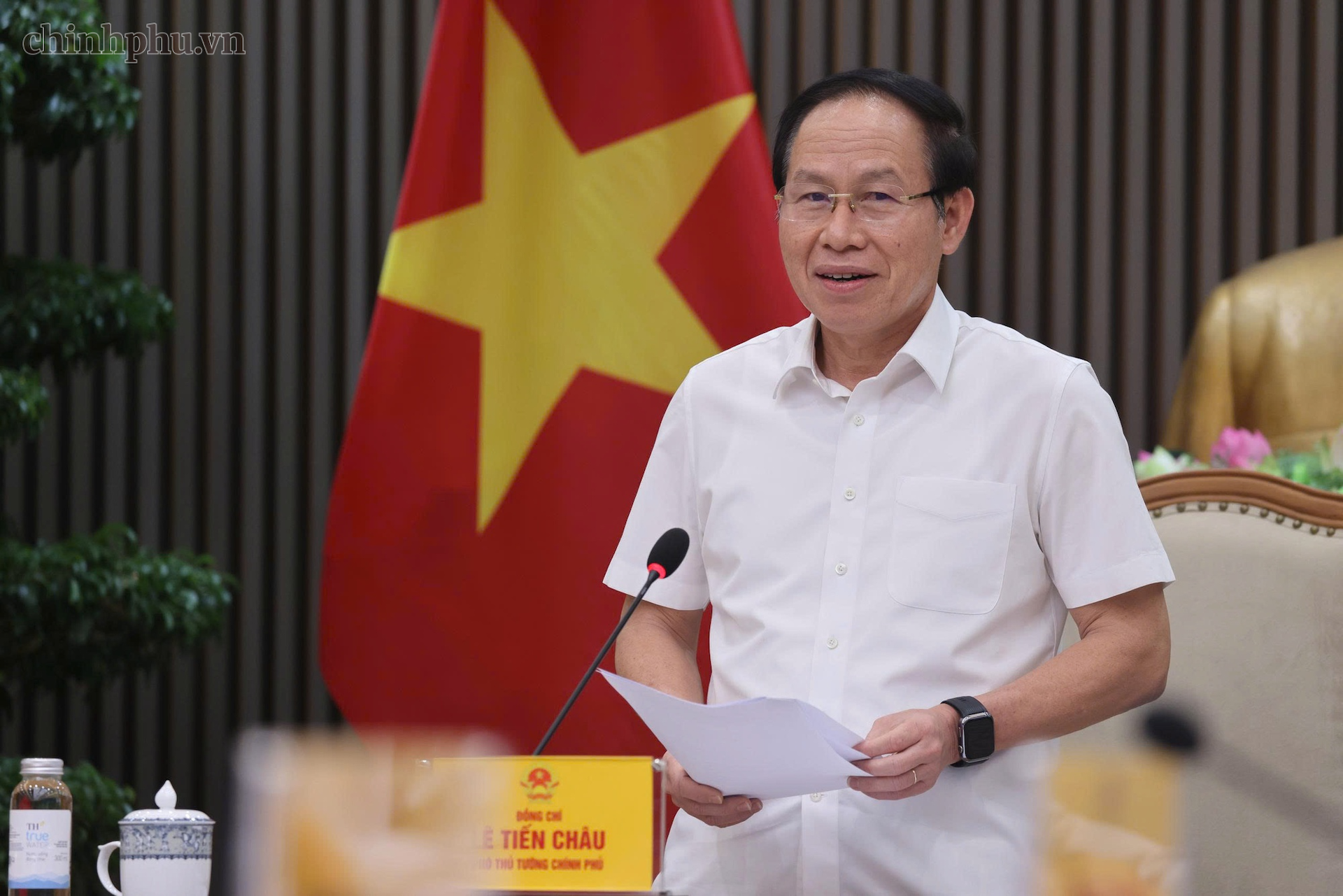
After hearing reports and comments from meeting participants, Deputy Prime Minister Le Tien Chau instructed provincial and municipal People's Committees to take direct responsibility for the outcomes of the restructuring and operation of preschool and general education institutions in their jurisdictions.
He called for a comprehensive review of large educational institutions, particularly those covering multiple grade levels, operating several campuses or satellite school sites, or serving extensive geographical areas.
Institutions whose size exceeds their management capacity, or whose operations could compromise education quality, safety or students' right to education, must be adjusted promptly. The review is to be completed in October.
The Deputy Prime Minister assigned the Ministry of Education and Training to serve as the focal point for receiving and consolidating difficulties reported by local authorities during the restructuring and operation of educational institutions.
The ministry must proactively address matters within its authority, coordinate with and urge relevant ministries and agencies to resolve issues under their respective responsibilities, and promptly report matters beyond its authority to the Government and Prime Minister.
It was also instructed to review and refine regulations governing the organization and management of educational institutions following restructuring, ensuring a clear division of authority and management responsibilities that reflects practical conditions and the need to improve education quality.
The Ministry of Home Affairs was tasked with studying and proposing appropriate policies for administrators and employees affected by the restructuring, as well as personnel working at large educational institutions with multiple grade levels, campuses and satellite school sites.
Turning to the construction and operation of multi-level boarding schools in border communes, the Deputy Prime Minister called on provinces and cities with unfinished first-phase schools to bring all outstanding work to completion.
He stressed that student and staff safety must be fully protected wherever teaching and construction are taking place simultaneously. No facility or construction component may be put into use before it meets the necessary conditions and has passed the required acceptance procedures.
The Deputy Prime Minister also emphasized the need to ensure sufficient teachers, support staff, funding and essential facilities for education, boarding arrangements and student care.
For the 121 schools in the second phase, chairpersons of provincial and municipal People's Committees must submit written commitments on construction schedules and quality to the Prime Minister and the Ministry of Education and Training before October 20.
The ministry is required to consolidate these commitments and report to the Prime Minister within October.
The Deputy Prime Minister called on provincial and municipal Party secretaries and People's Committee chairpersons to personally direct the projects from the outset, identifying the critical path for each school, from land clearance and investment procedures to construction, acceptance inspections and preparations for operation.
Tran Thuong
.svg)
