 Vietnamnet.vn

 Podcast



The Prime Minister has issued a directive to the Ministry of Education and Training, the Ministry of Home Affairs and local authorities on reorganizing Vietnam's public preschool, general education, continuing education and vocational education systems under the country's new two-tier local government model.
Reduce public education institutions by 30%
Under the directive, provinces and cities must complete the restructuring by August 30, reducing the number of public education institutions by around 30% compared with July 1, 2025. The reorganization must align with each locality's socio-economic development plans, population size and long-term spatial planning.
The reform also aims to streamline administrative management by reducing education management positions while increasing the number of teaching staff.

Reorganizing the school network is also intended to expand access to education, contributing to the national goal of universal preschool education for three- and four-year-old children by 2030. At the same time, the Government aims for at least 85% of people of upper secondary school age to complete high school or an equivalent qualification.
The Prime Minister emphasized that improving education quality and governance efficiency must remain the guiding principle throughout the restructuring process, warning against mechanically reducing institutions solely to meet numerical targets.
He also instructed authorities to ensure that no student is denied access to education because of financial hardship, and that the restructuring does not create additional barriers related to travel distance or education costs, nor undermine school enrollment or universal education targets.
For public preschools, primary schools, lower secondary schools and upper secondary schools, educational institutions will be reorganized into larger establishments under two models.
The first model consists of large single-level schools (or continuing education centers) operating with branch campuses. Each institution will include one main campus supported by branch campuses and satellite facilities. Staffing will include one principal, deputy principals, a shared administrative unit covering accounting, finance and clerical services, specialized support personnel and academic departments organized across branch campuses to improve teaching quality and professional collaboration.
Depending on student numbers, school size and the distance between branch campuses and the main campus, each branch may be assigned one deputy principal within the approved staffing quota to ensure education quality.
The second model involves large multi-level schools, bringing together multiple levels of general education within one institution. These schools may operate from a single campus or across multiple locations, consisting of one main campus with branch campuses serving different education levels.
Their staffing structure will similarly include one principal, deputy principals, a shared administrative division, specialized support personnel and academic departments organized according to education level and campus. Depending on practical conditions, each branch campus may also have one deputy principal within the approved staffing allocation.
The Prime Minister instructed provincial governments to adapt the detailed implementation of these large-scale school models according to local conditions, while ensuring streamlined administration, effective governance and compliance with the objectives of restructuring public education institutions and relevant legal regulations.
No mergers between preschools and general schools
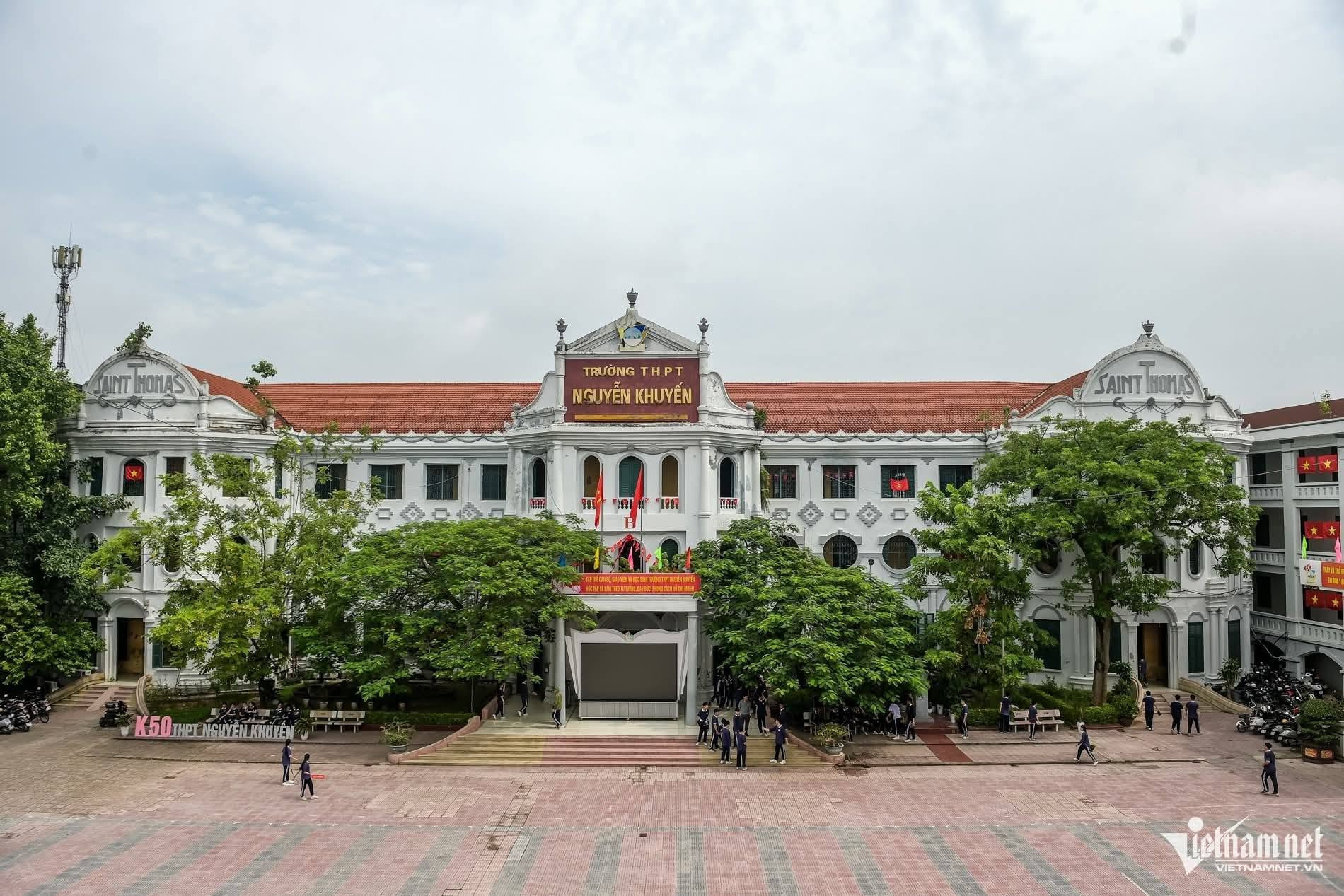
The Prime Minister also ordered the closure of satellite schools in remote, mountainous and border areas that fail to meet minimum infrastructure standards, with resources instead concentrated on developing boarding and semi-boarding schools at central campuses. Where facilities are not yet adequate, local authorities must urgently complete construction so that the new arrangements can be implemented by the 2027–2028 academic year.
He stressed that preschools must not be merged with general education schools. Likewise, general education schools must not be merged with continuing education centers or vocational-continuing education centers, while specialized schools serving students with disabilities or other special educational needs must remain separate from mainstream schools. Priority should instead be given to reorganizing institutions of the same education level or those located close to one another.
For preschools, primary schools and lower secondary schools, restructuring should take place within the boundaries of each commune-level administrative unit, ensuring that every commune has at least one preschool, one primary school and one lower secondary school, or alternatively, one multi-level school combining primary and lower secondary education.
Regarding vocational education, the Prime Minister called for reforms to address fragmented management, overlapping functions and low training quality, while strengthening links between vocational education and the needs of businesses, industrial parks, regional economies and emerging industries.
Under the plan, each province or centrally governed city will retain no more than three public vocational schools, excluding institutions that are financially self-sufficient for operating expenses or higher.
Vocational secondary schools capable of covering their own operating costs will continue to operate independently. Underperforming institutions will either be dissolved, merged into colleges or reorganized into vocational high schools if they meet the required conditions.
Vocational education centers, vocational-continuing education centers and continuing education centers will be consolidated into integrated vocational-continuing education centers operating from a main campus and practical training sites in accordance with existing regulations. Eligible centers may also be merged to establish vocational high schools.
To address surplus management and support staff following the restructuring, the Prime Minister instructed local authorities to prepare detailed workforce placement plans or implement relevant support policies.
He also requested that existing salary grades and allowances for managers affected by the restructuring be maintained in accordance with current regulations and any applicable local policies.
Finally, provinces and cities were instructed to review staffing needs and ensure sufficient numbers of teachers and support personnel in line with national standards and approved staffing quotas.
Tran Thuong
.svg)
