 Vietnamnet.vn

 Podcast



Foreign direct investment (FDI) into Vietnam’s manufacturing sector reached nearly $12 billion USD in the first half of 2025, marking a 32% year-on-year increase and accounting for over 56% of total registered capital. This is the highest level of FDI inflow since 2009 and signals significant opportunities for the industrial real estate sector.
Industrial real estate sees strong momentum
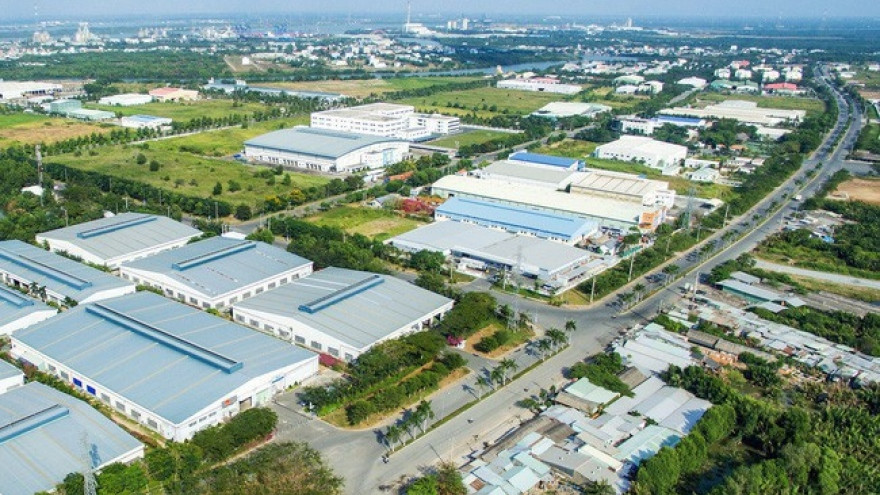
The continued inflow of FDI and notable growth in manufacturing activity during the first half of 2025 have been driving Vietnam’s industrial real estate market. Both domestic and foreign enterprises are not only expanding their industrial land portfolios but are also investing in infrastructure, logistics, and ready-built factories.
John Campbell, Director of Industrial Services at Savills Ho Chi Minh City, described the 32% increase in FDI into manufacturing as a major milestone - not only for the sector but for Vietnam's broader economic trajectory. He emphasized that this growth represents a structural shift, supporting the country’s roadmap toward high-value and sustainable industrial development.
This surge is not coincidental but rather a response to global volatility. The value-added output of Vietnam’s manufacturing sector rose by over 10% year-on-year, contributing nearly 2.6 percentage points to the national GDP. According to Campbell, this confirms a structural transition rather than a temporary boom.
He also noted that the sharp increase in project numbers proves Vietnam is not just a passive recipient of manufacturing relocation trends but is becoming a prioritized link in the global production chain.
Industrial real estate attracts FDI
Campbell pointed to several global drivers behind the FDI wave into Vietnam. Chief among them is the “China + 1” supply chain diversification strategy. Trade tensions between the US and China and mounting global tariff pressures have led multinational corporations to seek politically stable and tax-friendly alternatives like Vietnam.
Free trade agreements such as RCEP, CPTPP, and EVFTA provide Vietnam access to approximately 65% of the global market, boosting its appeal to export-oriented manufacturers. Its proximity to China also brings competitive labor costs and seamless integration into regional supply chains.
Green and high-tech FDI projects are becoming increasingly prominent, including Lego’s green factory and chip packaging investments. These represent a shift toward modern, environmentally friendly industrial models. These converging trends are ushering in a new era of high-value FDI, positioning Vietnam as a global manufacturing hub beyond its cost advantages.
Within the industrial real estate market, one notable shift is the dominance of ready-built factories (RBFs) over land purchases in project volume. Campbell views this as a turning point. RBFs offer fast deployment and reduced upfront investment, achieving the highest absorption rates in the past three years, with occupancy rates of 88-89% across key regions.
The rising demand for RBFs is driving up rental yields and occupancy rates, prompting sectoral expansion. Although industrial land supply continues to grow, greenfield development remains time-consuming and capital-intensive, making RBFs a preferred choice for agile investors - particularly in high-tech sectors that adhere to ESG standards.
What foreign investors expect from Vietnam’s industrial real estate
Drawing from market trends, Campbell shared that today’s international investors have more specific expectations for industrial real estate. They prioritize rapid deployment, stable electricity supply with renewable energy options, dual power sources, and direct power purchase agreements (DPPA). Sustainability is a key factor, with LEED/EDGE-certified projects and green industrial parks being preferred. Proximity to seaports and highways is also crucial, alongside a transparent legal environment and clear land valuation procedures. Moreover, a skilled workforce - especially in electronics and semiconductors - is indispensable.
To further develop industrial real estate, Campbell recommends expanding infrastructure connectivity, such as achieving the 3,000-kilometer expressway target and upgrading seaports and inland container depots (ICDs) to sustain investment appeal. He also advocates for more ready-built factories (RBF/RBW) and build-to-suit (BTS) projects that meet higher standards.
Incentive policies should be adjusted in line with the global minimum tax while retaining Vietnam’s investment attractiveness. Finally, cultivating a highly skilled workforce for semiconductors and high-tech manufacturing will be critical. These steps will not only enable healthy industrial real estate growth but also strengthen Vietnam’s global supply chain position.
Tien Phong
.svg)
