 Vietnamnet.vn

 Podcast



Tran Thuong
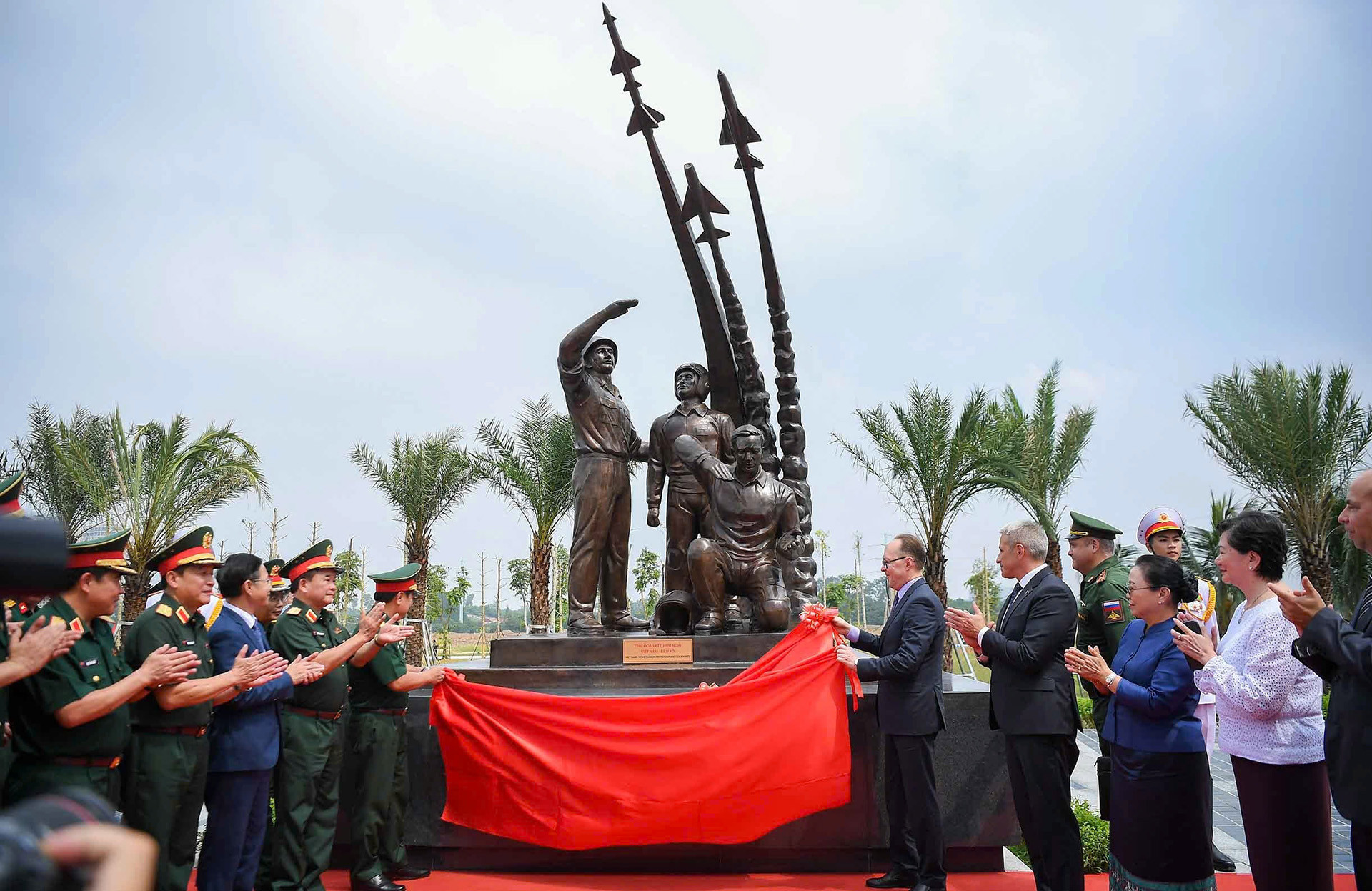
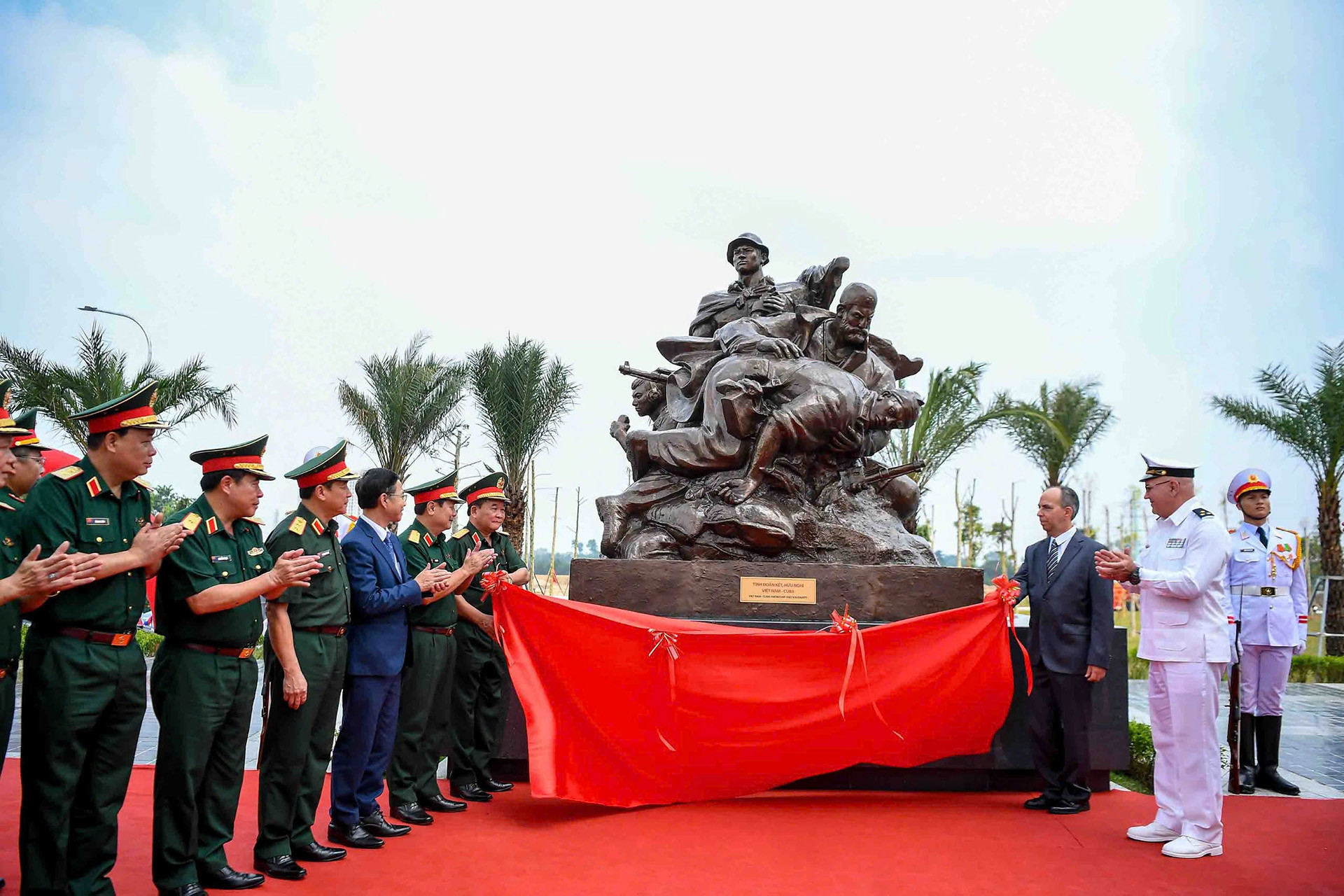
The Ministry of National Defense of Vietnam on August 28 inaugurated commemorative statues of Soviet and Cuban military experts and laid foundation stones for monuments honoring Chinese military advisors and international fighters from Laos and Cambodia at the Vietnam Military History Museum in Hanoi.
The project, comprising five monumental groups representing the Soviet Union, China, Cuba, Laos, and Cambodia, serves as a profound expression of historical, cultural, and political significance. It symbolizes the enduring international solidarity, heartfelt friendship, and extraordinary sacrifices made by foreign allies in Vietnam’s struggle for national liberation and defense.
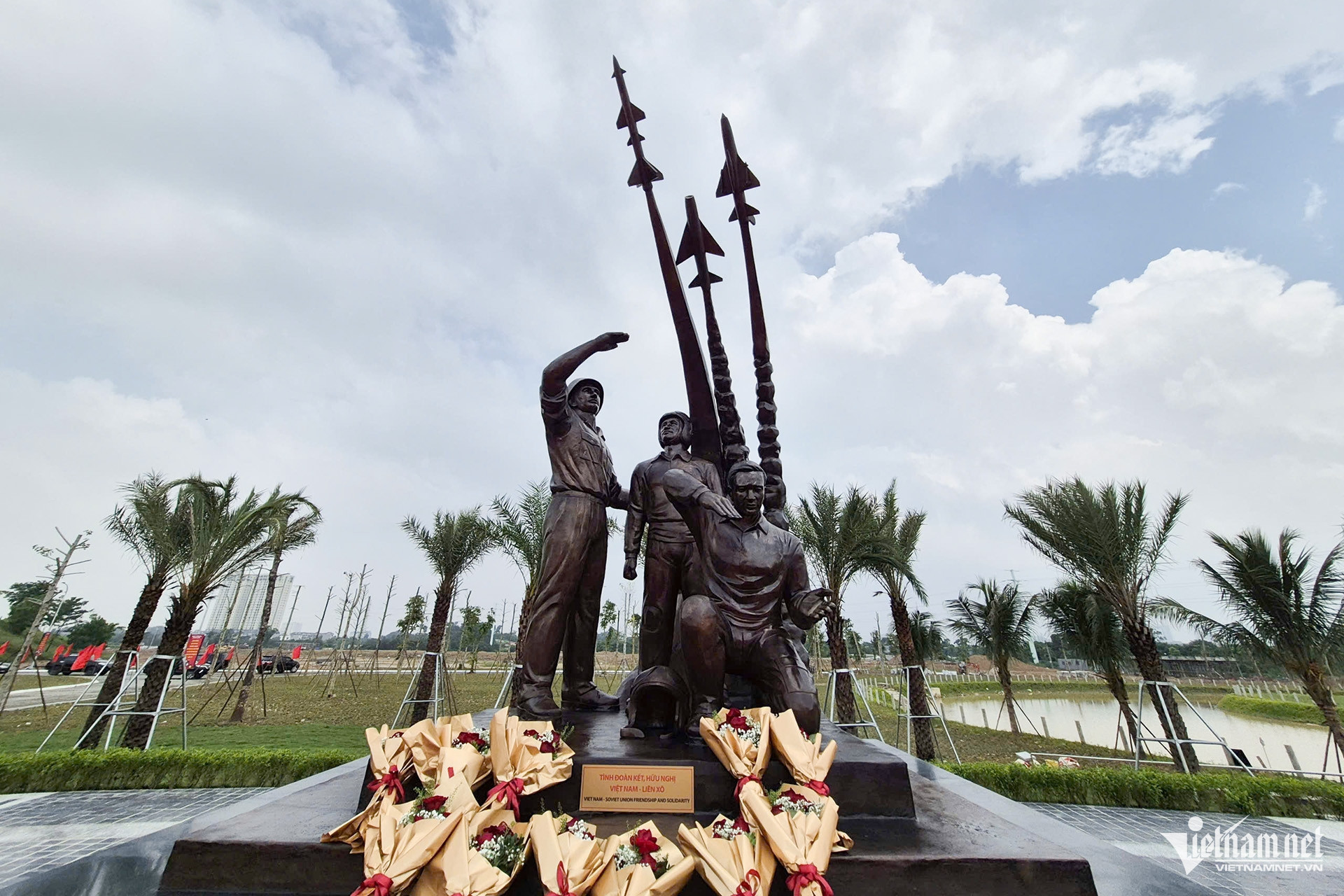
Each group consists of full-body bronze statues (3–5 figures) standing approximately 3 meters high, set on pedestals measuring 4x4 meters and nearly 1 meter tall. The sculptures were designed with historical accuracy and artistic integrity by renowned Vietnamese artists, in close consultation with representatives from the respective nations.
After just 45 days of dedicated work, infrastructure and landscaping for the site have been completed, along with the Soviet and Cuban monument groups. The Chinese, Lao, and Cambodian statues are currently under construction and are scheduled for completion by December 22.
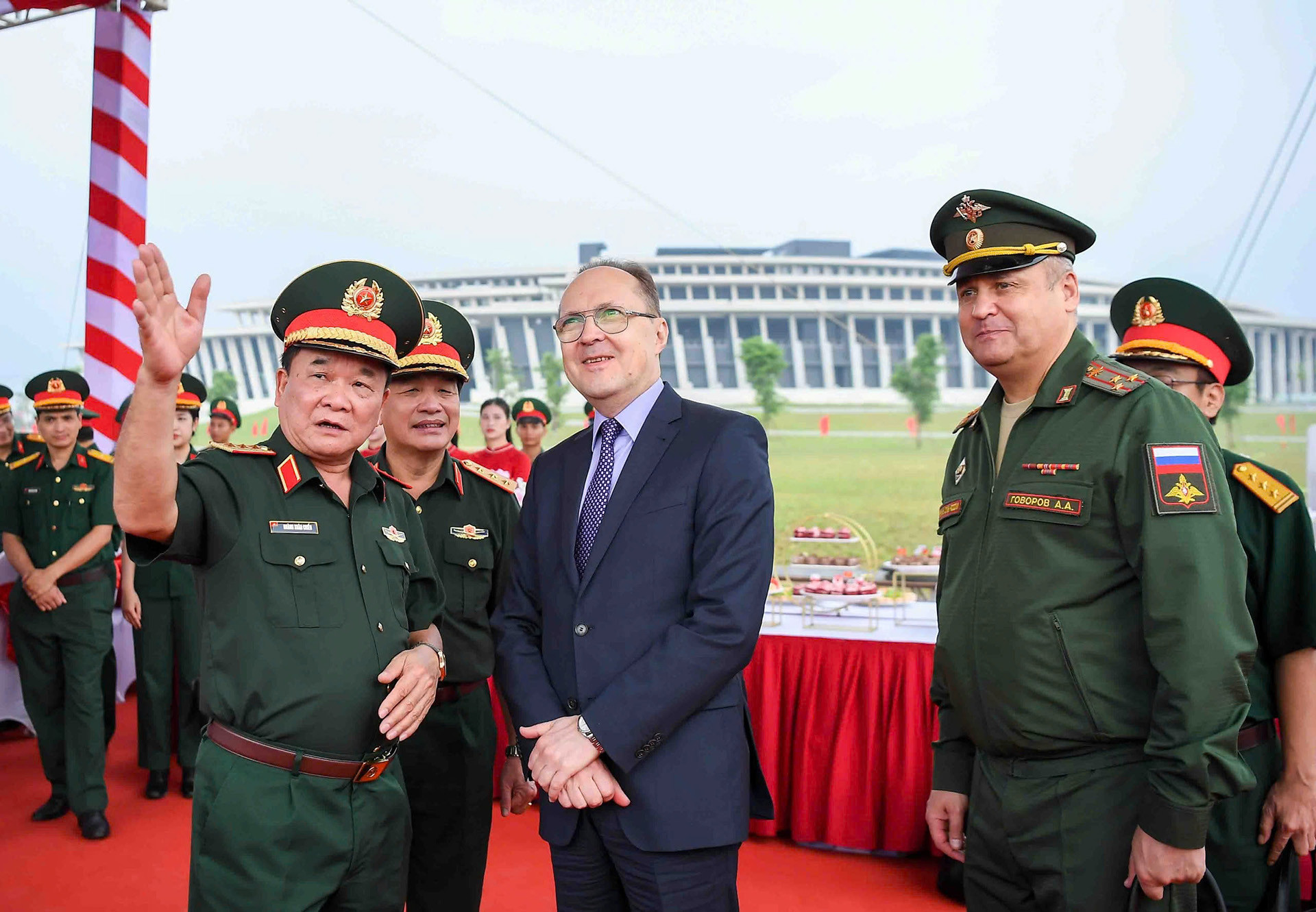
At the inauguration ceremony, Deputy Minister of National Defense, Senior Lieutenant General Hoang Xuan Chien emphasized that throughout its long and arduous struggle for independence, Vietnam consistently received invaluable and heartfelt support from international friends - especially China, the Soviet Union, Cuba, Laos, and Cambodia.
“The assistance provided was not only in material form but also a tremendous source of spiritual strength, contributing to the great victories of the Vietnamese revolution,” General Chien said. “Every battle, every campaign, every chapter of the Vietnam People’s Army bears the profound mark of international camaraderie.”
He affirmed that the monument site is part of Vietnam’s long-standing tradition of “drinking water, remembering its source”, and reflects the Party and State’s directive to commemorate the invaluable support of international allies during the nation’s wars. The statues are positioned in the museum’s outdoor exhibition space, serving as a permanent tribute to solidarity, friendship, and international gratitude.
“This is a sacred destination to educate current and future generations about the power of international unity and shared sacrifice for peace and independence,” General Chien added.
Russian Ambassador to Vietnam, Gennady Bezdetko, recalled that the Soviet Union was among the first nations to officially recognize the Democratic Republic of Vietnam in January 1950. The Soviet Union provided extensive military support - including modern weaponry, air and land defense systems, and training for Vietnamese soldiers.
"Within a short period, Vietnam’s officers and soldiers successfully mastered modern combat technologies and applied them effectively on the battlefield," said Ambassador Bezdetko. “This monument is a testament to the sincere friendship and deep trust between our nations, preserving the memory of those who stood shoulder to shoulder at the dawn of Vietnam’s modern history.”
Cuban Ambassador to Vietnam, Rogelio Polanco Fuentes, expressed that the monument is a tribute to the Cuban soldiers who stood alongside the Vietnamese people during their heroic resistance. He highlighted the significance of Cuba’s contributions to Vietnam’s defense strategies, particularly through the concept of “people’s warfare,” and honored the Cuban martyrs who fell in Vietnam.
The Ambassador also paid tribute to the late Cuban leader Fidel Castro, quoting his iconic statement: “For Vietnam, Cuba is willing to shed its own blood.” He further recalled Castro’s 1973 declaration in Quang Tri: “One thousand years, two thousand years, even ten thousand years may pass, but future generations will always remember the heroism of the Vietnamese people.”

.svg)
