 Vietnamnet.vn

 Podcast



Under a new government decree, women from very small ethnic minority groups, women living in localities with below-replacement fertility rates and women who have two children before the age of 35 will receive financial support of at least VND2 million (USD77).
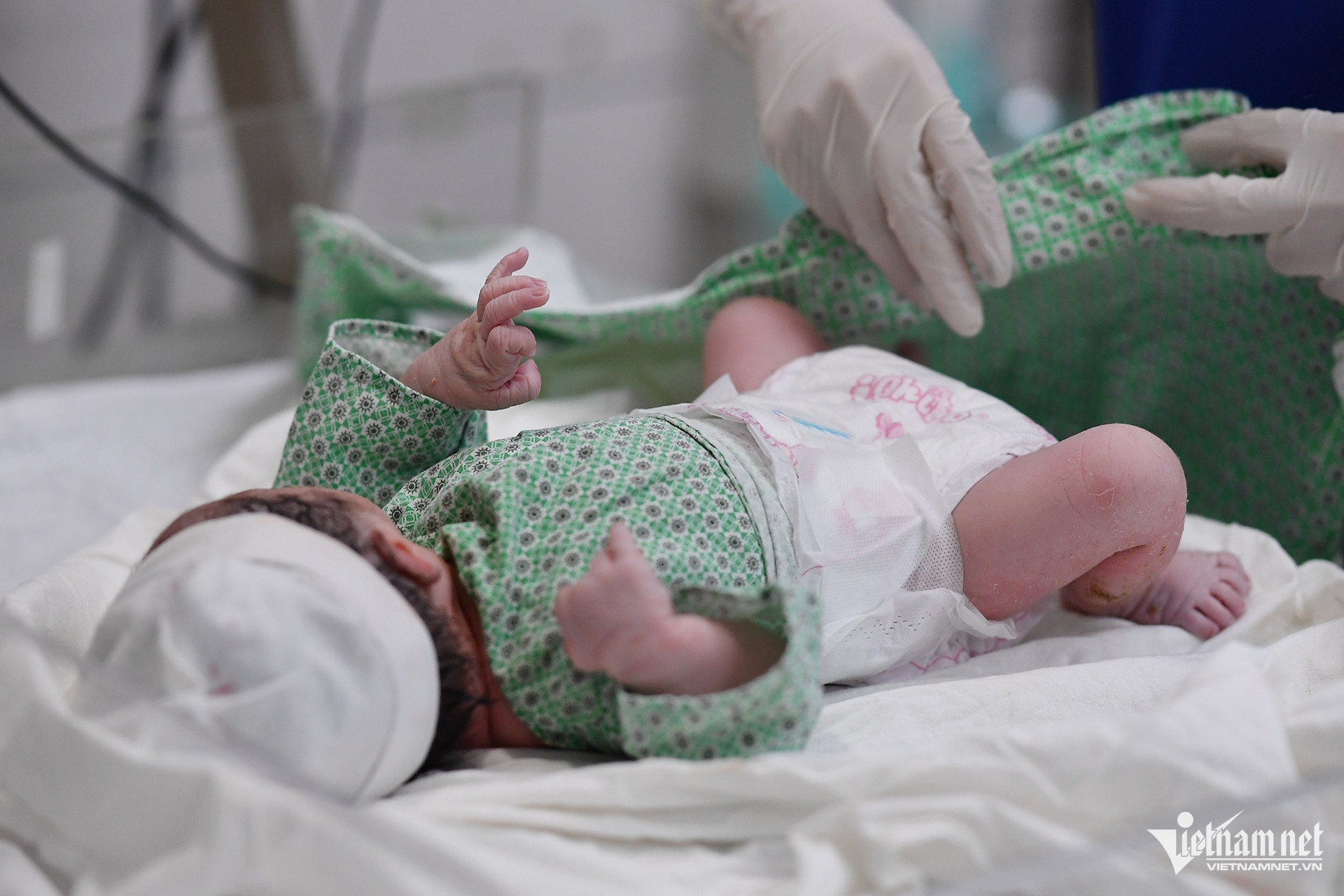
The government has issued Decree No. 168/2026 detailing several provisions and implementation measures under the Law on Population.
The decree outlines conditions and procedures for maternity leave benefits when giving birth to a second child, financial support levels and procedures related to childbirth support under Clause 2, Article 14 of the Law on Population, as well as the scope, beneficiaries and support levels for prenatal and newborn screening programs for certain congenital diseases.
According to the decree, female employees giving birth to a second child and male employees whose wives give birth to a second child are entitled to maternity leave benefits under Vietnam’s social insurance regulations if they meet the required conditions.
These cases include female employees who already have one living biological child at the time of giving birth, and male employees whose wives also have one living biological child at the time of childbirth.
Procedures for claiming maternity leave benefits for a second child will follow current social insurance regulations and the administrative process for resolving and paying social insurance and unemployment insurance benefits issued by the Ministry of Finance.
Applicants are fully responsible before the law for the accuracy and honesty of the information declared in support applications.
The decree stipulates a minimum financial support level of VND2 million (USD77) per woman giving birth under the following categories: women from very small ethnic minority groups, women living in provinces and centrally governed cities with fertility rates below replacement level and women who give birth to two children before age 35.
Women who fall into multiple eligible categories will receive only one support payment.
These regulations will take effect from July 1, 2026.
Funding for the financial support program will be covered by local government budgets.
Pregnant women entitled to screening for four congenital diseases
The decree also specifies the scope and beneficiaries of prenatal and newborn screening programs for certain congenital conditions.
Pregnant women will be entitled to prenatal examinations and screening for four major congenital disorders under the prenatal screening service package, including Down syndrome, Edwards syndrome, Patau syndrome and Thalassemia.
Newborns will receive screening for five major conditions under the newborn screening package, including congenital hypothyroidism, G6PD deficiency, congenital adrenal hyperplasia, congenital hearing impairment and severe congenital heart defects.
Support for prenatal congenital disease screening will be reimbursed based on actual costs, capped at VND900,000 (USD35) per case.
Support for newborn congenital disease screening will also be reimbursed according to actual costs, with a maximum of VND600,000 (USD23) per case.
In cases where authorities approve official pricing packages, the financial support level will follow the approved package price.
The support payments will be transferred directly to healthcare facilities responsible for sample collection and screening procedures.
From July 1, 2026 to December 31, 2026, pregnant women and newborns from poor households, near-poor households, social protection beneficiaries and residents in especially disadvantaged villages, ethnic minority and mountainous communes, border areas and islands will receive free screening service packages funded by the state budget.
From January 1, 2027, all pregnant women and newborns nationwide will become eligible for state-funded screening support under the National Target Program on Healthcare, Population and Development for the 2026-2035 period.
This support will continue until prenatal and newborn screening diseases are officially included in the list of conditions covered by health insurance, in line with future increases in health insurance contributions and the financial balance of the health insurance fund.
Tran Thuong
.svg)
