 Vietnamnet.vn

 Podcast



The relationship between Vietnam and Japan is entering a broader and deeper phase, spanning the economy, investment and human resources as well as security, culture and people-to-people exchanges.
Japanese Ambassador to Vietnam Ito Naoki said the most important "asset" the two countries have built is mutual trust and understanding, providing a foundation for them to pursue new goals together in the decades ahead.
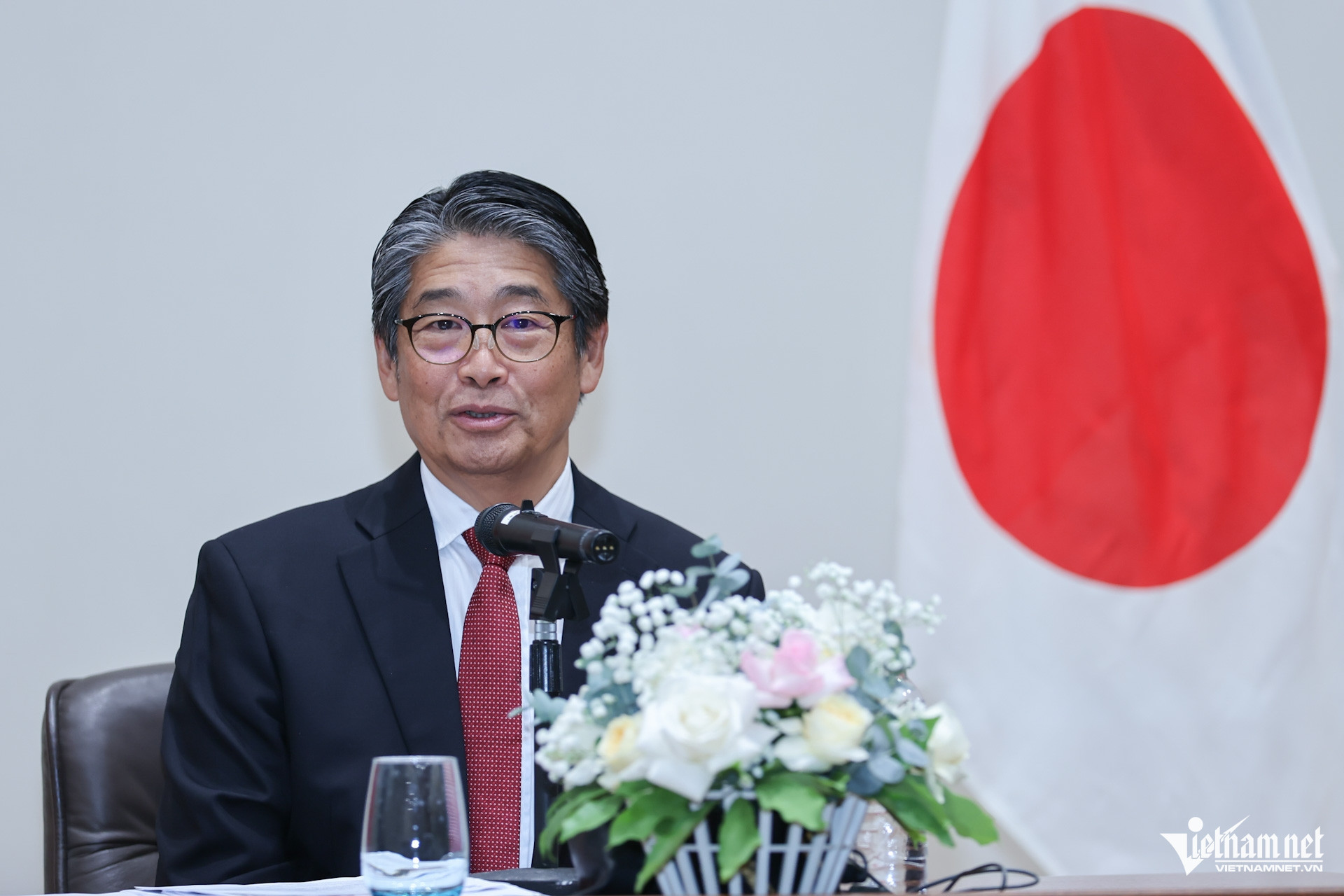
Marking the 53rd anniversary of diplomatic relations between Vietnam and Japan, Ito met with the media on Sept. 18 to discuss the progress in bilateral ties and areas expected to provide fresh momentum for cooperation.
Vietnam and Japan established diplomatic relations on Sept. 21, 1973. According to Ito, the relationship's development over more than half a century has been driven not only by cooperation between the two governments but also by mutual understanding and support among their people and the involvement of a wide range of stakeholders in both countries.
"Cooperation between the two countries has developed very well across many fields, particularly in recent years following the upgrade of relations to a Comprehensive Strategic Partnership for Peace and Prosperity in Asia and the World," Ito said.
Supporting Vietnam's next stage of development
Economic and investment ties remain a key pillar of the relationship.
Figures provided by Ito showed bilateral trade reached $38.6 billion in the first eight months of the year, up 15.2% year on year.
Japanese investment in Vietnam totaled $2.3 billion during the period, up 14.3%, while cumulative investment reached $81 billion.
As Vietnam pushes ahead with reforms and moves toward a new growth model, Ito said the Japanese government and businesses are exploring concrete ways to support the process.
In education and human resources, Ito highlighted the opening of a Vietnam-Japan exchange space at Hanoi University of Science and Technology, supported by Japanese businesses.
The facility is expected to connect universities, companies and researchers, promote joint research and support the development of highly skilled workers.
Bilateral cooperation is also expanding into security, including efforts to strengthen maritime law enforcement capacity, Japan's Official Security Assistance program and cooperation involving defense equipment and technology.
People-to-people exchanges grow despite Japan's visa fee changes
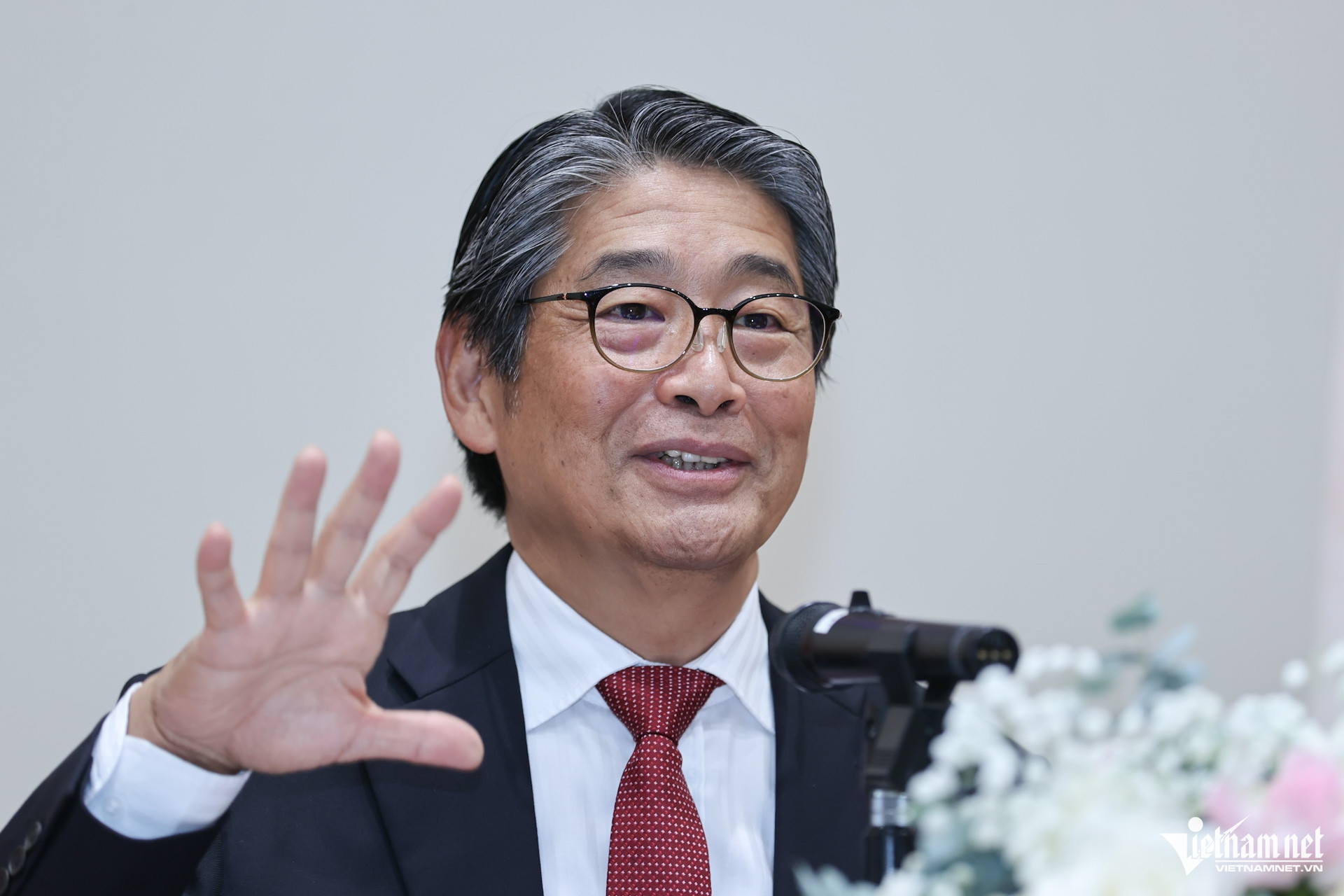
One issue raised at the media meeting was whether Japan's adjustment of visa fees could affect tourism and exchanges between people of the two countries.
Ito said the previous visa fees had remained unchanged for a long time. The adjustment came amid changes in prices, exchange rates and the costs involved in reviewing and issuing visas, and applied globally rather than specifically to Vietnam.
According to figures provided by the ambassador, about 92,000 Vietnamese traveled to Japan in March, before the fee adjustment. In August, the figure stood at more than 56,000, among the highest from ASEAN countries.
More broadly, about 505,000 Vietnamese visited Japan in the first eight months of the year, up 5.4% year on year. In the opposite direction, around 589,000 Japanese visited Vietnam, an increase of 9.2%.
Ito therefore said the goal of surpassing 2 million two-way visits before 2030 was becoming increasingly achievable.
Cultural exchanges are also becoming more diverse, with the two countries promoting cooperation in cultural industries and copyright protection.
Trust between the two peoples is an 'intangible asset'
Asked about the role younger generations could play in shaping Vietnam-Japan relations over the next 50 years, Ito said they would not only inherit the achievements of the past half-century but also need to identify common goals in a very different environment.
Issues such as science and technology, climate change, sustainable growth and shifts in the international environment require young people from both countries to identify shared values, common ground and goals that extend beyond bilateral relations.
Ito placed particular emphasis on what he described as an "intangible asset" in Vietnam-Japan relations.
Trust between the people and political leadership of the two countries, he said, has been built to a very high level and represents the most important asset they have achieved.
Having worked in several Asian countries, Ito said his experience in Vietnam had given him a strong sense of the closeness, mutual understanding and empathy between Japanese and Vietnamese people.
He said this foundation could enable younger generations to look beyond bilateral Vietnam-Japan relations and work together to contribute to peace, stability and development in Asia and the wider world.
APEC 2027 offers Vietnam an opportunity to showcase its role
Looking ahead, another topic raised at the meeting was Vietnam's role in APEC and its preparations to host the forum in 2027.
Ito noted that Japan had hosted APEC twice, in Osaka in 1995 and Yokohama in 2010, giving it an understanding of the complexity and considerable workload involved for a host economy.
Vietnam, meanwhile, has hosted APEC twice and is actively preparing to do so again.
With the global economy facing new challenges ranging from geopolitics to artificial intelligence and innovation, Ito said advancing trade liberalization and facilitation was no longer as straightforward as in the past.
He said this also offered Vietnam an opportunity to demonstrate its vision for sustainable growth, share its development experience and contribute to building more resilient regional supply chains.
As Japan's representative in Vietnam, Ito said Japan would continue to share its experience, work alongside Vietnam and provide support for a successful APEC 2027.
After 53 years, the Vietnam-Japan relationship has changed considerably. Cooperation has expanded beyond traditional areas such as official development assistance, trade and investment into highly skilled human resources, green transformation, technology, cultural industries, security and regional issues.
Yet behind the investment figures and growing movement of people between the two countries, Ito's strongest emphasis remains on the trust accumulated over more than half a century.
Thai An
.svg)
