 Vietnamnet.vn

 Podcast



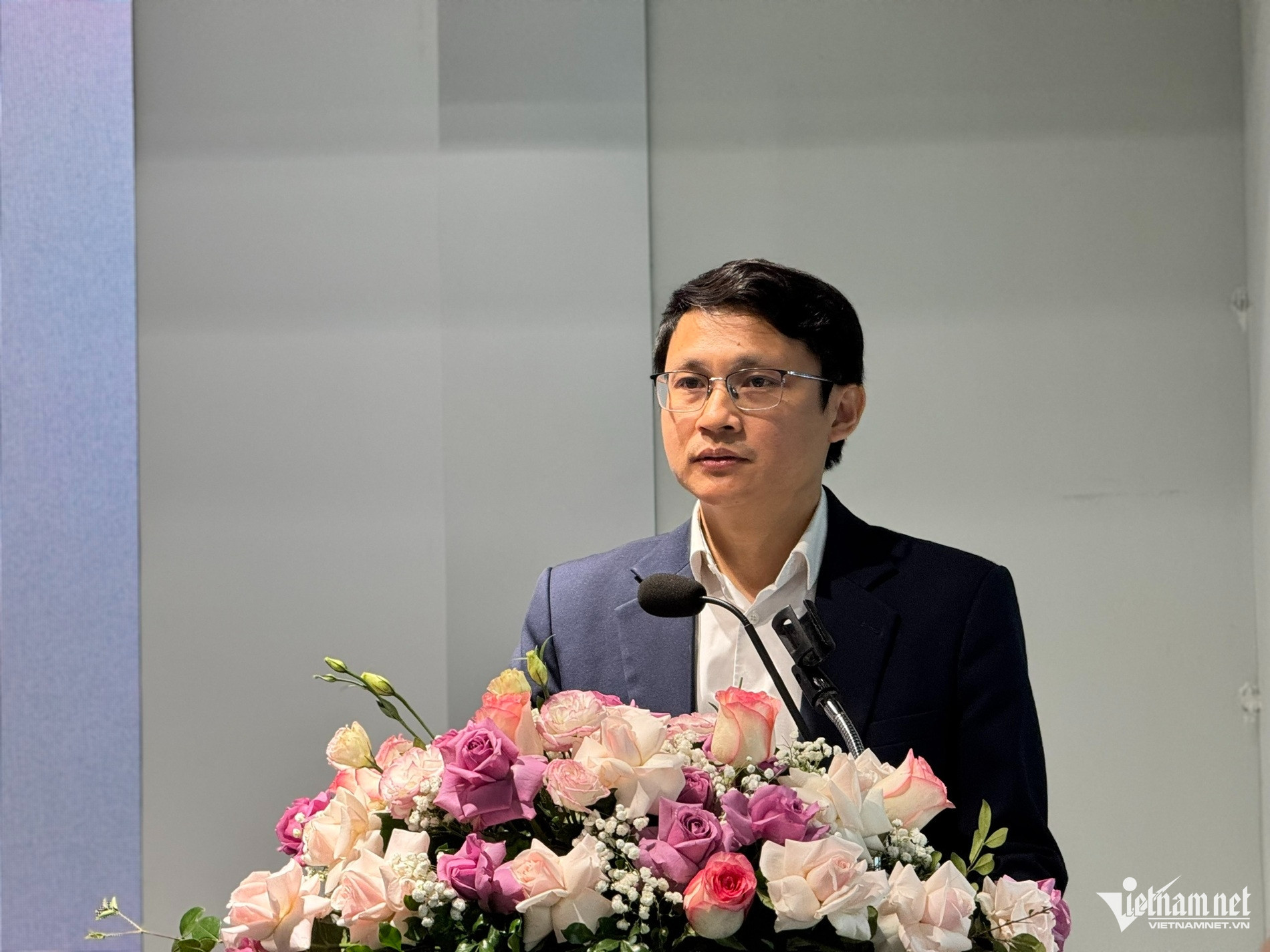
On February 10 in Hanoi, the National Innovation Center (NIC) officially launched the International Quantum Computing Hackathon (QC4SG 2026).
The event marks a strategic step for Vietnam in joining the global technology value chain in the “post-AI” era.
The event is co-organized by NIC in collaboration with the Vietnam Quantum Technology Innovation Network (VNQuantum), the Open Quantum Institute (OQI), and the Gia Lai Department of Science and Technology.
The hackathon is not only a technology playground but also an effort to implement the Politburo’s Resolution No57 on breakthroughs in science, technology, innovation and national digital transformation.
The next wave after AI
As major powers such as the US, China, Japan and the European Union invest billions of dollars in the quantum race, experts say this is a pivotal moment for developing countries like Vietnam to seize the opportunity.
Lee Eunkyu, Science, ICT and Communications Attaché at the Embassy of the Republic of Korea in Vietnam, raised the question: “The world is caught up in intense AI competition, but what comes after AI? The answer is quantum technology.” He stressed that the field is no longer a distant future but has become a decisive factor in industrial strength and national security.
Sharing the same view, speakers at the event pointed out that quantum technology has moved beyond the academic research phase and into the commercial application stage. Leading corporations such as IBM, Google, and NVIDIA are aggressively building ecosystems and training human resources to gain a long-term advantage.
Despite being a new and complex field, Vietnam is considered to have great potential in the field thanks to its young workforce and strong foundation in STEM (Science, Technology, Engineering, and Mathematics).
Vo Xuan Hoai, Deputy Director of the NIC, noted that Vietnam has already made an international mark in the semiconductor and AI sectors, evidenced by NVIDIA establishing its largest AI R&D center outside the US. Hoai believes Vietnam has a solid basis to develop its quantum industry.
However, Vietnam’s strategy is not to cover the entire value chain. “We cannot do everything from start to finish. We need to select a suitable segment to develop together with the world in the most effective way, rather than spreading our investment,” he said, suggesting a focus on materials, copper wires or smaller components as potential starting points.
The QC4SG 2026 international hackathon is designed as the first step in this strategy, creating a platform to connect young talent, research communities and international investors.
Its goal is to discover and incubate breakthrough ideas to address practical challenges in healthcare, finance, logistics and energy.
Bringing Quantum to the public
Rossy Nhung Nguyen, Chair of VNQuantum, said QC4SG 2026 is the first quantum hackathon in Vietnam and part of a broader series of events across Southeast Asia.
A key feature of the competition is its openness. “You do not need to be a quantum physicist to come up with quantum solutions,” she said.
The organizers are committed to supporting contestants from basic knowledge (Quantum 101) to the prototyping stage, encouraging anyone with a curious mindset to participate.
The event is also supported by the Open Quantum Institute (OQI), a global initiative aimed at bringing quantum technology to developing countries.
Registration is open until March 31. From May to June, participants will receive core knowledge training and hands-on technical practice through a Quantum Bootcamp.
Those who pass the training round will travel to Quy Nhon to form teams and work with mentors, including CEOs and CTOs from leading quantum companies, during Hackathon Week.
From Paris, Associate Professor Nguyen Luong Quang of the IAS Institute and Head of Research and Development at VNQuantum, said: “This is not just a competition. It is a launchpad for genuine quantum startups. We focus on practical solutions with real-world applicability and game-changing impact in the digital era.”
An interesting highlight is the co-organizing role of Gia Lai province. Nguyen Huu Ha, Deputy Director of the Gia Lai Department of Science and Technology, said the province views quantum technology as a field with strong breakthrough potential across computing, communications, AI, data and various socio-economic sectors.
Through cooperation with NIC and VNQuantum, the province hopes to gradually become a regional hub for science and technology expertise.
The Korean representative also expressed confidence in cooperation prospects. With an ambitious strategy to invest in national quantum clusters, South Korea sees Vietnam as a promising partner given their close economic ties.
Thai Khang
.svg)
