 Vietnamnet.vn

 Podcast



Deputy Prime Minister Ho Duc Phoc has officially signed Decision No. 2014/QD-TTg, approving the Prime Minister’s plan to upgrade the classification of Vietnam’s stock market.
The plan aims to advance the development of the Vietnamese stock market into a key medium- and long-term capital mobilization channel for economic growth. It supports the completion of a socialist-oriented market economy and strengthens both regional and global economic integration.
Short-term goals and international benchmarks
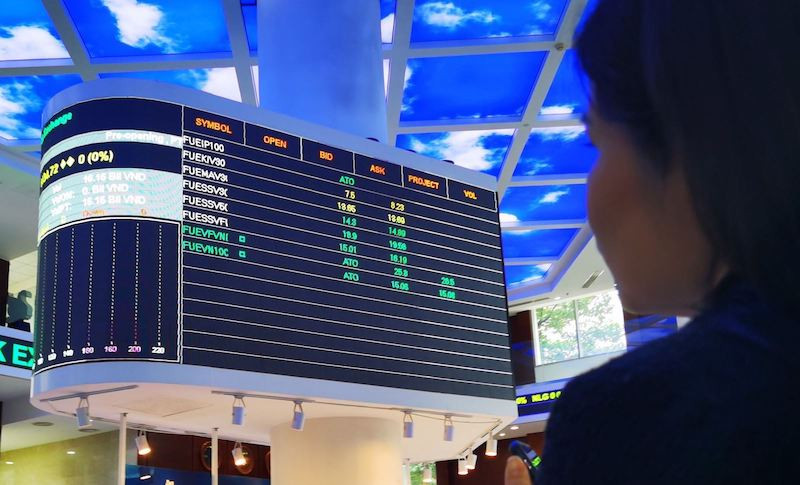
The plan sets a clear short-term goal: to meet the criteria for an upgrade from "frontier market" to "secondary emerging market" by FTSE Russell in 2025, and to maintain this status. The long-term goal is to achieve full "emerging market" status by MSCI and "advanced secondary emerging market" status by FTSE Russell by 2030.
To meet the requirements for FTSE Russell’s secondary emerging market status, several key tasks and solutions have been outlined:
First, the issue of the “pre-funding requirement” must be resolved. This refers to the current barrier where foreign investors must pre-deposit funds before trading. Removing this constraint is critical while the Central Counterparty Clearing House (CCP) mechanism is still being implemented in Vietnam’s stock market.
Second, there must be transparency regarding the maximum foreign ownership limits in various sectors, ensuring equal information access for foreign investors.
Facilitating short-term improvements
To maintain its classification in the short term, Vietnam plans to simplify procedures for foreign investors, particularly in registering and opening accounts. This includes streamlining documentation for indirect investment capital accounts.
The integration of Straight-Through Processing (STP) between custodian banks and securities firms will be enhanced to support trading activity. Vietnam will also roll out the omnibus trading account (OTA) model.
Proposed solutions to stabilize the foreign exchange market are vital to manage foreign investment volatility. In parallel, Vietnam will bolster its trading and settlement infrastructure to handle increasing trading volumes.
To support these efforts, the State Securities Commission will enhance regulatory oversight by investing in both human resources and advanced IT systems. Cross-agency coordination - particularly among the Ministry of Finance, State Bank of Vietnam, and Ministry of Public Security - will be strengthened to ensure market integrity, prevent crime, and protect financial system security.
Long-term strategic actions
To achieve long-term goals, a comprehensive set of solutions has been identified for meeting the criteria of FTSE Russell’s advanced emerging market and MSCI’s emerging market classifications.
Vietnam will revise its legal framework on foreign ownership to increase maximum ownership thresholds and remove unnecessary sectoral restrictions.
Advanced clearing and settlement systems will be developed to eliminate the need for 100% pre-funding and fully implement a CCP mechanism.
Vietnam will also explore a roadmap to allow securities lending, short selling (with control mechanisms), same-day trading, and other advanced tools.
In terms of foreign exchange development, new hedging instruments will be introduced to support indirect foreign investment.
Macro-financial stability will be pursued through tighter coordination of fiscal, monetary, and other macroeconomic policies to maintain stable economic conditions.
Sustaining momentum through modernization
To ensure long-term sustainability, the stock market’s trading and settlement systems will be continually modernized. Authorities will regularly monitor cross-border capital flows and enhance inter-agency collaboration in managing foreign exchange and securities activities.
The legal and regulatory framework will also be upgraded to ensure transparency, fairness, and security across the market and broader financial system.
Supporting liquidity and transparency
To improve market liquidity, Vietnam will introduce new trading orders and mechanisms, particularly in the stock market, aligned with investor needs. The country also aims to develop a network of market makers in line with international standards.
Market transparency will be enhanced by tightening the oversight of audit firms and auditors. Vietnam will roll out International Financial Reporting Standards (IFRS) and encourage large listed firms to publish financial statements in accordance with these global benchmarks.
Corporate governance practices will also be upgraded to align with OECD standards for public companies.
Investor diversification and product expansion
Vietnam will broaden its investor base by offering more training for domestic investors and encouraging them to invest via professional institutions such as investment funds. This will lead to a more balanced and stable market by increasing the share of institutional and long-term investors.
The diversity of tradable products will also be expanded. Vietnam will consider introducing infrastructure bonds, green bonds, new options and futures contracts, structured products, depositary receipts, and a variety of new mutual fund certificates. Financial innovations such as green instruments will be introduced in phases, appropriate to the market’s development.
Improvements will also be made to the quality and diversity of indices, including the creation of new underlying indices to support the derivatives market.
Nhan Dan
.svg)
