 Vietnamnet.vn

 Podcast


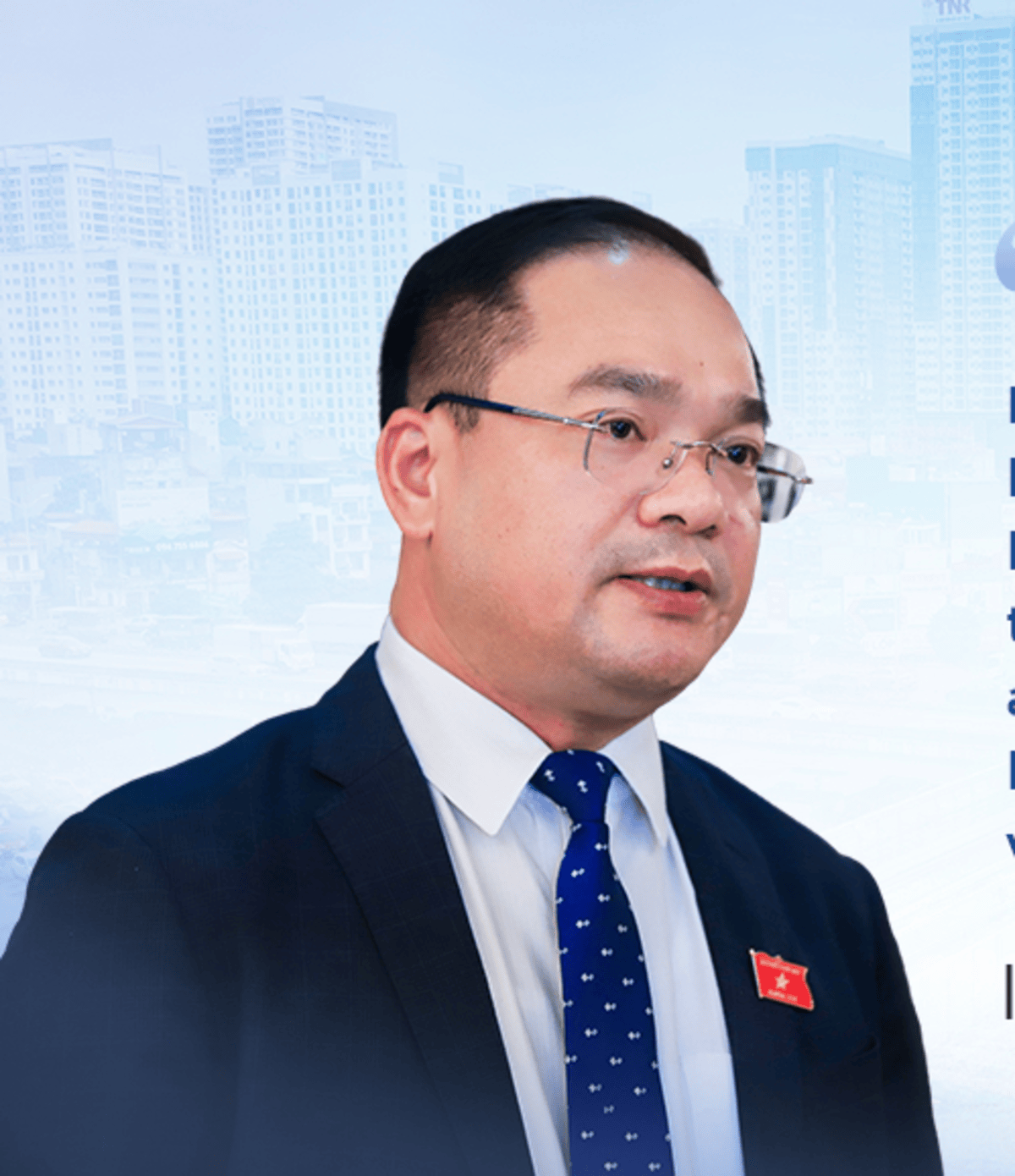
Prof. Dr. Phan Trung Ly said that state agencies cannot attract talent with incentives and then place them in environments that stifle creativity. He recommended cutting intermediate bureaucratic layers, expanding professional autonomy, and shifting from input control to output evaluation. Crucially, organizational leaders must be evaluated based on team development results and the efficiency of using high-quality human resources.
“We must not let the situation occur where 'the skilled stay outside while the average remain inside the system', or where talent is recruited but assigned no tasks, given no authority, and deprived of an environment to demonstrate their capacity,” he said.
Along with delegating authority, protection mechanisms must clearly differentiate between risks arising from innovation and experimentation for the common good versus violations, self-interest, or intentional wrongdoing.
He proposed protecting innovators who follow necessary procedures, act honestly without self-interest, and base their actions on scientific and practical foundations.
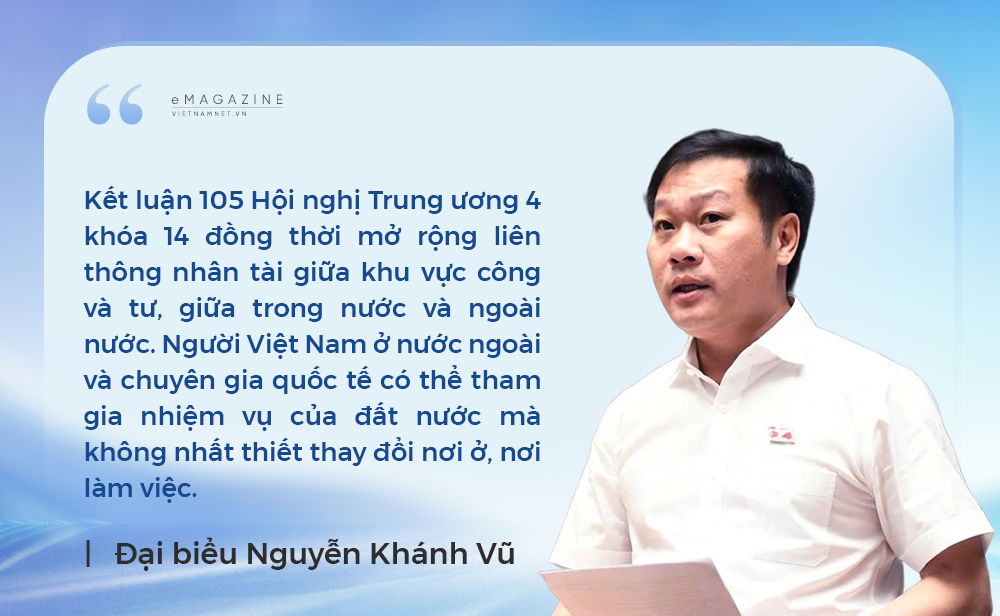
National Assembly Delegate Nguyen Khanh Vu urged prompt institutionalization of task-assignment mechanisms linked to authority, resources, reasonable liability exemptions for risks, and sufficiently attractive compensation policies. Protection must go hand in hand with publicity and transparency to prevent policy abuse that creates special privileges.
Delegate Nguyen Ngoc Viet noted that evaluating by results does not mean mechanically measuring all work by numbers alone. Research and innovation require time and carry objective risks.
“We must clearly distinguish those who are seriously innovating without immediate success from those who lack responsibility or exploit policies,” the Hanoi delegate said.
He said that talent must be proven through work; those utilizing talent must be evaluated by their ability to discover, empower, and unleash that capacity.
Handling the abuse of nominations for personal gain
According to Vu, the most difficult task remains selecting the right people. This requires clear selection criteria, clarity about who makes the selections, and appropriate arrangements for assigning and deploying talent.
Conclusion 105 of the 4th Plenum of the 14th Central Committee of the Communist Party of Vietnam has oriented the creation of an open and flexible national criteria framework for talent, tying selection responsibility to organizational heads while demanding strict penalties for exploiting recommendations for personal gain.
Sharing this perspective, Dr. Pham Tuan Khai, former Director-General of the Legal Department under the Government Office, emphasized the need to reform awareness in formulating talent policies and legislation.
In particular, it is necessary to critically assess the suitability of individuals for specific positions, and to reassign them when necessary, based on the principle of “the right person for the right job.”
This would help avoid a technocratic approach to developing talent in which people are treated purely as scientists but are later turned into politicians or public administrators, with negative consequences such as those seen in recent years.
“We must completely eliminate subjective and voluntarist thinking, as well as the exploitation of talent selection, deployment and development to build power networks in politics, the economy, and science and technology through personal relationships. We must also eliminate arbitrary, non-standardized approaches to identifying and using talent under the guise of ‘working teams’ that serve group interest or narrow local interests,” Khai stressed.
Therefore, when implementing these policies, the legal system must be grounded in the common good and uphold transparency, accountability and regulatory scrutiny, based on objective and scientific assessments of socio-economic impacts.
There must also be mechanisms for inspection, supervision and review of each policy and legal provision after a period of implementation.
A dedicated law on talent
Pham Tuan Khai also argued that Vietnam should move toward developing a dedicated law on talent to meet the country’s needs in a new phase of development. He said the Party had begun shaping its understanding of talent and its role at the 6th National Party Congress, but no legal instrument of sufficiently high standing had yet been adopted specifically on this issue.
Numerous sector-specific laws now contain provisions on highly skilled intellectual resources and the attraction and use of talent. These provisions should therefore be reviewed, systematized and elevated in legal status.
Legislation on talent should reflect a new approach, replacing the mindset of “control and management” with one of “enabling and governance,” and establishing a legal framework for attracting, selecting, deploying and developing talent through a dedicated law.
Thu Hang

