 Vietnamnet.vn

 Podcast



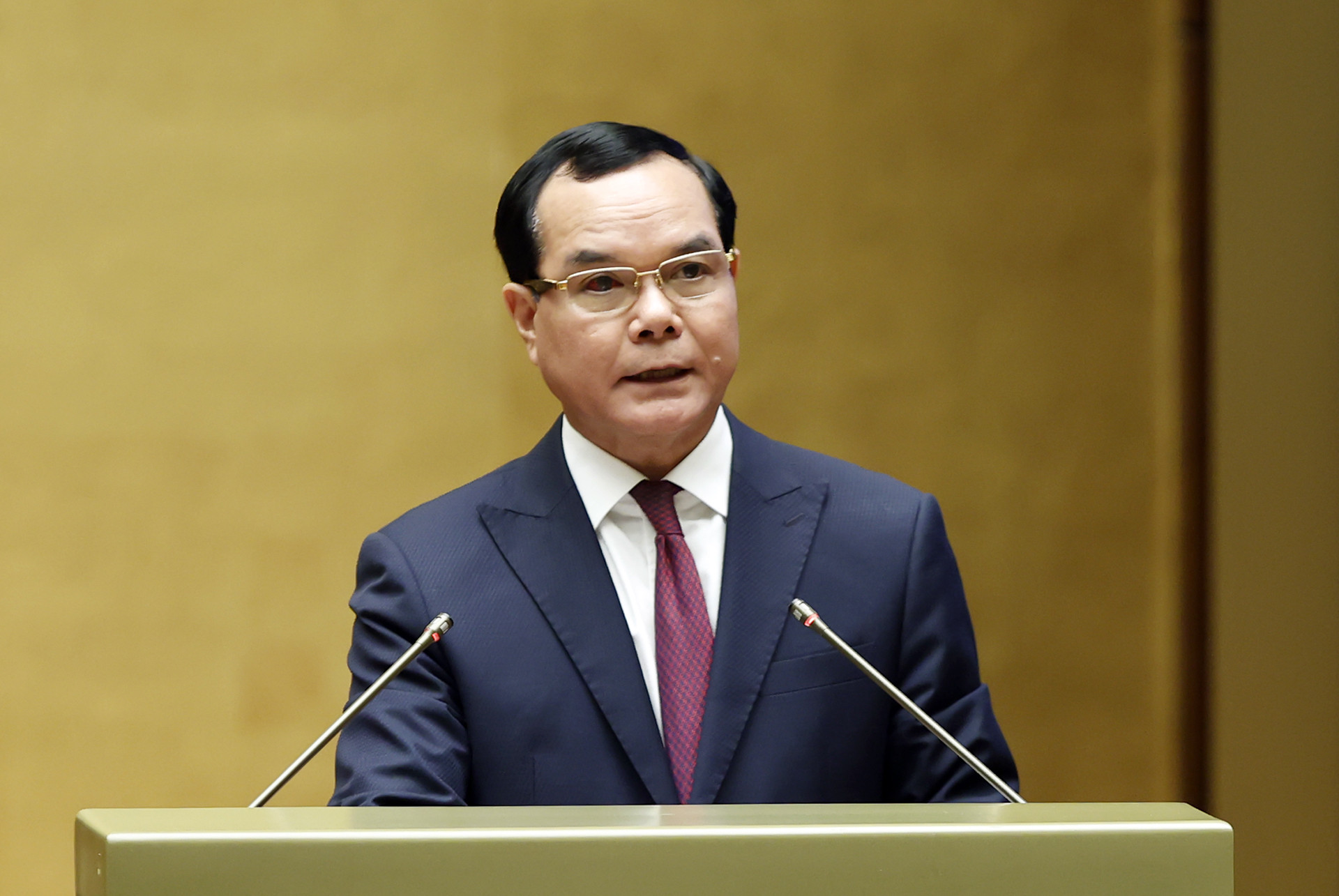
Speaking at a National Assembly discussion on the draft amended law on the afternoon of April 10, the minister addressed concerns raised by lawmakers and clarified key aspects of the proposed revisions.
He stressed that improving the legal framework aims to institutionalize the Party’s policies on belief and religion in line with the Constitution, international covenants on civil and political rights, and global human rights standards to which Vietnam is a signatory.
The amendments are also intended to ensure consistency across the legal system, enhance the effectiveness of state management, and better protect citizens’ rights to freedom of belief and religion.
According to the minister, the revision follows the principle of retaining provisions that have proven stable and effective, while selectively incorporating international experience in a manner suitable to Vietnam’s political system and its socialist-oriented market economy.
The Ministry of Ethnic and Religious Affairs will fully absorb feedback from lawmakers and continue coordinating with the National Assembly’s Committee for Culture and Society to refine the draft law, ensuring it meets both public needs and governance requirements.
Aligning with modern governance thinking
The minister noted that the drafting process has adhered to directions from Party General Secretary To Lam and National Assembly Chairman Tran Thanh Man on renewing legislative thinking.
This includes shifting toward a more flexible approach that both ensures effective state management and encourages innovation, avoiding rigid governance or the mindset of banning what cannot be controlled.
Addressing the issue of religious activities in cyberspace, Minister Nguyen Dinh Khang said most lawmakers supported provisions in the draft law as being consistent with inevitable global trends.
However, some raised concerns that online religious activities transcend borders and therefore require distinct principles compared to those conducted in physical settings. Lawmakers also called for clearer responsibilities for telecommunications providers, internet platforms, and cross-border services, particularly in the use of artificial intelligence in religious dissemination, as well as stronger coordination mechanisms to detect and remove harmful content.
In response, the minister said these concerns have been studied and incorporated into the draft, which includes a dedicated provision outlining general principles for religious activities, regardless of whether they take place online or offline. The government will be tasked with issuing detailed regulations to address specific issues raised.
Decentralization and capacity building
On decentralization, the minister acknowledged the increasing diversity and rapid growth of religious activities in terms of scale, geography, and forms, which poses challenges for grassroots authorities.
To better meet legitimate religious needs, the draft law proposes stronger decentralization, assigning more authority to local governments in handling religious activities at the community level.
This approach aligns with the Law on Organization of Local Government 2025.
Regarding human resources, the ministry will continue advising the government on policies to attract, train, and develop officials working in the field of belief and religion, ensuring they have sufficient capacity to meet their responsibilities.
For concerns about overlaps between religious activities and cultural heritage management, the drafting body has worked closely with the Ministry of Culture, Sports and Tourism to address and eliminate inconsistencies.
On other issues raised by lawmakers, the minister affirmed that only matters that are sufficiently reviewed and clearly understood will be included in the law. The revised legislation will build upon the stable provisions of the 2016 Law on Belief and Religion, while adjusting certain aspects to ensure consistency with related laws.
Tran Thuong
.svg)
