 Vietnamnet.vn

 Podcast



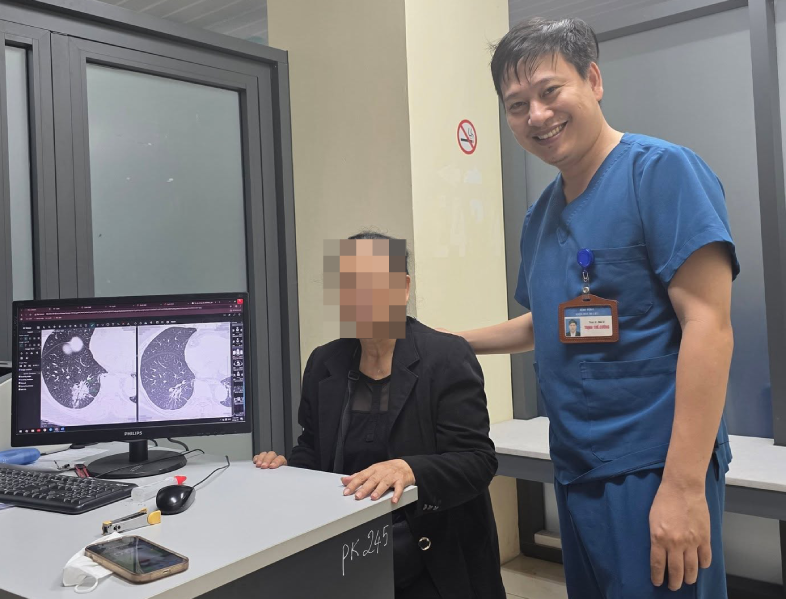
With 50 percent of the cost covered by health insurance, he pays just over VND2 million a month.
Dr. Trinh The Cuong of the Chemotherapy Department at Hanoi’s E Hospital said he treated an 88-year-old man with lung adenocarcinoma in May.
Based on the patient’s test results, doctors selected the first-generation targeted therapy gefitinib. After about a week, X-rays showed a significant reduction in pleural effusion, with improved ventilation in the left lung and reduced shortness of breath.
After 10 days of treatment, follow-up tests showed that the left-sided pleural effusion had decreased further. The patient’s condition stabilized, allowing him to leave the hospital and continue taking the targeted drug as an outpatient.
The treatment cost was within the patient’s financial means. The Vietnam-made targeted drug costs about VND138,000 per tablet. With 50 percent covered by health insurance, the patient just has to pay VND69,000 per tablet, or just over VND2 million a month.
As a retiree, the patient was considered able to afford the cost for continued treatment.
According to Cuong, for elderly patients with advanced lung cancer, the treatment goal is to choose an approach appropriate to the patient’s condition, physical status, wishes and the family’s financial capacity.
“The most medically advanced option is not always the most appropriate one for a patient. If a treatment forces a family to sell their home, it may not necessarily be the right choice,” Cuong said.
In this case, instead of opting for more expensive treatments, doctors recommended a Vietnam-made first-generation targeted drug that was appropriate for the patient’s EGFR mutation and partially covered by health insurance.
“Don’t treat indiscriminately or cling to blind hope, but don’t give up too quickly when the patient still has a reasonable chance,” Cuong said.
When the treatment is properly indicated and aligned with the treatment goal, a relatively affordable option can still deliver clear benefits for the patient.
Wife asks for best, most affordable treatment
Cuong cited another patient he had treated, a 62-year-old man with a long history of smoking whose lung cancer had metastasized to the brain.
According to Cuong, the tumor was located in the left hilar region and was compressing the bronchus. In addition to cancer, the patient was experiencing an acute exacerbation of chronic obstructive pulmonary disease (COPD).
Before treating the cancer, doctors first had to stabilize the patient’s overall condition, including treating cerebral edema and infection, dilating the bronchi, reducing inflammation, providing oxygen and managing respiratory symptoms.
“Please help my husband find the fastest, best and most affordable treatment,” said the man’s wife, as the family faced the dual burden of treating an advanced illness and managing the cost.
The doctors faced a difficult question. Should they prioritize the lung tumor or the brain metastases?
After assessment, they decided to treat the brain lesions first because multiple brain metastases had caused neurological symptoms, leaving the patient with weakness on one side of his body.
Conventional chemotherapy for squamous cell lung cancer has limited effectiveness against brain metastases. Meanwhile, the patient’s respiratory symptoms were thought to be significantly associated with the COPD exacerbation, as crackles were present in both lungs while the tumor was primarily located on the left.
The following day, the patient began radiation therapy for the brain lesions.
He also received acupuncture and rehabilitation, underwent physical exercises, and continued antibiotics, bronchodilators, anti-inflammatory treatment and other supportive therapies.
Following treatment, his respiratory symptoms improved significantly. The crackles disappeared and he no longer experienced shortness of breath. After completing 10 radiation sessions, his condition stabilized, with no signs of increased intracranial pressure, and he was healthy enough to proceed with cancer treatment.
Doctors then began chemotherapy under a regimen covered by health insurance. After about three weeks of inpatient treatment, the patient was discharged in stable condition.
The family had been particularly concerned about the cost, but the final bill came as a surprise. The total cost of treatment was about VND37.7 million, of which health insurance covered VND35.8 million. The patient paid only about VND1.8 million.
The cost included inpatient treatment, radiation therapy, chemotherapy, acupuncture and supportive medications.
According to Cuong, individualized treatment is crucial in cancer care, allowing doctors to determine the appropriate order of interventions, select suitable treatments, maximize effectiveness and reduce unnecessary burdens on patients and their families.
.svg)
