 Vietnamnet.vn

 Podcast



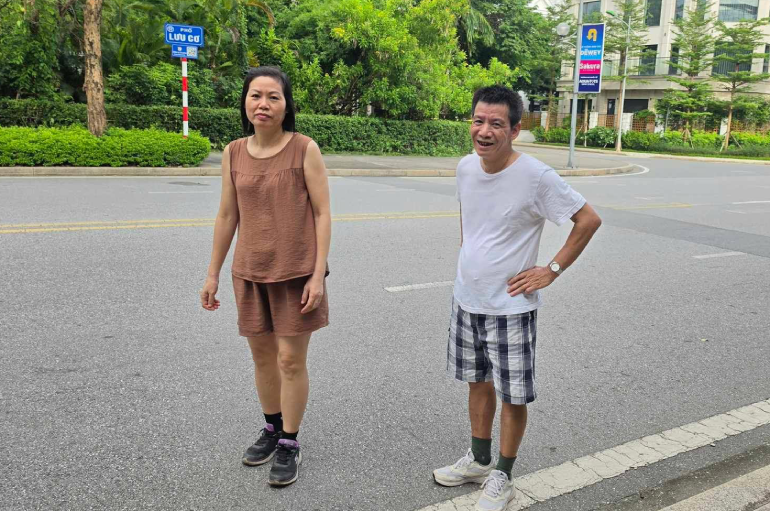
Every day, An, 61, a resident of Nghia Do, Hanoi, plays volleyball, swims two kilometers, and goes jogging. Few would guess that he once faced late-stage lung cancer and was confined to a wheelchair.
Before his diagnosis, An was healthy enough to exercise regularly. In late August 2022, after playing table tennis, he felt unusually fatigued and decided to get checked.
At E Hospital in Hanoi, doctors discovered a hazy shadow on his lung and advised immediate hospitalization. Thinking it was just a minor illness, An asked to return home, intending to be admitted after the September 2 holiday. However, within a few days, his condition deteriorated rapidly, requiring emergency hospitalization in the middle of the night.
He was transferred to the National Lung Hospital, where doctors diagnosed him with Stage IV lung cancer. The large tumor, measuring over four centimeters, had invaded the mediastinum, pressed against the aorta, and compressed nerves, leaving him reliant on a wheelchair.
"When I learned I had late-stage cancer, I was shocked and heartbroken. But as a former soldier, I told myself to regain my composure quickly, take things one day at a time, and rely on the support of my family," An recalled.
He asked for surgery, but doctors declined, citing a high risk of aortic rupture that threatened his life directly on the operating table.
Doctors ordered genetic mutation testing to determine if he was eligible for targeted therapy. However, all tests came back negative for actionable mutations.
Meanwhile, immune biomarker testing showed high expression levels, qualifying An for immunotherapy. That was the moment his family faced an exceptionally difficult financial dilemma.
"The drug costs were astronomical, and our family wasn't wealthy, so we had to borrow money everywhere. We reasoned that if treatment would only prolong his life briefly in pain, we wouldn't borrow such a large sum. However, doctors encouraged us to take it step by step - administer the first dose and evaluate the effectiveness after three cycles," An's wife recalled.
Miracle arrives after first infusions
The treatment plan consisted of four cycles of immunotherapy combined with chemotherapy, followed by maintenance immunotherapy alone.
During the initial days after infusion, An experienced fever, fatigue, and an inability to eat. His family waited anxiously, worried the medication might not be working. But about a week later, his health began to improve noticeably.
By the third infusion, he could walk with his wife's support. After the fourth dose, the couple started walking together in the park every day.
"After a few months, I grew stronger day by day. At first, I could only take a few steps, but eventually, I walked multiple laps around the park. With each follow-up exam, the tumor shrank continuously, until today it resembles nothing more than a fibrous scar," An recalled.
An now undergoes periodic checkups every three months and requires no additional medication. What brings his family the greatest joy is that life has virtually returned to normal.
The '4-T' journey
An's wife believes what helped her husband overcome the critical stage was not just medication and finances, but also a spirit of optimism.
Throughout his treatment, she remained by his side through the smallest details - preparing meals, managing his sleep, driving him to infusions, meeting doctors, researching nutrition, and offering emotional support.
The family avoided overly strict dietary restrictions. Following medical advice, An maintained a varied diet, reducing red meat while increasing poultry, fish, and green vegetables, alongside regular exercise to maintain physical stamina.
"I think the most important thing is never giving up. Maintaining ‘Tinh Than Lac Quan’ (an optimistic spirit), ‘Tin Tuong Bac Sy’ (trusting doctors), ‘Tuan Thu Dieu Tri’ (adhering to treatment), and ‘Tap The Duc Dieu Do’ (exercising regularly) - those are the “four 'T'” principle that brought me to where I am today," An shared.
Overcoming the heavy financial burden to pursue immunotherapy doses priced at VND 60–90 million per vial to fight cancer, An realized how fortunate he was to have his family's unwavering support.
Lung cancer was previously the leading cause of cancer mortality in Vietnam before being surpassed by liver cancer. Nevertheless, it remains one of the deadliest malignancies, with new cases and deaths remaining consistently high.
According to Globocan 2022, Vietnam records more than 24,400 new lung cancer cases annually, ranking third after liver cancer and breast cancer. Every year, over 20,000 people die from the disease.
Phuong Thuy
.svg)
