 Vietnamnet.vn

 Podcast



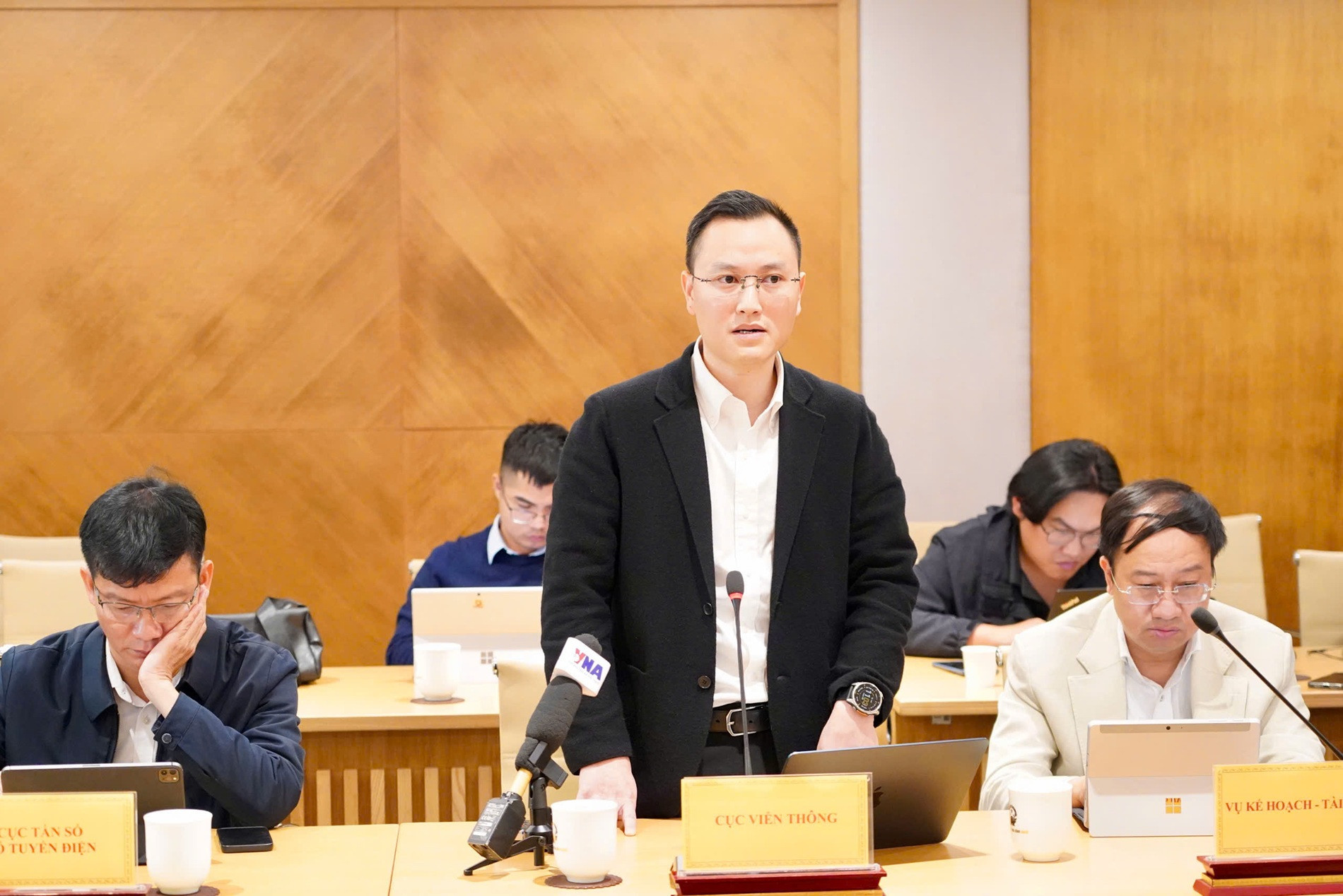
On December 1, the Ministry held its regular monthly press conference, chaired by Deputy Minister Bui Hoang Phuong.
Among the most anticipated updates was the licensing progress of pilot satellite internet services from Starlink (under SpaceX) and Kuiper (Amazon).
During an August meeting with Deputy Minister Pham Duc Long, Amazon Kuiper representatives emphasized Vietnam’s strategic importance in the group’s global development plan.
The Kuiper project is Amazon’s flagship initiative to build a constellation of over 3,200 low-Earth orbit (LEO) satellites offering high-speed (up to 400 Mbps for individuals and 1 Gbps for enterprises), low-latency internet service. The network focuses on underserved or remote regions, including rural areas, islands, and mountainous zones.
As of August, Amazon had launched 102 satellites and plans to complete at least 50% of the constellation by 2026. The system operates on the Ka-band, with compact, easy-to-install terminals and built-in AWS cybersecurity features.
At the press briefing, Nguyen Anh Cuong, Deputy Director of the Department of Telecommunications, shared that on November 24, Amazon Kuiper submitted a revised application clarifying key issues raised by MOST, the Ministry of Public Security, Ministry of National Defense, and Ministry of Finance.
The revised documents have been forwarded to relevant ministries for joint evaluation.
Regarding SpaceX’s Starlink service, Mr. Cuong told VietNamNet that “Starlink is very close to the final step of providing services in Vietnam.” After its initial application, the company was advised to clarify several details and is expected to resubmit its completed documentation this week.
Once the revised application is received, the Ministry will coordinate with other government bodies, including the Ministry of Public Security, the Ministry of National Defense, and the Civil Aviation Authority of Vietnam, to assess it. The general stance is to “review and grant licenses as soon as possible,” Cuong added.
He further explained that satellite internet services like Starlink - with wide coverage - could complement domestic fixed and mobile networks, especially in remote, border, and island areas. These services are also crucial during natural disasters when ground-based infrastructure is disrupted.
More importantly, satellite systems may serve as a vital backup communication channel between BTS stations, enhancing emergency responsiveness and restoring connections in crisis situations.
During Vietnam’s recent historic floods, MOST directed agencies and businesses to proactively implement emergency measures.
Typhoons No. 13 and 14, accompanied by landslides and flash floods, caused severe communication breakdowns. At peak disruption, 906 out of 6,307 BTS stations in Gia Lai and Dak Lak were down during Typhoon No. 13; after Typhoon No. 14, the number rose to 1,202 out of 8,742 stations across Gia Lai, Dak Lak, and Khanh Hoa.
Using technical methods such as boosting nearby BTS power to extend coverage and deploying mobile broadcasting vehicles to temporarily replace damaged stations, authorities ensured communications were maintained with 100% of local leadership for disaster management. However, service quality for the general public was not on par with normal conditions.
Telecom networks in affected areas were largely restored within 1 to 3 days after the disasters, preventing prolonged outages.
Early warnings via SMS helped raise public awareness and preparedness.
Coordination between telecom providers and local governments improved the overall effectiveness of disaster response efforts.
In areas without grid electricity, telecom companies opened their offices and base stations equipped with generators, inviting residents to charge phones and maintain communication.
Mobile BTS vehicles, portable charging stations, and generators were dispatched to densely populated or evacuation centers, enabling people to contact loved ones and access critical updates.
Additionally, mobile carriers implemented relief measures, such as extending prepaid plans and maintaining account balances for users in hard-hit regions to ensure ongoing connectivity.
Du Lam
.svg)
