 Vietnamnet.vn

 Podcast



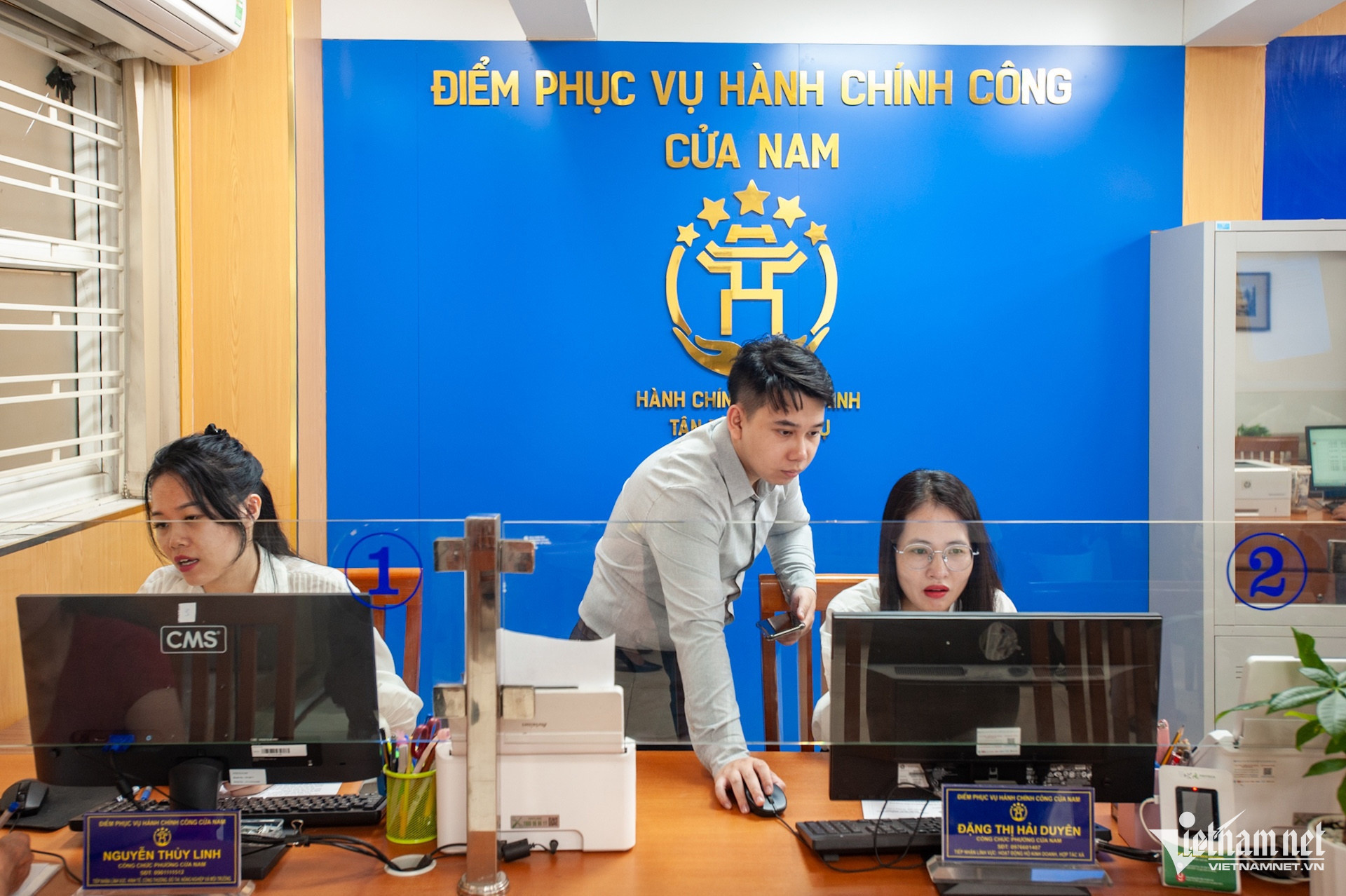
Vietnam’s government has issued Resolution No. 41, outlining an action program to implement the resolution adopted at the 14th National Congress of the Communist Party of Vietnam.
The program sets out key tasks for ministries, sectors and local authorities to carry out.
The first task focuses on synchronously improving development institutions to unlock productive forces, mobilize all resources and create new momentum for growth.
The government stressed the need for strong administrative reform, with maximum reduction of administrative procedures in the direction of transparency and openness, while shifting management from pre-inspection to post-inspection.
This task also prioritizes improving the investment and business environment and enhancing national competitiveness. Authorities are required to cut and simplify unnecessary, overlapping or unclear business conditions, while shortening the time and cost required to comply with administrative procedures.
The goal is to bring Vietnam’s investment environment into the top three in ASEAN and among the world’s top 30 countries by 2028.
The second task is to establish a new growth model, restructure the economy and accelerate industrialization and modernization, with science, technology, innovation and digital transformation serving as the main drivers.
The government emphasized the need to manage the real estate market to ensure healthy, transparent and sustainable development, better meeting the housing needs of citizens. It also called for improving the efficiency of gold market management.
Authorities are tasked with implementing strong measures to develop the stock market and the corporate bond market in a stable, safe and healthy manner.
The government also highlighted the priority of gradually mastering production technologies in several emerging industries, including semiconductor chip manufacturing, robotics and automation, artificial intelligence, advanced materials, biotechnology, environmental industries, renewable energy and new energy.
Vietnam also aims to build and implement breakthrough solutions for tourism development, targeting 45 - 50 million international tourist arrivals by 2030. The government also plans to establish and develop a new generation of free trade zones capable of competing at regional and international levels.
Promoting virtual assistants for businesses and citizens
The third task focuses on developing high-quality human resources.
Within this group of tasks, the government requires stronger teaching and learning of foreign languages, with English to become a second language in schools. Education programs for preschool children will also be reformed, alongside a roadmap to universal preschool education for children aged three to five.
Another priority is training high-quality human resources in line with international standards, particularly management personnel and specialists for key sectors such as science and technology, smart governance, fundamental sciences and other emerging priority fields.
The fourth task focuses on breakthroughs in science, technology, innovation and national digital transformation.
The government plans to develop systems of research and testing centers as well as key national laboratories, prioritizing strategic technologies. It will also design major scientific research programs and projects with breakthrough potential, focusing on strategic technology sectors.
Digital technologies and artificial intelligence are expected to be widely applied in the management and operations of state agencies, while virtual assistants will be strongly developed to support both businesses and citizens.
The fifth task concerns the development of synchronized and modern infrastructure to effectively exploit new development spaces.
Major infrastructure projects include building and upgrading the eastern North - South expressway axis, sections of the western North - South expressway and key east - west road corridors. Plans also include gateway seaports integrated with international transshipment hubs, major airports, a high-speed railway along the North - South axis, international railway connections and international transshipment ports.
Vietnam aims to complete the Lao Cai - Hanoi - Hai Phong railway line before 2030 and proceed with phase two of Long Thanh International Airport.
The sixth task focuses on improving the material, spiritual and health conditions of the population.
The government outlined plans to develop several hospitals and medical facilities capable of meeting regional and international standards, while establishing modern specialized medical centers.
Every citizen is expected to receive periodic health checkups or free health screenings at least once a year.
Regarding national defense and security, ministries and local authorities are required to proactively research, assess and accurately forecast developments, ensuring timely responses to situations related to national defense, security and social order, without being caught off guard.
The government also emphasized the continued reform and development of a professional, modern and efficient administrative system. Decentralization, delegation and authorization must be implemented scientifically and reasonably, accompanied by greater accountability and adequate resources, while strengthening inspection and supervision.
In addition, the government assigned tasks to complete job position frameworks linked to restructuring and improving the quality of the contingent of cadres, civil servants and public employees.
It also aims to finalize mechanisms to attract, recruit, utilize and provide appropriate incentives for talented individuals working in state agencies and public service units.
Tran Thuong
.svg)
