 Vietnamnet.vn

 Podcast


But turning that momentum into a thriving music industry will require homegrown talent, stronger infrastructure and cultural brands with global appeal.
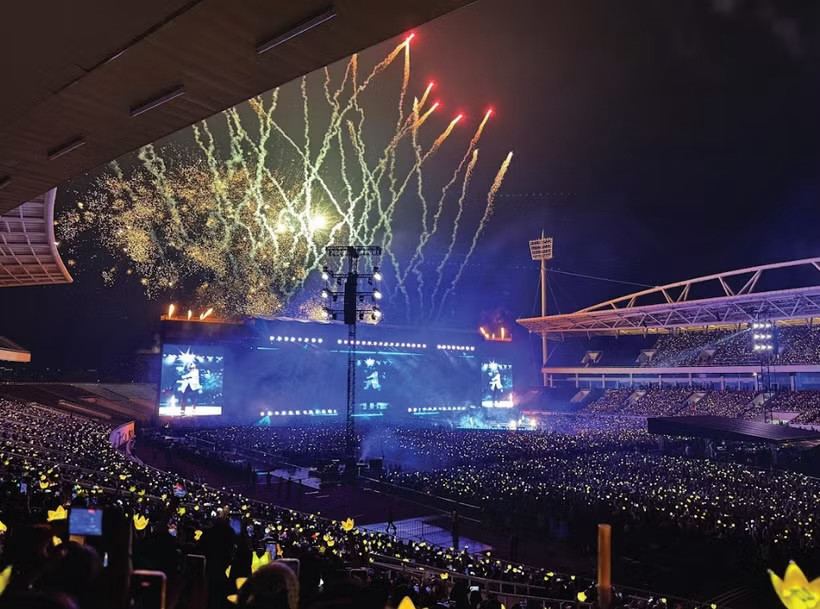
A concert may last only a few hours, but its impact can resonate far beyond the final song. Since the summer of 2023, when BlackPink electrified My Dinh Stadium, to BigBang's two performances in Hanoi on October 24 and 25, Vietnam has increasingly become a destination for international concert tours.
The vast crowds and thousands of voices singing together bring excitement and joy. But beyond those unforgettable moments lies a more important question: What will we do with this opportunity?
BlackPink's two Hanoi concerts in 2023 sold 67,443 tickets and generated more than VND330 billion (approximately $12.7 million) in ticket revenue, according to Touring Data.
During the two concert days, the Hanoi Department of Tourism estimated total visitor spending across the city at around VND630 billion ($24.2 million). This represented overall tourism revenue during the period, not revenue generated directly by the concerts alone.
Even so, the spillover effects on accommodation, transportation, restaurants and shopping were clear. Westlife, Maroon 5, 2NE1 and G-Dragon subsequently brought their performances to Vietnamese audiences.
For BigBang, the significance goes beyond the approximately 90,000 attendances recorded across two nights at My Dinh Stadium, according to the organizers.
The reunion of G-Dragon, Taeyang and Daesung during the group's 20th-anniversary tour also rekindled memories of youth for generations of fans.
Music is more than a consumer product. It nurtures communities, emotions and the desire for shared experiences.
That is the distinctive power of cultural industries: They transform emotional and spiritual value into social appeal, which can then generate economic value.
Yet we must distinguish between becoming an attractive stop on international concert tours and building a strong domestic music industry.
In the first scenario, Vietnam provides audiences, venues and supporting services. In the second, we also develop artists, creative works, brands, technologies, businesses and intellectual property capable of reaching global markets.
Being chosen by international stars is encouraging. Having our own stars chosen by audiences around the world would mark a far more significant stage of development.
That is why we need to move beyond thinking about individual events and begin building an integrated live entertainment ecosystem.
A major concert should connect music with tourism, hospitality, food, fashion, media and the nighttime economy.
Alongside concert tickets, audiences could be introduced to heritage tours, creative spaces and distinctive Vietnamese cultural products.
Businesses and local authorities should facilitate cooperation across these sectors.
When that happens, visitors who initially come for an international star may discover more reasons to stay, explore Vietnam and eventually return.
To achieve this ambition, however, we must address several practical bottlenecks.
Vietnam still lacks enough performance venues that meet international standards. Transportation and supporting services are not always well coordinated, while event approval procedures need to become more streamlined.
Crowd management and emergency response capabilities must also become more professional.
The ticketing market needs greater transparency to curb speculation and fraud. Relationships among artists, producers, event organizers and distribution platforms should be governed by clear contractual standards.
Poorly managed events can damage the reputation of an entire destination.
I am particularly concerned about intellectual property.
The economic value of music extends far beyond ticket sales. It also includes songwriting copyrights, related rights, recordings, livestreaming, licensed merchandise and the long-term commercial exploitation of brands.
If creators' rights are not adequately protected and revenues are not shared fairly, businesses will struggle to make sustainable investments.
We need to train producers, artist managers, sound engineers and market specialists.
Artistic inspiration must be supported by technology, professional knowledge and effective management.
Another essential priority is ensuring that welcoming international stars goes hand in hand with nurturing our own artists and cultural brands.
Concerts by Vietnamese performers, locally branded music festivals and productions combining traditional cultural elements with contemporary artistic expression all have the potential to become competitive cultural products.
We should not treat traditional music and popular music as opposing forces.
Through creativity, storytelling and technology, Vietnamese melodies, instruments and cultural narratives can find new life on modern stages.
Our ambition should not be limited to building a large consumer market. We must also create distinctive products that carry Vietnamese identity and have the power to win audiences beyond our borders.
Resolution No. 80-NQ/TW, issued by the Politburo on January 7, 2026, sets a target for cultural industries to contribute 7% of Vietnam's GDP by 2030 and 9% by 2045.
These targets require culture to become a genuine driver of national development.
As the National Assembly considers the draft Law on Cultural Industry Development, I believe Vietnam needs breakthrough mechanisms to mobilize private investment, develop performance infrastructure, protect intellectual property, support innovation, train skilled professionals and bring Vietnamese cultural products to international markets.
The state should create a favorable environment, while businesses, artists and creative communities must be given the freedom and opportunities to realize their potential.
What I hope to see after BlackPink, BigBang and other major concerts is not simply more brightly illuminated stadiums or sold-out shows.
I look forward to the day when audiences from across the region travel to Vietnam specifically to enjoy Vietnamese performers, attend music festivals built around Vietnamese brands and return home with memorable stories about our country.
When that day comes, Vietnam will no longer merely welcome the cultural influence of the world. It will also contribute its own cultural appeal to global audiences.
The stage lights may go dark after each performance, but the value created through a well-developed cultural industry can continue to shine for generations.
Assoc. Prof. Dr. Bui Hoai Son
(Deputy Head of the Party Central Committee's Commission for Information, Education and Mass Mobilization)

