 Vietnamnet.vn

 Podcast



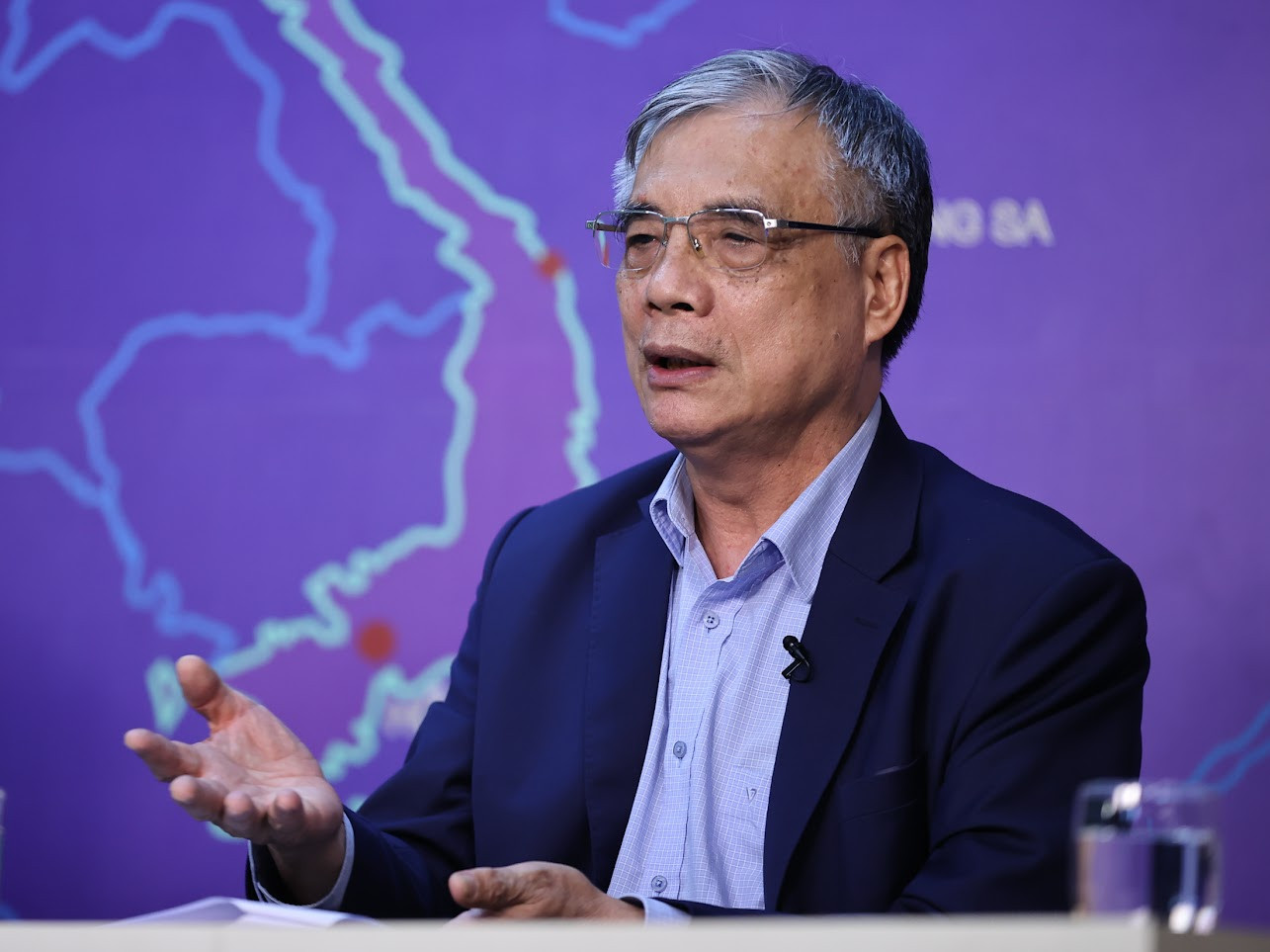
After nearly eight years of implementing Resolution 36, according to Dr. Tran Dinh Thien, a respected economist, the most important thing is not just exploiting natural resources, but shifting the mindset to view the sea as a strategic development space, opening a new economic structure for the country.
Resolution 36 on the Strategy for Sustainable Development of Vietnam's Marine Economy has been implemented for eight years. In your opinion, what is the most important thing this resolution has brought?
The biggest thing that Resolution 36 has brought, in my opinion, is not just shaping a development program, but a fundamental change in perception regarding the marine economy.
Previously, we viewed the sea as a "resource storehouse," mainly serving the "maximum exploitation" for GDP growth. Speaking of the sea meant thinking of oil and gas, seafood, tourism, or seaports. That was an approach based on individual sectors and fields.
Resolution 36 places the sea in a completely different position: the sea is a survival space, a development space, and a strategic space linked to the national future. This approach aligns with the trend of the modern times, considering the 21st century as the Century of the Ocean.
This is an exceptionally important perceptional shift. Because in the 21st century, a country's advantage is no longer decided mainly by its mainland area, which is becoming increasingly cramped, or underground resources, which are increasingly scarce.
With the advancement of technology and the globalization trend, that advantage depends more and more on the ability to exploit open spaces, especially the ocean. Just like the sky or digital space, the sea becomes a place connecting the world's flows of trade, capital, technology, data, and energy. Whichever nation knows how to organize and master those flows will create superior development advantages.
In that context, Resolution 36 has opened a new way of looking at things: the sea is not the fringe of the economy but becomes one of the centers of the national development strategy. The resolution expands the vision, which in essence opens up development opportunity spaces for the rising economy.
However, changes in perception do not yet mean changes in practice. We have invested more in coastal infrastructure, developing economic zones, seaports, tourism, and energy, but basically still within the trend of "onshore exploitation" and "nearshore fishing." The ocean in its true sense remains out of reach. The sea has not truly become a growth driver as needed, possible, and expected.
In my opinion, the deep-seated cause lies in the fact that we still develop the sea according to the old mindset: fragmented by administrative boundaries and individual sectors, mainly following the "raw resource exploitation."
Every province wants to have its own port, economic zone, industrial park, and tourist area. Meanwhile, to develop a modern marine economy and a strong maritime nation, a completely different economic organization is needed: according to an open economic space, relying on modern technology, and creating value chains based on national competitive advantages.
It can be said that Resolution 36 has opened the right door. But to step through that door, the country needs a fundamental shift in institutions and development mindset. That is exactly what General Secretary and President To Lam recently emphasized when demanding innovation in maritime mindset and vision, viewing the sea as a strategic development space of the country in the new period.
You have argued many times that the sea is not just a resource, but a national development space. Why is this perspective particularly important in the current context?
I think this is the difference between two development models.
If we view the sea as a resource, the primary goal will be exploitation. We will care about how much oil and how much fish we can extract today, and how many more tourist areas we can build.
But if we view the sea as a development space, the question will be completely different. We will ask: Where will Vietnam stand in the global maritime network? Which links of the international logistics chain will Vietnamese enterprises participate in? Which technologies of the ocean economy will we master? How will the sea contribute to national competitiveness in the next few decades?
That is the difference between the physical exploitation mindset of a peasant economy and the development-enabling mindset in the high-tech era.
Reality shows that the growth room on land is gradually narrowing. The land fund is no longer abundant, urban areas face great pressure, resources are finite, and the growth model relying on cheap labor has reached its limit.
Tu Giang - Lan Anh
.svg)
