 Vietnamnet.vn

 Podcast



Vietnam's digital creators remain heavily dependent on foreign platforms to distribute their content, leaving them with limited transparency and few options when disputes arise, according to industry experts who say the country needs to build its own digital infrastructure to support the growth of its cultural industries.
The issue was highlighted during a panel discussion titled "Comprehensive Technology Applications to Advance Digital Culture", held as part of the press conference introducing Ho Chi Minh City Technology Day – Conviction 2026 on July 31.
Digital cultural industries have significant growth potential
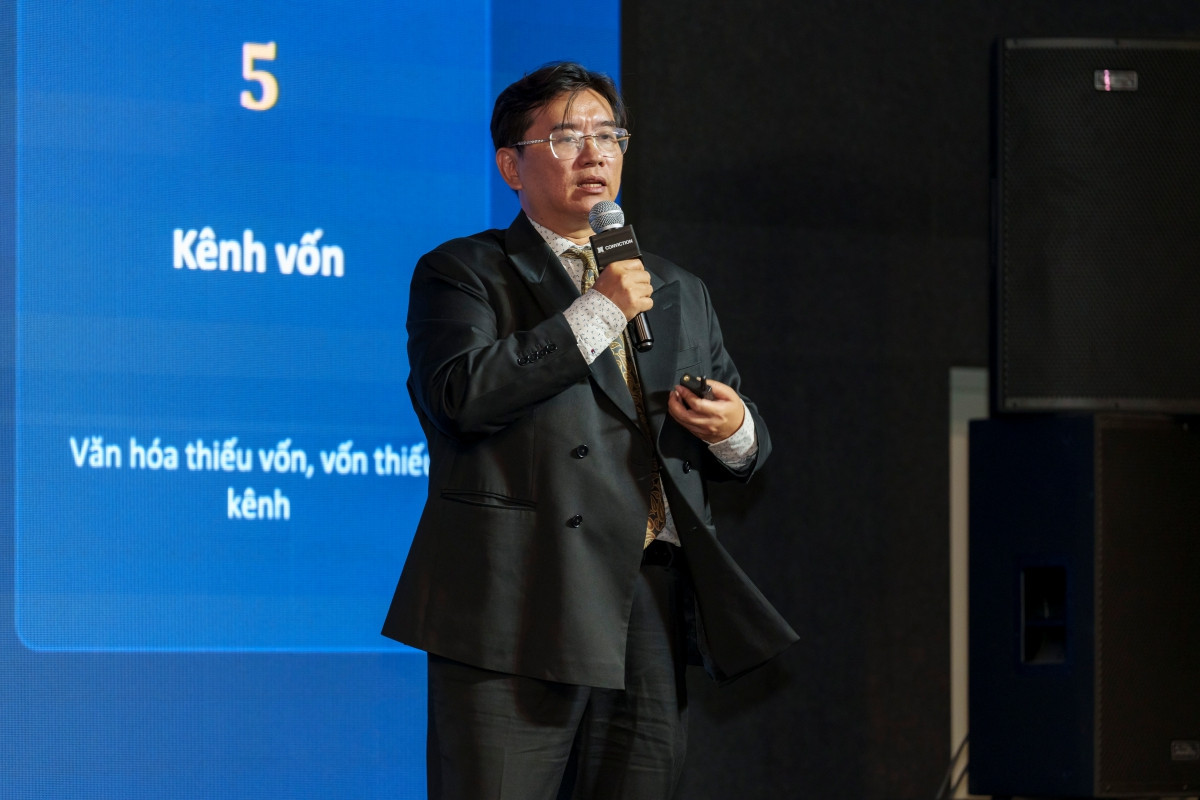
According to Phan Vu Tuan, Vice Chairman of the Ho Chi Minh City Intellectual Property Association, Vietnam's cultural industries represent one of the country's most promising economic sectors.
The sector currently contributes about 4% of Vietnam's GDP, well below the peak contribution of around 12% recorded by South Korea and approximately 11% in the United States.
Vietnam has set a long-term goal of increasing the cultural industry's contribution to 9% of GDP by 2045, with more than 80% of cultural products expected to be digital and between five and ten national cultural brands established.
A UNESCO report titled "Re|Shaping Policies for Creativity" shows that digital revenue now accounts for 35% of creators' income, compared with 17% in 2018.
However, Tuan said the growth of digital revenue has also brought structural changes, less stable incomes and increasing risks related to intellectual property protection.
He noted that market concentration among a small number of global streaming platforms and opaque content management systems has weakened the position of smaller creators.
UNESCO's research, covering more than 120 countries, concludes that rapid digital transformation, artificial intelligence, shifting global trade dynamics and growing threats to artistic freedom are reshaping cultural industries worldwide.
By 2028, generative AI is projected to reduce global revenues for music creators by 24% and audiovisual creators by 21%, underscoring the need for stronger policies to protect creative professionals.
Dependence on foreign platforms creates structural challenges
Tuan argued that one of Vietnam's biggest obstacles in developing its digital cultural industries is the lack of domestic digital content distribution platforms.
Instead, creators rely almost entirely on global services such as YouTube, TikTok and Facebook.
"As an example, Vietnam's music video industry depends almost entirely on YouTube," he said. "That means the country's entire digital music ecosystem relies on a foreign platform that operates through multi-channel networks (MCNs). When copyright disputes occur, Vietnamese regulators and legal authorities often have no direct mechanism for accessing the necessary information."
He also noted that while Vietnam has introduced regulatory sandbox programs in several industries, similar experimental frameworks have yet to be developed for the cultural sector.
According to Tuan, Vietnam could learn from South Korea by establishing city- or provincial-level regulatory sandboxes that allow innovative cultural business models to be tested before wider implementation.
Blockchain proposed as foundation for creator-owned ecosystems

Sharing a similar view, Nguyen The Vinh, co-founder and CEO of Ninety Eight & FANOS, said Vietnam's digital cultural economy remains highly dependent on international social media platforms.
Beyond hosting Vietnamese user data overseas, these platforms primarily reward content that generates high view counts rather than reflecting genuine community engagement, he said.
"We want to build a platform based on trust, passion and meaningful human connections, rather than one driven solely by view counts," Vinh said.
He believes Vietnam needs technology infrastructure developed by Vietnamese companies specifically for the country's growing fan economy.
That vision led to the development of FANOS, a specialized social platform where artists can build communities and connect directly with fans while retaining ownership of their audience data.
Unlike traditional social networks that mainly measure follower numbers, FANOS uses blockchain technology to record and verify each fan's engagement history.
Activities such as attending concerts, purchasing merchandise, interacting with artists or providing support are permanently recorded as transparent, tamper-resistant digital records.
According to Vinh, digitizing these interactions allows artists to better understand their audiences and design membership benefits, loyalty programs and fan recognition based on genuine engagement rather than simple popularity metrics.
For example, a concert ticket continues to exist as a permanent digital record after the event, contributing to a fan's long-term participation history within the platform.
Beyond strengthening artist-fan relationships, blockchain technology could also support copyright protection and intellectual property management.
The platform aims to provide digital certification for creative works, develop a Content ID system tailored to Vietnamese music and establish a more transparent copyright distribution framework once Vietnam's legal framework for digital assets is further developed.
Le My
.svg)
