 Vietnamnet.vn

 Podcast



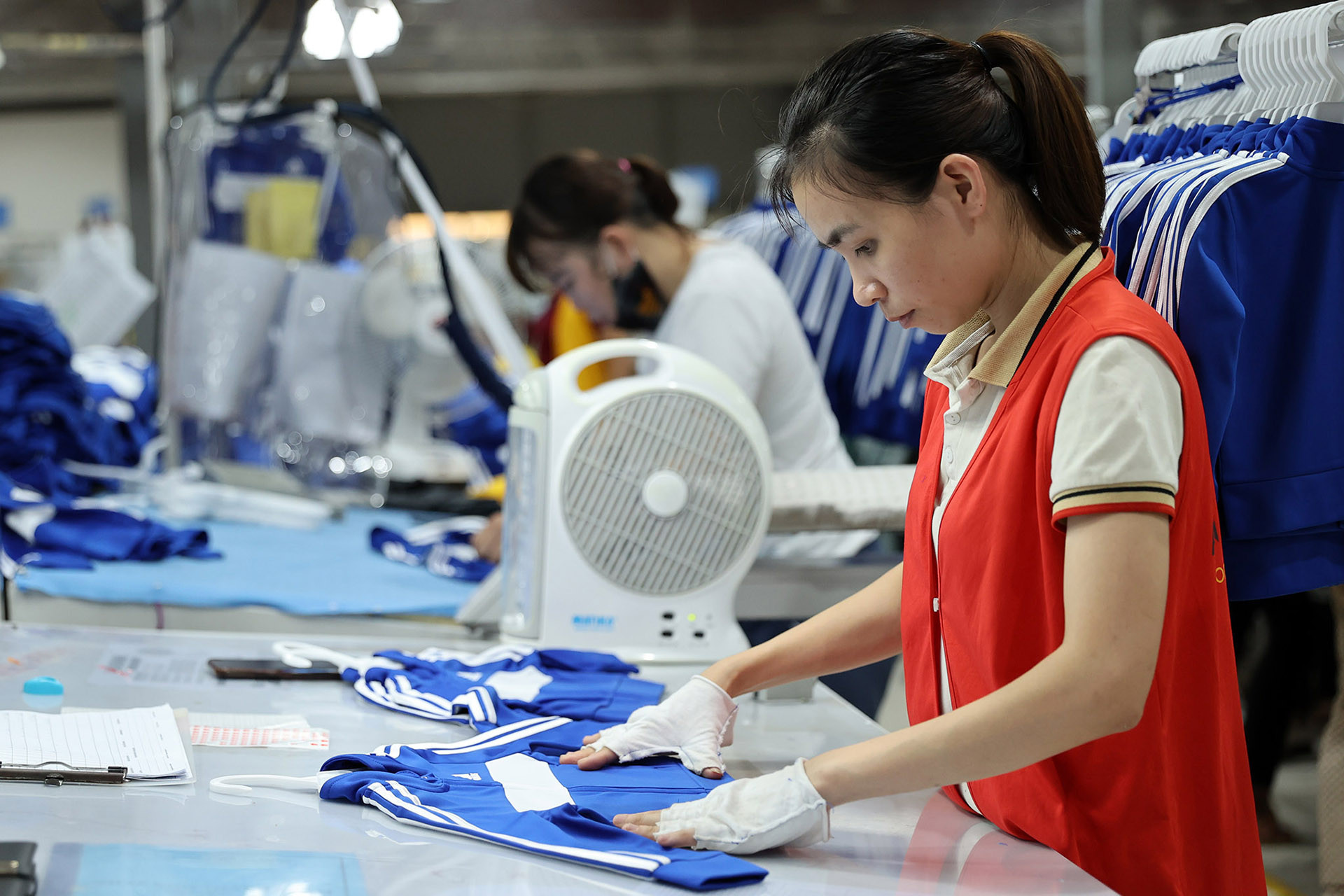
Vietnam's wealth-creation model relies heavily on exploiting readily available resources and carrying out assembly stages within global value chains where technology, design, standards, and organizational authority reside primarily abroad.
Consequently, rapid growth, high export volumes, and substantial foreign investment inflow do not automatically convert into national technological capacity, domestic corporate prowess, or innovation capabilities.
Beyond its reliance on the foreign invested economic sector, Vietnam's growth framework remains slanted toward capital expansion rather than productivity enhancement.
While the investment-to-GDP ratio has hovered around 32–34 percent over many years, the incremental capital-output ratio (ICOR) remains high and volatile, whereas the contribution of total factor productivity (TFP) stays low.
Vietnam must concurrently carry out three major transformations: turning its golden demography into human capital, transforming supply chain shifts into domestic corporate capacity, and translating technological revolutions into national creative capabilities.
Transforming golden demography into human capital
The objective cannot simply be training additional workers to meet existing job demands; it requires upgrading the entire capability structure of the labor force. Vocational training, higher education, and research must be structured with association with specific industries, technologies, and core competencies that Vietnam resolves to master.
Enterprises must actively participate in defining skill standards, designing curricula, hosting interns, and developing on-site human resources.
Simultaneously, cross-sector mobility for engineers, scientists, and managerial talent must expand among businesses, universities, research institutes, and the public sector. Knowledge generates value only when it flows freely and transforms into new technologies, products, processes, and enterprises.
The golden demographic window will yield real value only if, with each passing year, Vietnam not only expands its labor market pool but also cultivates a growing workforce of high-productivity engineers, scientists, managers, entrepreneurs, and skilled workers capable of generating and controlling economic value.
Transforming supply chain shifts into domestic corporate capacity
Investment attraction policies must shift their core focus from registered capital totals, project counts, and basic job numbers toward the quality of domestic capabilities created. Foreign investment projects must be tied directly to supplier development initiatives for Vietnamese firms, engineering training programs, joint research, and support for domestic suppliers to meet international standards.
While the State cannot impose technology transfer through administrative commands alone, it can design strong incentives that foster genuine linkages across technology, workforce, and supply networks.
Rights to access land, infrastructure, credit, incentives, and public support should be linked directly to verifiable outcomes: local procurement ratios from domestic suppliers, number of engineers trained, research expenditures, number of Vietnamese firms integrated into supply chains, and the proportion of value-added retained within the domestic economy.
Translating technological revolutions and automation into creative capabilities
If AI and automation are deployed merely to continue cutting costs in low-end contract manufacturing, Vietnam may produce items faster and cheaper yet remain trapped at lower rungs of the value chain. Conversely, if technology is harnessed to elevate capabilities in research, product design, supply chain management, market analytics, and business model innovation, it can act as a powerful multiplier for Vietnamese human capital and enterprise strength.
However, Vietnam's baseline for technology absorption and innovation remains thin. Expenditure on R&D has hovered at roughly 0.4–0.5 percent of GDP for years, remaining far below the 2 percent target set for 2030.
Notably, the FDI sector's share of total domestic R&D expenditure declined from 12.4 percent in 2017 to 10.1 percent in 2023. This drop highlights that direct FDI contributions to domestic R&D activities remain limited, while Vietnam's domestic technological absorption, innovation, and spillover capacities are not yet strong enough to convert global corporate presence into endogenous creative power.
AI can help Vietnam move faster, but it cannot determine direction independently. If development strategies remain focused on optimizing cheap labor advantages, emerging technologies could cause those advantages to evaporate sooner. If strategies prioritize building core capabilities, technology can help Vietnam compress learning curves, innovate, and progressively master higher value-added stages.
The institutional lever
The overarching lever, therefore, must be an institutional framework strong enough to ensure that every opportunity seized today leaves behind developmental capacity for tomorrow.
That institutional framework must connect education, technology, finance, investment, public procurement, and corporate development policy toward a common goal. At the same time, it must clearly define what capabilities Vietnam needs to master, where resources should be concentrated, who is responsible for results, and whether support will be continued, adjusted, or terminated based on what criteria.
Dr Pham Manh Hung (University of Economics and Business - Vietnam National University, HCMC)
.svg)
