 Vietnamnet.vn

 Podcast



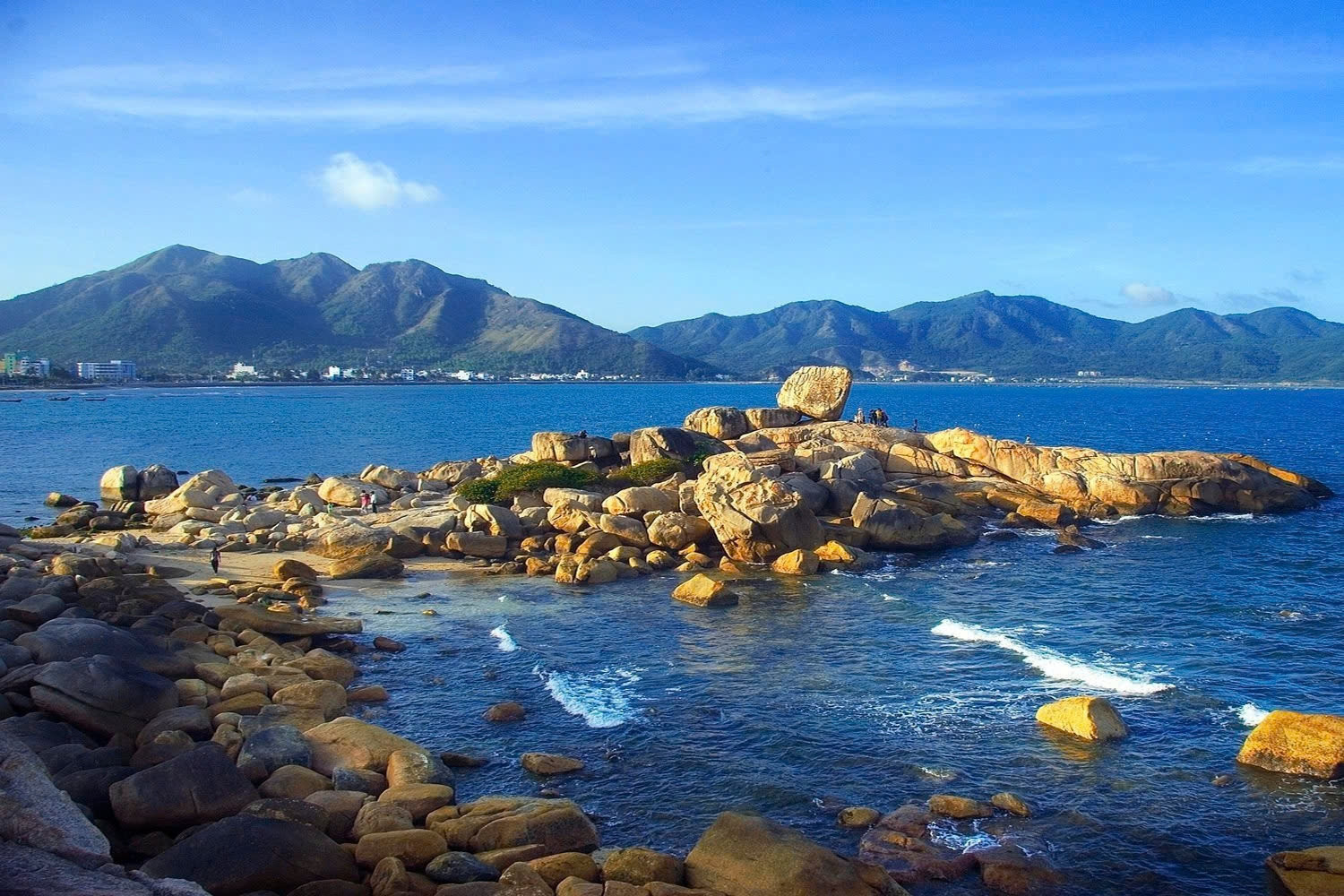
In the second part of the interview, Economist Tran Dinh Thien said that to move beyond nearshore mindsets, Vietnam needs to leverage its premier geoeconomic location, build high-quality global gateways, and transition toward a technology-driven, sustainable blue ocean economy for future generations.
If we continue to view the sea only as a place to exploit resources, we will narrow our own opportunities, he said. But if we view the sea as a new development space, we will see there not only resources but also logistics, international transportation, renewable energy, marine technology, ocean data, marine skies, finance, services, and innovation, he added.
The world has determined that the 21st century will witness a very strong shift of development drivers to the ocean, and whichever nation builds an ocean mindset early will have a long-term competitive advantage. Vietnam cannot stand outside that trend.
Vietnam has more than 3,260 km of coastline and lies on important international maritime routes. Where does Vietnam's greatest advantage truly lie: marine resources or geoeconomic location?
In my opinion, Vietnam's greatest advantage does not lie in resources, but in its geo-economic location.
Vietnam opens up to the Pacific Ocean and sits at the gateway connecting the Pacific and Indian Oceans, on the world's busiest maritime routes, and at the center of the most dynamically developing region globally. That is an advantage not many nations possess.
We often say Vietnam owns a very beautiful "frontage." But having a beautiful frontage does not mean one will automatically be rich. The deciding factor is what we do with that frontage.
If we only build a few more industrial parks or a few local ports, we have only exploited a small part of the geographical value. What we need to aim for is building "Global Gates" with logistics, finance, and maritime service centers, free trade zones, and marine cities directly connected to the global economic network, turning Vietnam's marine "frontage" into a high-class development convergence coordinate for the whole world.
That is the way to transform geographical advantages, which are essentially still just "comparative advantages," into true competitive advantages and development advantages.
The 21st century will no longer be a competition between nations with abundant resources, but between nations that know how to organize global flows of goods, capital, technology, data, and cultures. The sea is the place where those flows converge.
Therefore, in my opinion, the big question is not how much sea Vietnam has or what position it holds in the East Sea, but rather what role Vietnam will play in the ocean. When we can answer that question, we will not limit ourselves to a "nearshore fishing" mindset, but will determine our position in the world economy for many decades to come.
Resolution 36 prioritizes the development of marine tourism and services, the maritime economy, offshore renewable energy, and new marine economic sectors, instead of just focusing on resource exploitation. In your opinion, what does this change reflect?
In my opinion, this is a very fundamental transformation in the development model, from a development method relying on physical resource exploitation to creating an economy based on services, high technology, and creative intelligence.
For many decades, we mainly exploited what the sea had readily available. If there was oil, we extracted oil; if there was fish, we caught fish; if there was a beautiful beach, we did tourism. That is a development model relying on natural resources.
But resources always have limits. The deciding factor for the strength of a modern economy is no longer how many resources it can extract from nature, but how much value it can generate from knowledge, technology, and organizational capability.
That is also the spirit of Resolution 36.
What needs to be exploited is no longer just oil and gas or fisheries, but the entire marine economic space, inside the sea, under the seabed, on the sea surface, including the marine sky, and in the economic activities taking place in connection with the sea.
An international transshipment port can create much more long-term value than a mine that will eventually run dry. A logistics center, a free trade zone, an offshore energy industrial cluster, or an ocean research center are all assets capable of generating profits for many generations.
The world today no longer talks much about "marine economy" in the sense of exploiting the sea. People talk much more about "ocean economy" or "blue economy," meaning an ocean economy based on technology, innovation, green economy, and sustainable development.
Tu Giang - Lan Anh
.svg)
