 Vietnamnet.vn

 Podcast


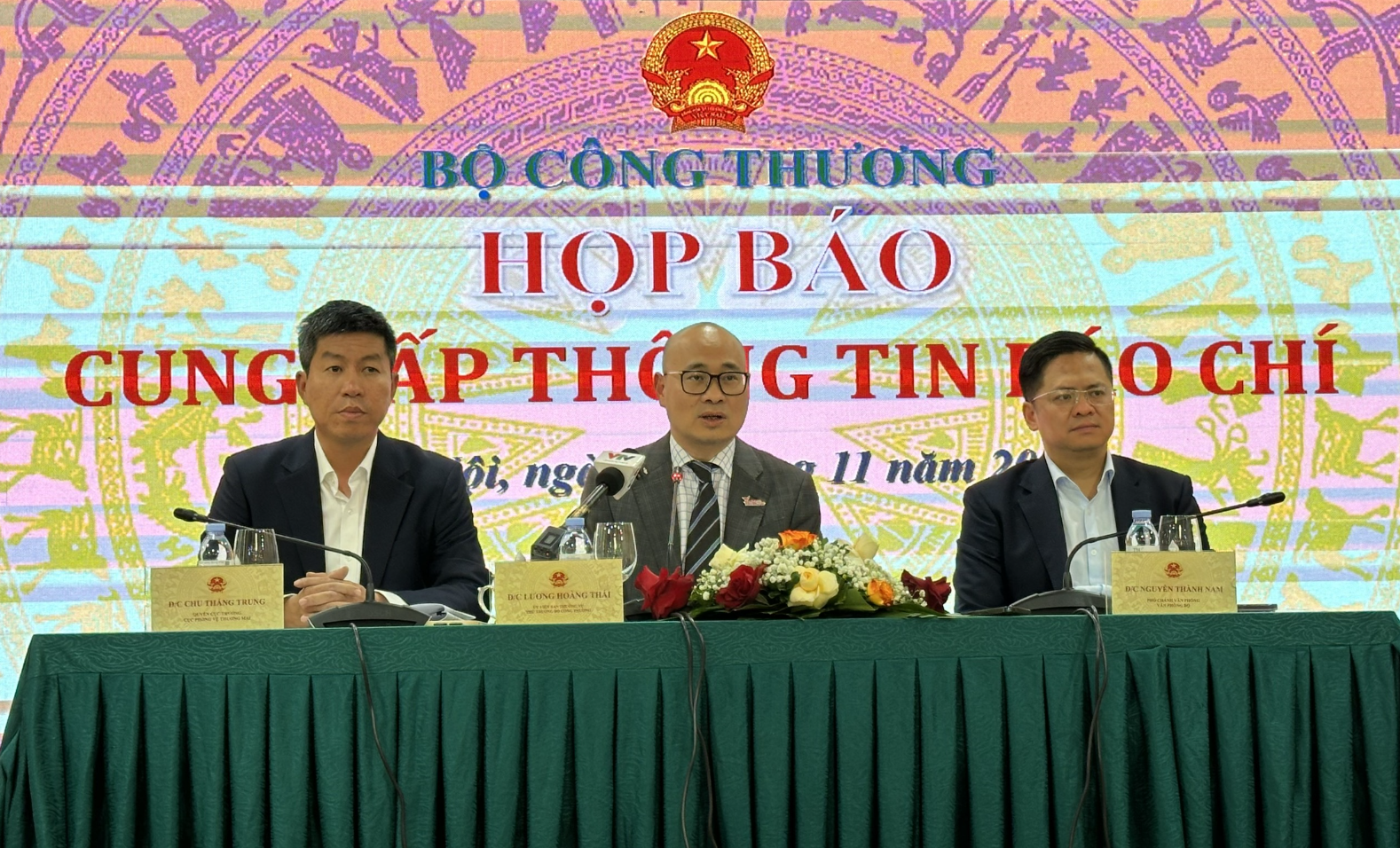
On the afternoon of November 26, the Ministry of Industry and Trade (MoIT) held a press briefing on the preliminary findings released by the Office of the United States Trade Representative (USTR) in its investigation under Section 301 of the US Trade Act of 1974.
Speaking at the briefing, Deputy Minister of Industry and Trade Luong Hoang Thai stressed that the USTR report contained only preliminary findings and did not constitute a final decision.
Under US legal procedures, countries, business communities and other stakeholders can still provide information and submit responses before the competent authorities determine which measures to impose.
Notably, the preliminary report proposed two tariff rates for Vietnam. The maximum rate could reach 35%, while a lower rate of 20% could be considered if the two countries sign an Agreement on Reciprocal, Fair and Balanced Trade (ART).
Thai emphasised that neither rate had been officially imposed on Vietnamese goods. The final outcome would depend on information submitted by relevant parties, consultations and further discussions between the two countries.
Vietnam offers the highest possible commitments in US trade talks
Responding to questions about the prospects of reaching a reciprocal trade agreement, Thai said Vietnam was pursuing two parallel channels of engagement with the US.
The first involves participating in the Section 301 investigation. Vietnam has already provided substantial information and worked closely with US authorities.
The MoIT will continue to submit additional information and official comments, and participate in public hearings.
The ministry will also coordinate with industry associations and the Vietnamese and US business communities to provide investigators with comprehensive, accurate and objective information.
Thai noted that Vietnam was not the only country affected by the investigation.
At a recent international conference, he held discussions with representatives of several economies, including members of the Comprehensive and Progressive Agreement for Trans-Pacific Partnership (CPTPP), several ASEAN countries and the European Union (EU).
According to the deputy minister, the countries consulted expressed disagreement with the USTR’s allegations concerning excess production capacity and the use of these allegations as a basis for proposing high tariffs.
The second channel involves continuing negotiations on a reciprocal, fair and balanced trade agreement between Vietnam and the US.
Thai said both sides had been working towards the agreement for some time. Throughout the negotiations, Vietnam had proactively offered commitments equivalent to, or even exceeding, those made under its existing free trade agreements (FTAs).
These commitments provide a favourable basis for the two countries to conclude negotiations and move towards signing the agreement.
“Vietnam has offered commitments at the highest possible level, demonstrating maximum goodwill throughout the negotiation process,” he said.
Thai described these unprecedented commitments as a favourable foundation for both sides to reach consensus soon. However, the timing of the conclusion of negotiations would depend on further reviews and mutual agreement.
Regarding whether the US would impose a 35% tariff or reduce it to 20%, Thai said the decision rested with US authorities.
Vietnam would continue discussions, provide relevant information and advance negotiations to secure the most favourable outcome possible.
Exporters urged to prepare for multiple tariff scenarios
Alongside the Government’s negotiation efforts, the deputy minister advised businesses to proactively develop contingency plans in response to changes in US trade policy.
He noted that the impact of tariff measures would vary across industries. Businesses should therefore assess the specific risks facing their products and markets rather than relying solely on the proposed headline tariff rates.
According to information released by the MoIT, the USTR has proposed an exemption list covering 2,121 product categories identified by eight-digit Harmonised System (HS) codes.
Certain products, such as tea and coffee, could qualify for exemptions, meaning their exposure to tariff risks would differ from that of non-exempt products.
For certain computer and electronic products already subject to measures or investigations under Section 232, the application of Section 301 tariffs would also require separate consideration.
Thai cautioned that these provisions remained under review and should not be regarded as final decisions.
In addition to the investigation into excess production capacity, the US is conducting other Section 301 investigations involving products made using forced labour and intellectual property issues.
Regarding the forced labour investigation, the US has decided to impose an additional tariff of 12.5% on Vietnamese goods, subject to specified exemptions.
However, US authorities have yet to determine whether the proposed tariffs arising from the excess capacity investigation would be imposed on top of the 12.5% duty or already incorporate it.
Vietnam strengthens trade risk management
In response to these developments, Thai said the Government had proactively developed a framework for managing trade risks.
On November 21, the Government issued a resolution on a comprehensive plan to manage trade surpluses and mitigate risks in reciprocal trade during the 2026-2030 period.
The plan provides a basis for ministries and agencies to coordinate measures addressing fluctuations in international trade while supporting businesses in managing risks.
The MoIT will continue working with relevant agencies, particularly through the early warning activities of the Trade Remedies Authority of Vietnam, to provide information and help businesses develop appropriate response strategies.
Thai noted that despite increasingly complex international trade conditions and frequent changes in US tariff policies, Vietnam’s import and export performance had remained positive.
The country’s total import-export turnover is projected to reach $1.2 trillion in 2026, exceeding the assigned target.
The ministry reaffirmed its commitment to working with relevant ministries, agencies and the business community to minimise the adverse effects of trade measures and sustain export growth in the coming period.
Tam An

