 Vietnamnet.vn

 Podcast



On behalf of the Politburo, General Secretary and State President To Lam has signed and issued Resolution No. 16 on the construction and development of Dong Nai City through 2035, with a vision to 2065.
The Politburo assessed that Dong Nai City's development has yet to meet its potential, advantages and emerging requirements.
It attributed these limitations partly to mechanisms, policies and traditional growth drivers that have failed to create breakthroughs in mobilizing and effectively using resources, particularly new development opportunities and advantages.
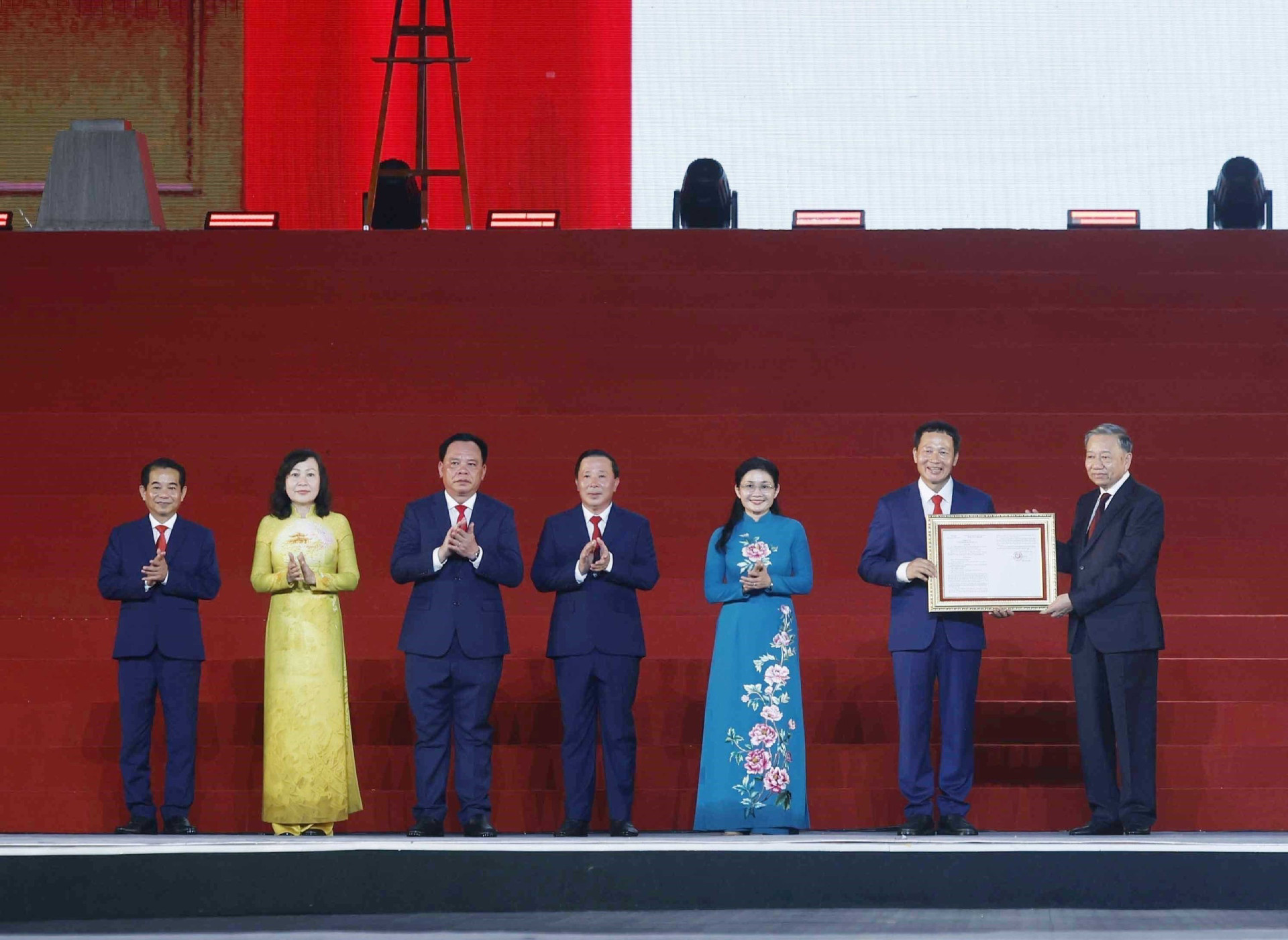
The Politburo affirmed that building and developing Dong Nai City is the responsibility of the entire Party, people, armed forces and political system.
The city's planning and development must be based on renewed thinking and a long-term strategic vision, featuring open development space, multidirectional transport infrastructure and a modern, multilevel and multicenter urban structure.
River systems and natural ecosystems are expected to serve as the principal landscape axis.
Dong Nai must become a multifunctional growth pole with a leading role in aviation and aerospace industries, high-tech manufacturing, logistics, border trade, high-tech agriculture and innovation.
Its development will capitalize on the strategic position of an "airport city" with global connectivity, aiming to reach the level of major airport cities in the region and worldwide.
Ambitious targets through 2065
By 2035, Dong Nai aims to become a green and smart city developed under airport-city, riverside, multicenter and multipurpose urban models.
It is expected to house internationally standardized centers for high-tech manufacturing, aviation and aerospace industries, and the aviation economy, while providing residents with high incomes and a civilized, safe and happy society.
By 2045, Dong Nai is expected to become a modern aviation center in the Asia-Pacific region and a dynamic knowledge-based economic hub.
The city is expected to achieve a high Human Development Index, modern urban governance and a civilized, safe, livable and happy society.
By 2065, Dong Nai is envisioned as a globally connected city with a high standard of living and level of happiness, ranking among the world's multifunctional airport cities.
For 2026-2030, the Politburo has set an annual gross regional domestic product growth target of at least 10%.
By 2030, Dong Nai's GRDP is expected to reach USD44 billion, with GRDP per capita of USD9,200. The digital economy should account for at least 30% of GRDP, while the urbanization rate is targeted at 65%.
During 2031-2035, annual GRDP growth is also expected to remain at 10% or higher.
By 2035, GRDP is projected to reach USD70 billion and GRDP per capita USD13,000, approaching the level of developed cities in the region. The digital economy is expected to contribute at least 40% of GRDP.
For 2036-2045, annual GRDP growth is again targeted at no less than 10%.
By 2045, Dong Nai's economy is expected to reach USD150 billion, with GRDP per capita of USD23,000, placing it among the region's higher-income localities. The contribution of the digital economy is expected to continue increasing.
Between 2046 and 2065, annual GRDP growth is targeted at at least 8%.
By 2065, the city's GRDP is projected to reach USD600 billion, with GRDP per capita of USD67,500.
Special mechanisms for Dong Nai
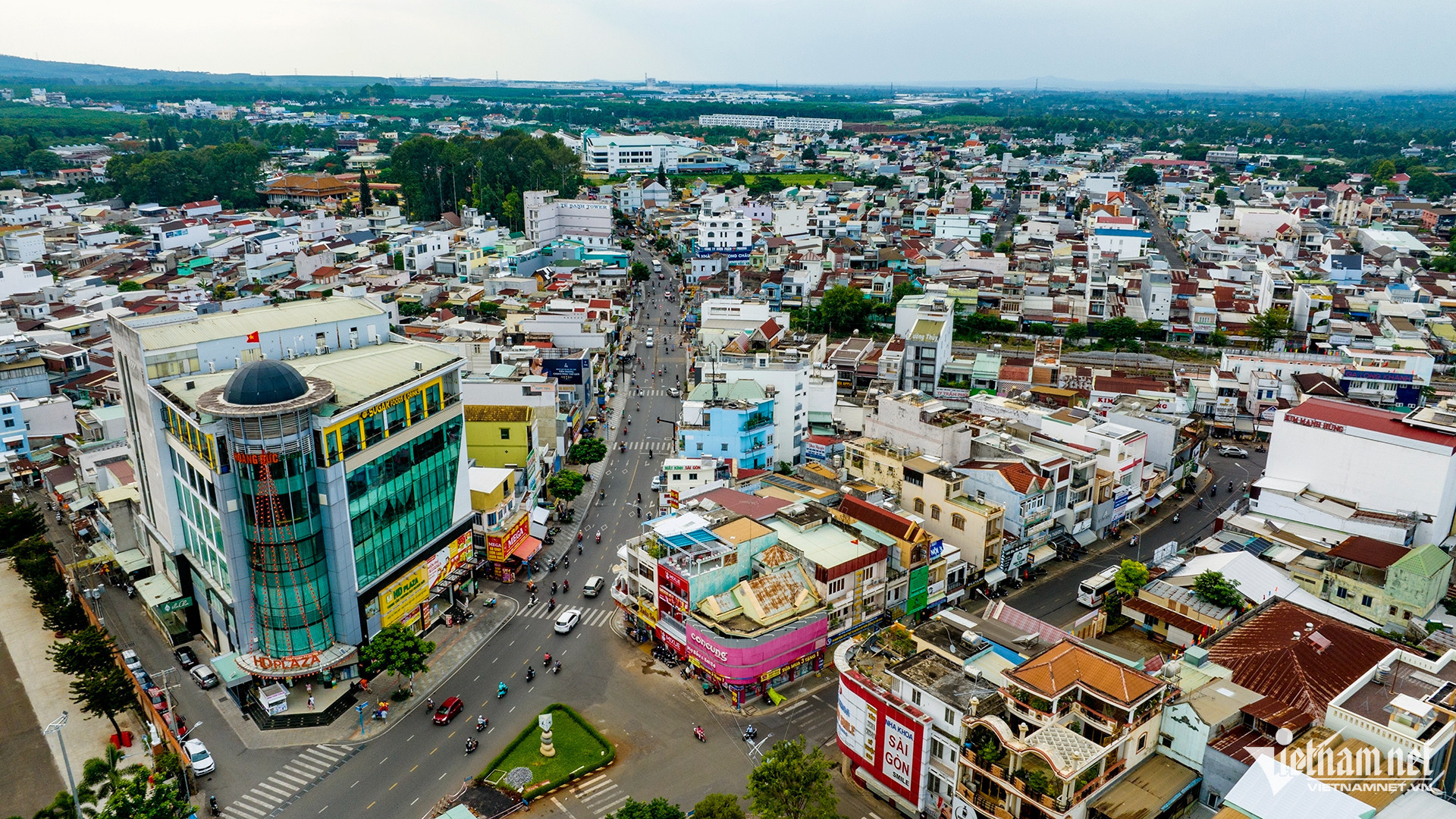
Resolution No. 16 outlines eight major groups of tasks and solutions to achieve these objectives.
The first is strengthening and reforming the Party and political system.
The second is planning Dong Nai's development with a long-term strategic vision.
The Politburo proposed several principal development corridors.
The Ho Chi Minh City - Bien Hoa urban area - Long Thanh urban area - Phuoc An port complex corridor will focus on aviation, seaports, logistics and modern services.
The Bien Hoa - Dau Giay - Tan Phu - Central Highlands corridor will connect industry, agriculture, ecotourism, energy and services.
The Phuoc Long - Dong Xoai - Chon Thanh - Hoa Lu - Cambodia - mainland ASEAN corridor will serve as a border-gate, cross-border trade, logistics and supporting-industry axis.
The Long Thanh - Lam Dong - South Central Coast and Central Highlands corridor will link aviation, seaports, highland areas and the coast.
The Dong Nai River will be planned and developed as the city's strategic spatial axis, serving as the center of its ecology, culture, landscape and urban development.
The third task is establishing breakthrough institutions and policies to mobilize resources for Dong Nai's development.
The city will receive extensive decentralization and delegation of authority in most sectors, except national defense, security, foreign affairs and religion.
Authority and accountability for leaders at all levels will be strengthened alongside mechanisms for controlling the exercise of power.
Dong Nai will also be prioritized for the application of more favorable legal provisions in certain fields, in accordance with local characteristics and the law.
The Politburo has allowed the city to apply special mechanisms and policies similar to those used in Ho Chi Minh City in selected areas.
These include investment, finance, budgeting, land, construction, planning, urban development, the environment, strategic investors, science and technology, innovation, digital transformation, high-quality human resources, staffing, job positions, policies for public employees, border economies and ethnic minority and mountainous areas.
Dong Nai will be permitted to establish and develop special economic zones, free trade zones, concentrated digital technology zones, innovation districts and higher education zones linked to the Long Thanh airport city.
These facilities are intended to help the wider airport region meet international standards.
Developing a comprehensive aviation ecosystem
The fourth task is the coordinated development of the aviation ecosystem.
The Politburo requested the comprehensive development of Long Thanh airport city and surrounding areas within a network connecting the Southeast, Mekong Delta, South Central Coast and Central Highlands regions, as well as cross-border economic corridors.
The airport city is expected to become a major growth engine with broad spillover effects across Dong Nai.
The Politburo also called for progress to be maintained on phase two of Long Thanh International Airport, the Bien Hoa - Vung Tau railway, airport access routes and interregional infrastructure.
The central objective is to develop Long Thanh International Airport into Vietnam's principal international aviation gateway, an international transit hub and a strategic node in regional and global supply chains.
Infrastructure in the airport region and the Long Thanh - Nhon Trach urban area will be planned to accommodate an urban population of at least 2.5 million people.
The aim is to establish an internationally standardized airport city and transit-airport region.
The fifth task is developing strategic infrastructure and modern urban spaces.
The sixth is establishing a new growth model based on science, technology, innovation and digital transformation, while developing key economic sectors.
The seventh is the comprehensive development of Dong Nai's culture, education, healthcare and people.
The final task is safeguarding national defense, security and social order, while improving the effectiveness of foreign affairs.
Tran Thuong
.svg)
