 Vietnamnet.vn

 Podcast



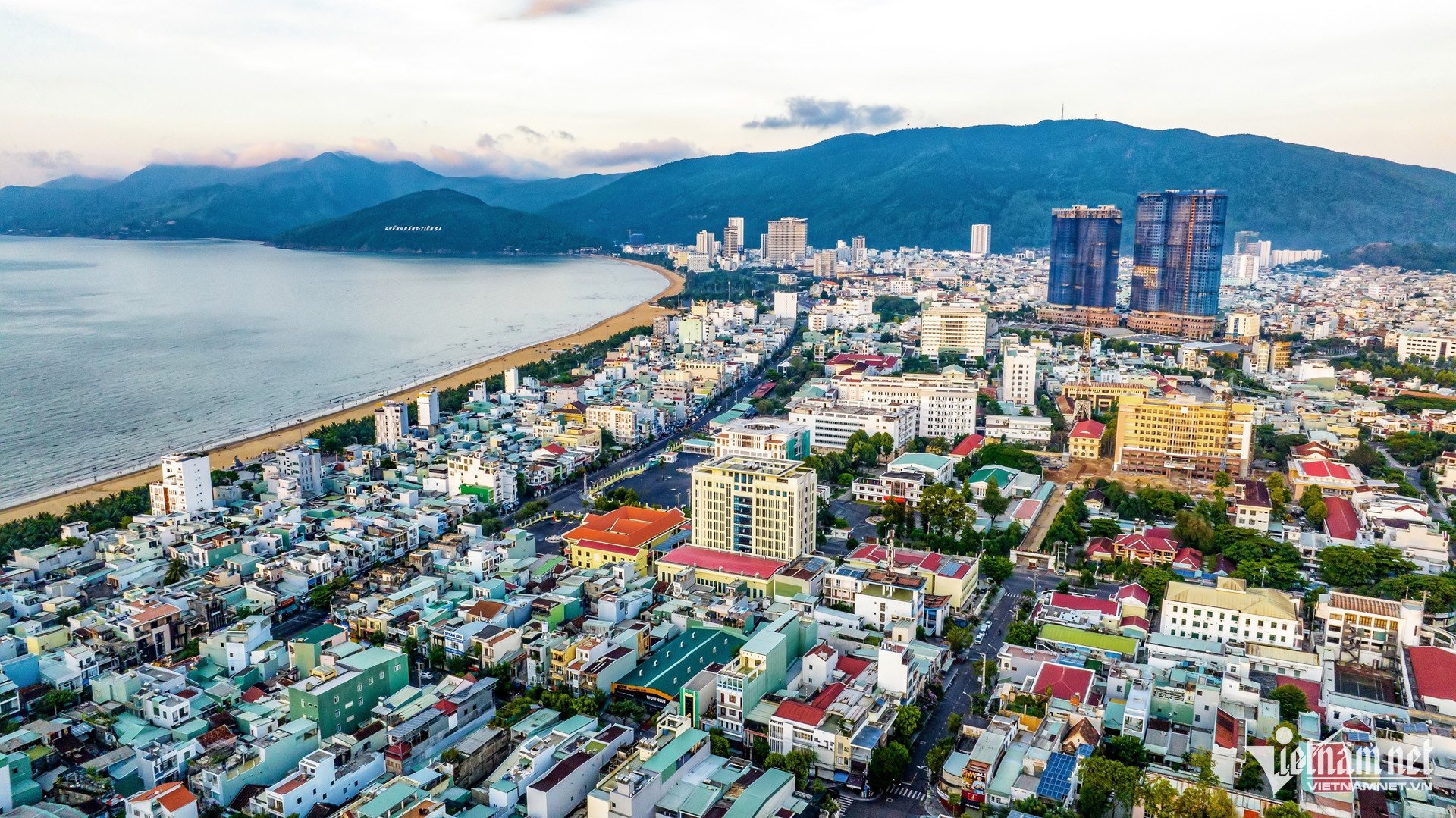
The Politburo stressed that regional development should serve as a way to organize national growth, restructure development space, allocate resources and strengthen Vietnam’s competitiveness in the new context.
It called for sweeping changes to development and growth models, shifting from reliance largely on existing resources toward creating, leading, unlocking and activating all available resources. Domestic strengths should remain the fundamental, strategic, long-term and decisive foundation, combined effectively with external resources to ensure rapid and sustainable development and build an independent, self-reliant and highly resilient economy.
The Politburo called for Vietnam’s national development space to be reorganized as a unified whole, with the role, position, functions, advantages, identity and development mission of each region clearly defined within the country’s broader sustainable development strategy.
It set specific targets for 2030 and 2045 across Vietnam’s six socio-economic regions, alongside groups of tasks and solutions to achieve them.
The first group of tasks focuses on organizing regional development space and effectively implementing regional planning.
The Politburo called for a shift away from organizing development primarily around the administrative boundaries of provinces and cities. Instead, development should be based on functions, potential, comparative advantages, natural resources and environmental conditions, together with regional, sectoral, subregional and local linkages as defined in planning.
This group of tasks also includes forming and developing economic corridors that effectively connect key economic regions and national growth poles, making better use of new development space created following the reorganization of administrative units. Regional development space, including subregions and individual localities, should be arranged in line with the functions, responsibilities and objectives of growth poles.
The second group of tasks is to comprehensively improve institutions for regional development. Intersectoral and interregional projects of national strategic importance must have a unified coordination mechanism and a single body responsible for their implementation.
The third group of tasks involves renewing the growth model and creating and developing new regional economic drivers.
The Politburo called for the development of the data economy, green economy, circular economy and digital economy, with science, technology, innovation and digital transformation serving as the main drivers and a consistent thread running through regional development.
Regions should identify new growth engines linked to stronger digital, green and energy transitions, as well as changes in economic structure and improvements in the quality of human resources.
The marine economy should be developed in a modern and highly competitive direction, while marine resources and space should be managed and used efficiently and sustainably in tandem with environmental protection and the conservation of marine ecosystems.
Railways, energy projects, urban infrastructure, seaports and digital infrastructure should be developed alongside domestic industries, including construction, mechanical engineering, metallurgy, new materials, electrical equipment, signaling systems, automation, software, design consulting and operational management.
At least five internationally competitive cities by 2045
The fourth group of tasks focuses on developing modern, coordinated and interregional socio-economic infrastructure.
Different types of infrastructure should be organized in an integrated manner along economic corridors and regional development spaces. The Politburo called for balanced development across economic and social infrastructure, digital and data infrastructure, science, technology and innovation, while ensuring socio-economic infrastructure is climate-resilient and coordinated with healthcare, cultural, educational and sports facilities.
It proposed prioritizing investment in a new generation of backbone North-South infrastructure and East-West corridors.
The North-South axis would integrate roads, railways, energy infrastructure, fiber-optic networks and logistics, connecting them with new urban areas and industrial and service centers. East-West corridors would connect inland regions with seaports, border gates and regional logistics networks.
The Politburo also called for greater investment in railway links to major seaports, international railway connections, urban railways and regional rail networks, particularly the North-South high-speed railway.
The fifth group of tasks focuses on developing a modern urban system and regional growth poles.
The Politburo called for investment in major cities and growth poles so they can play a stronger role in creating, leading and spreading development along urban-industrial-service corridors.
The resolution gives priority to developing the country’s two largest growth poles: the Hanoi metropolitan region and the Ho Chi Minh City metropolitan region.
It also calls for mechanisms and policies to encourage selected localities to become centrally governed cities, enabling them to serve as regional growth poles and strengthen connections within regions, between regions, and with regional and international networks.
The Politburo has set a target of developing at least five cities of international stature by 2045, serving as major hubs connecting Vietnam with regional and global networks.
The subsequent groups of tasks include developing high-quality human resources; accelerating science, technology, innovation and digital transformation; advancing cultural and social development and ensuring comprehensive social welfare; protecting the environment and adapting to climate change; strengthening national defense and security; and expanding foreign relations and international integration.
The final group of tasks focuses on building and rectifying the Party and the political system.
The Politburo called for improvements to the organization and operating model of local governments at all levels to reflect the characteristics of each region and the particular conditions of rural, urban, mountainous and special administrative areas.
Decentralization and delegation of authority should be strengthened under the principle that localities make decisions, carry them out and take responsibility for the results.
The Politburo also stressed the need to ensure that the administrative apparatus operates closer to the people, responds more quickly and efficiently, and better reflects the practical needs of each locality.
It called for the recruitment, training, development and cultivation of officials at all levels who have the necessary integrity, capacity and talent, with particular emphasis on standardization, rejuvenation and professionalization.
Tran Thuong
.svg)
