 Vietnamnet.vn

 Podcast



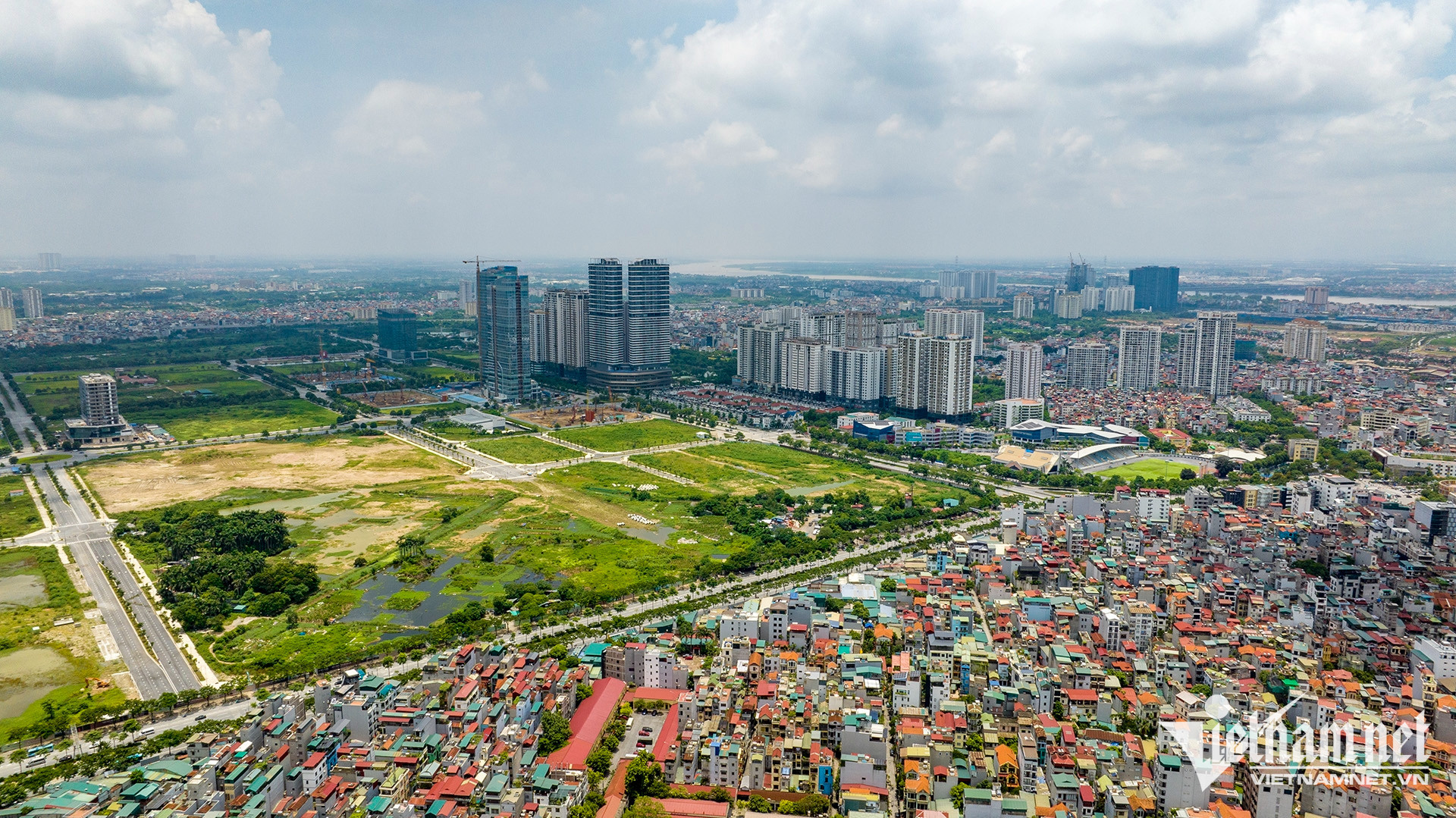
The Politburo has instructed the Government Party Committee to direct the Party Committee of the Ministry of Agriculture and Environment, in coordination with relevant agencies, to urgently conduct a review of the implementation of Resolution No. 18 adopted by the 13th Party Central Committee.
The resolution focuses on continuing to reform and improve institutions and policies governing land management and land use, with the goal of helping Vietnam become a high-income developed country.
The review is expected to provide the basis for proposing fundamental changes to land policies for consideration and comment at the third plenary session of the 14th Party Central Committee.
Based on the outcome of that process, amendments to the Land Law will be proposed and submitted to the National Assembly for consideration and approval.
At the same time, authorities will continue reviewing, supplementing and refining the adjusted national land-use plan, while reporting any matters beyond their authority to the Politburo.
Land-use plan to be approved before July 1
The Politburo has assigned the Government Party Committee, its secretary and the Prime Minister to incorporate comments from the Politburo and the Secretariat to finalize the proposal.
The adjusted national land-use plan must be approved in accordance with legal procedures before July 1, 2026.
Authorities have also been instructed to continue addressing practical difficulties arising during implementation while ensuring that land policies do not hinder socio-economic development.
The Politburo stressed the need to prevent policy manipulation, corruption, vested-interest groups and any attempts to legalize previous violations.
The Government Party Committee has further directed the Party Committee of the Ministry of Agriculture and Environment to urgently review areas of rice-growing land, forest land and other categories to ensure accurate and complete data for effective and efficient management.
New development demands driving review
According to the Ministry of Agriculture and Environment, nearly five years of implementing the national land-use plan have seen significant changes in socio-economic development priorities.
One of the most notable shifts is Vietnam’s ambition to achieve double-digit economic growth in the coming period, creating substantially higher demand for land across multiple sectors.
At the same time, provincial master plans and a number of national sectoral plans have been approved after the national land-use plan was adopted, generating new requirements for land allocation and management.
The latest adjustment proposal has been developed based on land-use demands submitted by all 34 provinces and centrally governed cities, national sectoral plans involving land use, regional plans and socio-economic development orientations outlined following the 14th National Party Congress.
New challenges emerge under the 2024 Land Law
The Ministry of Agriculture and Environment noted that the 2024 Land Law introduced important reforms in land management and land use.
These changes have improved transparency, strengthened public access to information and provided better protection of the legitimate rights and interests of land users.
However, implementation has also revealed a range of new issues requiring further attention.
Among them are challenges related to land-use planning, land-use plans, land recovery, compensation, support and resettlement policies, land valuation mechanisms, business access to land resources, land database development and digital transformation in the land sector.
The upcoming review is therefore expected not only to adjust land-use planning but also to provide a broader foundation for comprehensive reforms of Vietnam’s land governance framework in the years ahead.
Tran Thuong
.svg)
