 Vietnamnet.vn

 Podcast



On August 13, the National Innovation Center (NIC) under the Ministry of Finance and Thermo Fisher Scientific jointly held a forum titled “Partnering with Vietnam to realize its ambitions in semiconductors, AI and innovation.”
During the forum, the two sides signed and exchanged a memorandum of understanding (MOU) to develop a shared laboratory for semiconductor and biomedical technologies at NIC Hoa Lac, designed to meet international standards.
Solving the bottleneck in advanced equipment and infrastructure
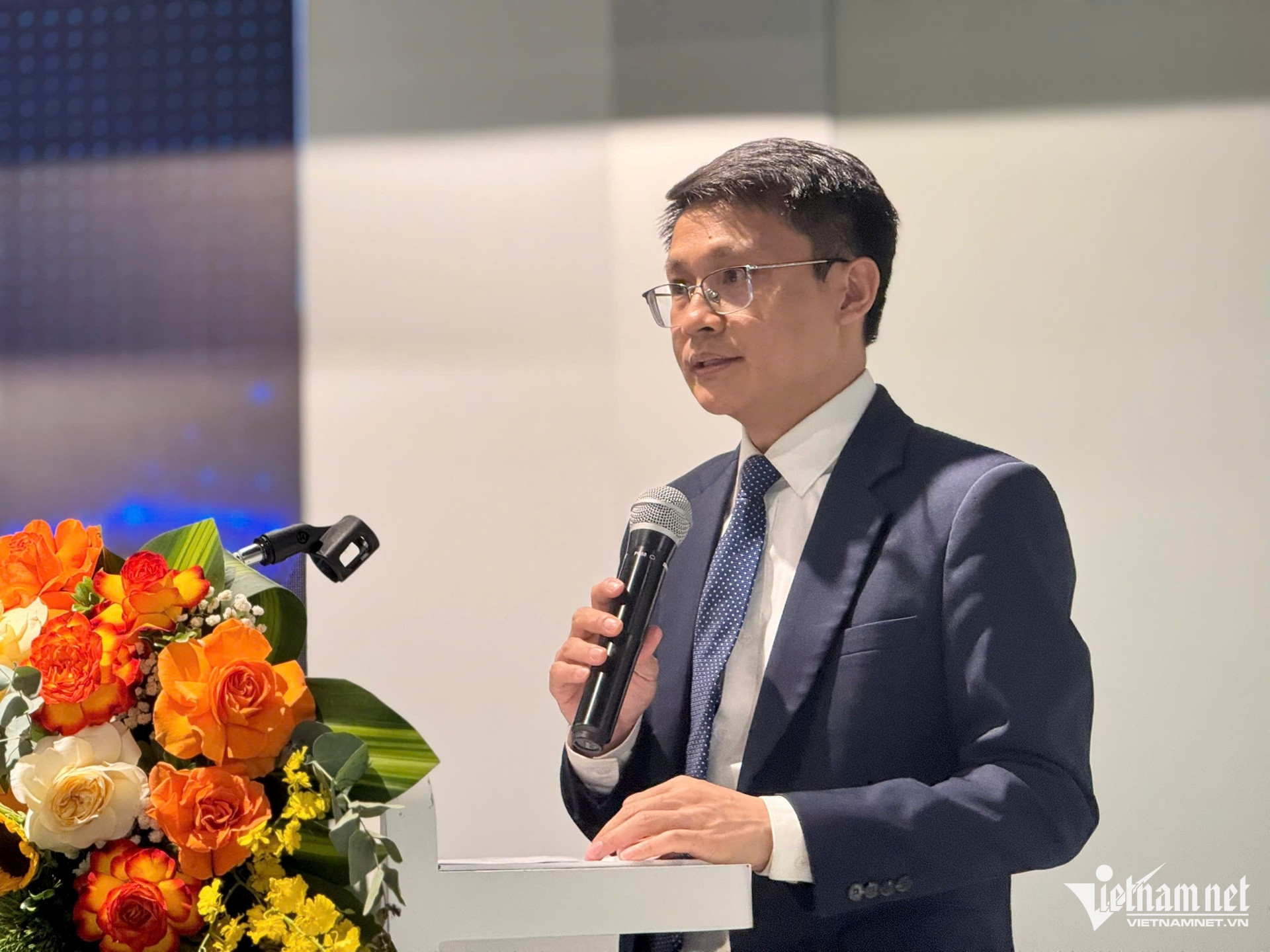
In his opening remarks, Vo Xuan Hoai, Deputy Director of NIC, stressed that the greatest value of the partnership goes beyond simply bringing equipment or technology into Vietnam.
“The greatest value of the cooperation between NIC and Thermo Fisher lies not merely in bringing certain equipment or technologies to Vietnam, but in jointly building an open research infrastructure where businesses, startups, universities and research institutes can access internationally standardized technologies, equipment and expertise at more reasonable costs and within more practical timeframes,” Hoai said.
As Vietnam accelerates implementation of the Politburo’s Resolution 57 on breakthroughs in science and technology, innovation and national digital transformation, two strategic technology sectors - semiconductors and artificial intelligence (AI) - have been identified as new engines of growth.
However, investing in sophisticated systems for measurement, analysis, testing and advanced research requires enormous financial resources.
High upfront investment costs, coupled with the rapid pace of technological change, make it difficult for many small and medium-sized enterprises, startups, research institutes and universities in Vietnam to build comprehensive infrastructure of their own.
If each organization invests separately, resources risk becoming fragmented, while expensive equipment may be underused, resulting in inefficiency and waste.
To address this shared-infrastructure bottleneck, NIC has been actively building partnerships with international organizations, including Thermo Fisher Scientific, a technology group with a market capitalization of $220 billion.
Under the proposed partnership, the shared laboratory at NIC Hoa Lac would operate as an open research infrastructure.
Instead of requiring individual organizations to spend heavily on their own equipment, the shared model would pool resources, allowing scientists, engineers and businesses to directly access advanced systems and international experts at a more manageable cost.
This could lower the cost of accessing technology, shorten research and development (R&D) timelines and help bring products to market faster.
Joining forces to build a launchpad for strategic technologies
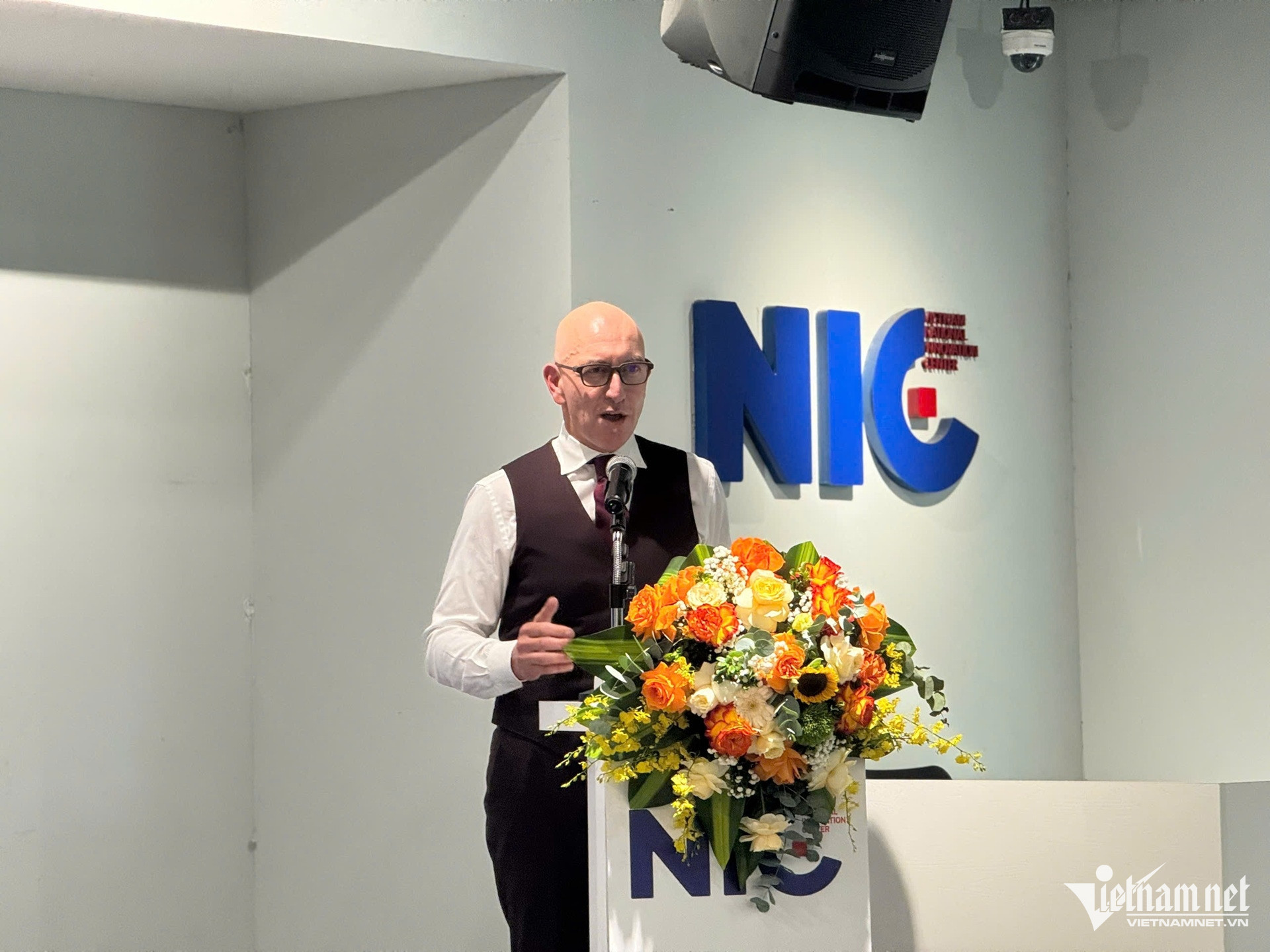
Gianluca Pettiti, President and Chief Operating Officer of Thermo Fisher Scientific, expressed confidence in Vietnam’s potential to develop high-tech industries and said the group was ready to contribute equipment, technology and expertise from its extensive network across more than 50 countries.
“Vietnam has set out a very ambitious vision to create a globally competitive innovation ecosystem across fundamental sectors such as biotechnology, healthcare, semiconductors and artificial intelligence,” Pettiti said. “To achieve this ambition, technology alone is not enough. It also requires a critical foundation - research capacity, workforce capabilities and multi-stakeholder collaboration.”
Vietnamese technology companies are also moving to play an active role in building the ecosystem rather than relying solely on the capabilities of international corporations.
Nguyen Van Khoa, CEO of FPT Corporation, emphasized the need to strengthen the technological autonomy of Vietnamese businesses and said FPT was ready to work with NIC and Thermo Fisher in areas where it has expertise, including AI, data, automation and digital transformation.
Such contributions are intended to add digital capabilities to shared laboratories and research infrastructure.
The combination of the State’s enabling role, advanced technologies from an international corporation and software solutions from domestic companies represents a new form of public-private cooperation.
The model is intended to turn international resources into tangible research and development capabilities within Vietnam.
The proposed shared laboratory at NIC Hoa Lac is envisioned as foundational infrastructure serving the entire development chain, from R&D and technology testing to the training of highly skilled workers.
Establishing such an open research center would not only address immediate infrastructure challenges facing startups and universities, but could also provide a foundation for expanding the shared-laboratory model into other strategic technology sectors in the future.
According to NIC leaders, the ultimate goal is to build substantive technological capabilities in Vietnam — creating an environment where businesses can access advanced technologies, scientists have the infrastructure they need for research, startups have the conditions to develop products, and international corporations find an ecosystem capable of supporting investment, collaboration and shared growth.
Du Lam
.svg)
