 Vietnamnet.vn

 Podcast



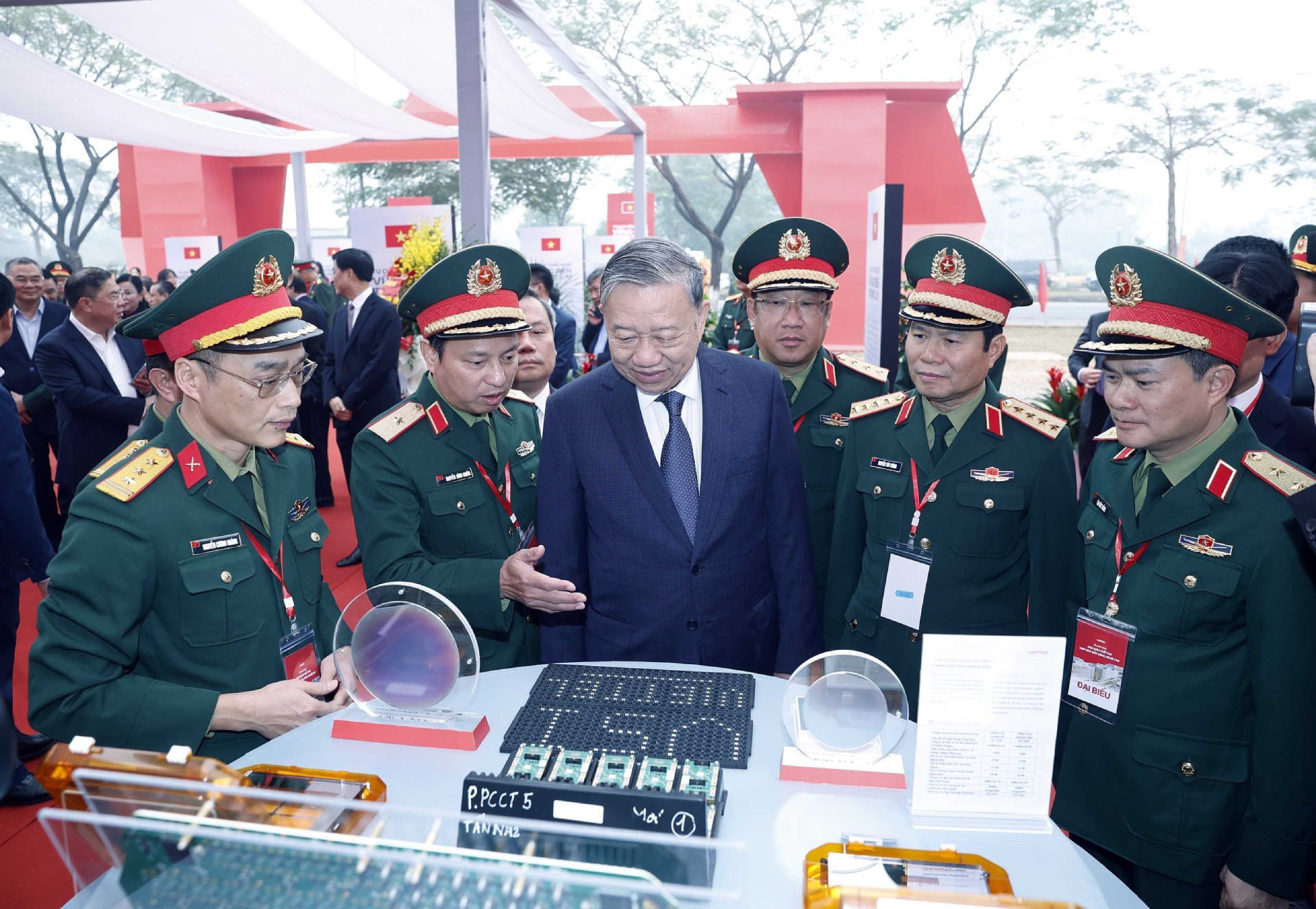
Tran Cam Tu, Permanent Member of the Communist Party of Vietnam Central Committee’s Secretariat, recently signed a Politburo conclusion on the development of Vietnam’s materials industry.
According to the conclusion, the Politburo assessed that Vietnam’s materials industry has gradually developed in recent years, largely meeting demand for many types of supplies and input materials across the economy. The sector has made important contributions to economic growth, infrastructure development, job creation, State budget revenue and exports.
However, the industry’s development has yet to match the country’s potential and advantages. Insufficient attention has been given to deep processing, mastery of core and advanced technologies, and recycling.
Materials production also remains heavily dependent on extraction and resource-intensive processes, with high energy consumption, low added value, substantial emissions and environmental pollution.
The Politburo stressed that “developing the materials industry is a national strategic task that will make an important contribution to the country’s rapid and sustainable development and the building of an independent, self-reliant and resilient economy.”
Development should be focused rather than fragmented or spread too thinly, with resources concentrated on critical and foundational stages and sectors capable of generating spillover effects and driving other industries.
The Politburo called for strategic minerals to be managed in a unified and rigorous manner across the entire value chain, from exploration, geological surveys and planning to extraction, refining, production of applied materials, recycling and strategic reserves.
Exports of raw minerals should be minimized, while national resources must be extracted and used economically, efficiently and sustainably.
In terms of specific tasks, the Politburo called for research into and adoption of special and breakthrough mechanisms and policies to master technologies for producing strategic and high-value materials.
These include materials serving the semiconductor industry, new energy, national defense and security, dual-use applications and industries of the future.
In 2026, Vietnam is required to formulate and issue a national strategy for materials industry development through 2030, with a vision to 2045, while studying the establishment of a unified national coordination mechanism for the sector.
The Politburo conclusion also calls for closed-loop industrial chains covering extraction, processing, deep processing and final applications.
Priority areas include rare earths; battery and magnetic materials; electronic and semiconductor materials; aluminum, steel, titanium, non-ferrous metals and specialty alloys; chemical and fertilizer materials; carbon materials; and dual-use materials.
Authorities at all levels, sectors and localities have also been instructed to comprehensively and objectively assess the state of resources and reserves, extraction conditions - including in deep-sea and offshore areas - processing technologies and market demand.
50% localization target for selected strategic materials
Under the conclusion, Vietnam is expected to establish a national materials industry database in 2027 and complete the integration of geological and mineral data.
By 2028, the country aims to establish at least three to five national materials research centers.
By 2030, Vietnam seeks to master selected deep-processing technologies for rare earths, semiconductor materials and battery materials, while targeting a localization rate of 50% for certain strategic materials.
The Politburo emphasized the need to prioritize stable, long-term resources for fundamental research into strategic and future materials.
Vietnam should also strengthen national reserves of selected critical and strategic materials and minerals, secure materials supply chains and substantially reduce dependence on imports of essential materials.
Notably, the Politburo outlined the coordinated development of the materials industry around three categories: basic materials, strategic materials and future materials.
For basic materials, the country should maintain production capacity, ensure stable supplies and improve quality, efficiency and competitiveness.
For strategic materials, the Politburo called for the effective mobilization and use of State resources alongside stronger efforts to attract private-sector capital and foreign investment.
The goal is to gradually gain access to and master technologies and supply chains involving semiconductor and electronic materials, rare earths, batteries and energy-storage materials, magnetic materials, specialty alloys, defense and security materials, renewable-energy materials, aerospace materials and those used in other high-tech industries.
Agencies and organizations should also proactively begin research and preparation for future materials in line with emerging global technology trends, laying a solid foundation for Vietnam’s long-term development.
Through 2030, the Politburo wants Vietnam to focus on completing relevant mechanisms and policies while prioritizing resources for several key strategic materials.
The initial priorities include semiconductor materials, rare-earth materials, battery and energy-storage materials, new materials, and specialty and dual-use materials serving high technology, defense and security industries, renewable energy and digital transformation.
Another task is to urgently develop and implement special policies and mechanisms to attract, employ and provide incentives for talented Vietnamese professionals at home and abroad, international experts and global technology corporations, while establishing strong research teams.
The Politburo also called for strict action against violations of mineral and environmental laws, as well as corruption, waste, misconduct and vested interests in the management, extraction and use of natural resources.
Tran Thuong
.svg)
