 Vietnamnet.vn

 Podcast



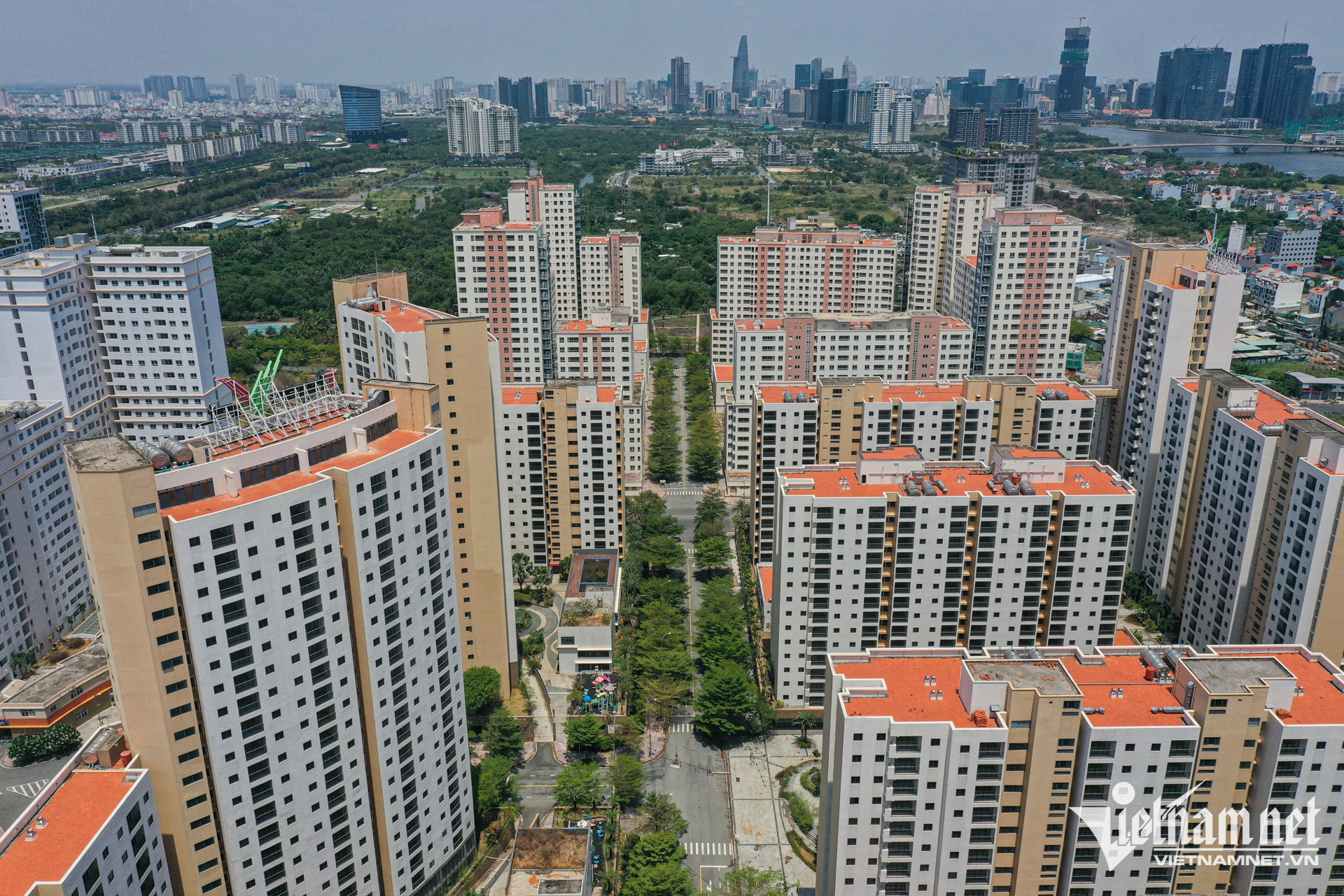
The directive comes as housing and real estate prices in several regions have surged beyond the financial reach of many citizens. Contributing factors include a lack of market transparency, inflated or speculative pricing, and a shortage of affordable commercial housing. While social housing projects are being expedited, they still fall short of meeting demand.
To address these issues, the Prime Minister ordered ministers, heads of government agencies, and chairpersons of provincial and municipal People's Committees to review and revise land use fee regulations to prevent them from being a key factor in driving housing prices far above people’s incomes.
Relevant ministries, sectors, and localities must urgently develop and implement breakthrough, open, and favorable mechanisms to attract more resources for a healthy, transparent, and sustainable real estate market.
The directive also calls for strengthened oversight of real estate business activities and transactions, ongoing market monitoring, and timely issuance of policies to guide the sector toward long-term stability.
Building rent-to-own policies for low-income earners
The Prime Minister has tasked the Ministry of Construction with proposing price control mechanisms that align with market principles while ensuring state management and the people’s right to housing.
The Ministry must also propose innovative policies to develop social housing, and urgently create rental and rent-to-own housing programs tailored for low-income groups.
Additionally, the Ministry of Construction, in coordination with the Ministries of Natural Resources and Environment, Finance, and others, must finalize a pilot project for a state-managed “Real Estate and Land Use Rights Trading Center” for government review and approval within October.
Localities must also be guided to promptly update and publish construction material prices and cost indices to reflect market realities. Speculation and hoarding of materials to exploit state policies will be strictly prohibited and punished.
The Prime Minister instructed the Governor of the State Bank of Vietnam to manage monetary policy flexibly and efficiently, while directing credit toward priority sectors, including:
Project developers and homebuyers of social housing
Housing for workers
Projects to rebuild old apartment blocks
Commercial housing with prices within citizens’ reach
At the same time, the central bank must rigorously review and assess credit applications for high-end real estate projects or those showing signs of price manipulation.
The Prime Minister also directed regular inspections of credit institutions issuing loans backed by real estate assets. Property valuations must be objective, reasonable, and legally compliant to safeguard credit security and market integrity.
The directive emphasizes the need to accelerate disbursement of housing policy loan packages and expand preferential credit programs for young people under 35 purchasing their first home or social housing, with appropriate interest rates and terms.
Localities must ‘act, not retreat’ on housing targets
Provincial and municipal leaders are urged to fast-track projects and meet housing targets on time, adopting the spirit of “just act, no retreat.”
Major urban centers and key industrial provinces - such as Hanoi, Hai Phong, Ho Chi Minh City, Da Nang, Hue, and Can Tho - must prioritize land resources according to urban planning for developing social housing and affordable commercial housing to expand the housing supply accessible to the public.
Local authorities are also tasked with tightening oversight of real estate brokerage activities to prevent the spread of rumors and misinformation that destabilize the market.
Tran Thuong
.svg)
