 Vietnamnet.vn

 Podcast



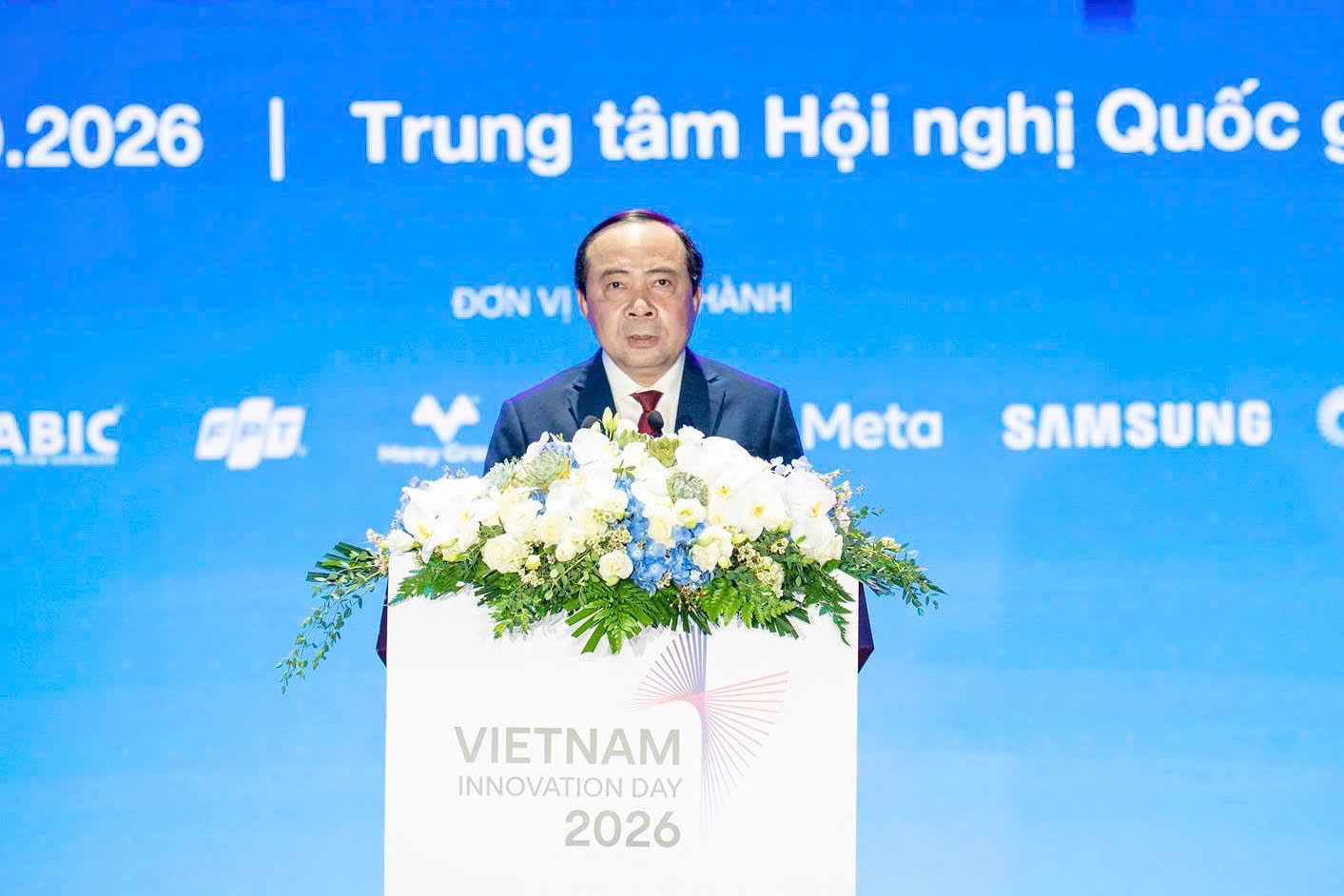
Quan, speaking at the National Innovation Day response ceremony on October 4, 2026, said that innovation extends beyond modern technologies, inventions, or tech startups. It originates fundamentally from an "innovation mindset."
Quan said conventional thinking causes people to stop learning and can slow down strategic decisions at the national level, while an innovative mindset opens up new space for development, improves the effectiveness of the public sector and builds a governance foundation that is closer to the people.
He cited opposing case studies of Nokia and DeepSeek to convey a core message on innovative mindset: organizations must continuously reinvent themselves at the peak of success while demonstrating the courage to carve out new pathways under resource constraints.
The Minister highlighted another example in Singapore’s transformation of used water into a high-grade recycled water supply, demonstrating how "natural constraints can be leveraged as catalysts for breakthrough solutions."
Vietnam's growth model positions science, technology, innovation, and digital transformation as primary driving forces. "We must generate greater value through knowledge, productivity, and technological mastery. To execute these strategic directions, an innovative mindset must translate into operational capability across society," Quan said.
"An innovative nation is formed by innovative individuals and organizations that foster conditions for innovation. A century-long vision must commence with sound decisions today. Ambition must be realized through concrete, persistent, and result-oriented efforts," Quan added.
Embedding innovation into corporate "survival DNA"
At the National Innovation Day response ceremony, representatives from major technology corporations, international experts, and the startup community shared practical perspectives on technology commercialization and building innovation capacity.
Emphasizing the need to make innovation a “survival DNA,” Na Ki Hong, General Director of Samsung Vietnam, said true value should not stop at the scale of assembly.
“The more important question is: behind a product leaving the production line, how many Vietnamese engineers have contributed to creating it, and how many Vietnamese companies have the capacity to become suppliers? That is the shift from manufacturing in Vietnam to conducting research, making improvements and creating additional value in Vietnam together,” Na Ki Hong said.
Illustrating this direction, Vietnamese engineers at the Hanoi R&D Center directly developed Vietnamese language capabilities in the global lineup of AI-powered smartphones.
Christopher Nguyen, founder and CEO of Aitomatic, raised the issue of the “third layer of value” in products, where Vietnam must master artificial intelligence embedded inside devices. He said overseas Vietnamese experts and intellectuals can make practical contributions without necessarily returning to Vietnam full-time.
"We can collaborate with domestic enterprises to identify key problems, connect right partners, design projects, mentor technical teams, and jointly evaluate outcomes," he said.
Sharing ecosystem development experiences from Singapore, Edward Lim, Country Director of BLOCK71 Vietnam (NUS Enterprise), raised questions regarding startup trajectories following competitions. Highlighting the Triple Helix model linking Government, Academia, and Enterprise, he noted: "For any nation, the deeper question is whether its institutional systems can continuously convert ideas into new capabilities, sustainable enterprises, and emerging industries."
From a domestic tech enterprise perspective, Ta Hong Phuc, Vice President of Hyphen Deux, addressed the journey from semiconductor design to market commercialization. Following the milestone of successfully designing the HDx32U chip, the enterprise faced challenges in packaging, testing, and securing commercial end-users.
"Success is not measured merely by creating a chip, but by seeing that chip deployed in real applications and continuously refined," Phuc emphasized.
Representing the startup generation, Tran Van Luc, an alumnus of Hanoi University of Science and Technology, shared lessons following the initial failure of the Awake Drive project. Leveraging experiences gained from that set-back, his team rapidly developed an AI translation device (SenAI), securing third place at VAIC 2026 and pitching to Silicon Valley investors.
According to Luc, young innovators do not necessarily require massive capital investments or fully equipped laboratories; rather, they need opportunities to tackle real-world challenges, present solutions, and receive fair evaluations.
Du Lam
.svg)
