 Vietnamnet.vn

 Podcast



The Ministry of Construction is currently seeking public feedback on a draft circular to replace Circular 47/2024, which governs vehicle inspection, including emissions testing for motor vehicles and specialized machinery.
A key highlight of the proposal is the classification of vehicles based on their production age. For motorbikes no older than five years, inspection centers would rely on quality certification from manufacturers or importers to issue emissions compliance certificates. Owners would not need to bring their vehicles in for physical testing, and processing time would be capped at three hours.
In contrast, motorbikes older than five years would be required to undergo direct emissions testing at inspection centers, in accordance with the national technical regulation QCVN 122:2024/BGTVT. Vehicle owners could submit applications either in person or via online booking systems.
When attending inspections, owners would need to provide one of the following documents: the original vehicle registration, a certified copy (or electronic version), or an appointment slip for registration issuance.
If a vehicle meets emissions standards, the result would be issued electronically and integrated into the owner’s digital identity account (VNeID), eliminating the need for physical documents. Vehicles that fail would be flagged for necessary repairs.
The draft also clarifies and expands policies on first-time inspection exemptions for motor vehicles (excluding motorbikes) and unused specialized vehicles with less than two years between production and application.
For these categories, owners would not need to bring vehicles to inspection centers. Instead, they could submit applications at any inspection facility nationwide via online platforms, in person, or by post. Simplified documentation would allow processing within a maximum of four working hours.
If the application is valid, the inspection center would create an electronic vehicle record and issue both the inspection certificate and inspection sticker.
Stricter procedures for vehicles requiring inspection
For vehicles not eligible for exemption, both initial and periodic inspections would continue to follow national technical standards, involving five mandatory stages: identification; general inspection; upper-section inspection; braking and lateral slip evaluation; and lower-section and environmental checks.
Vehicles that pass would receive certification and inspection stickers. Those found with serious or dangerous faults would be denied certification and prohibited from operating until issues are resolved.
Notably, the draft introduces provisions allowing off-site inspections for vehicles operating in special areas such as islands, ports, mines, construction sites, or oversized vehicles that cannot enter standard inspection lines.
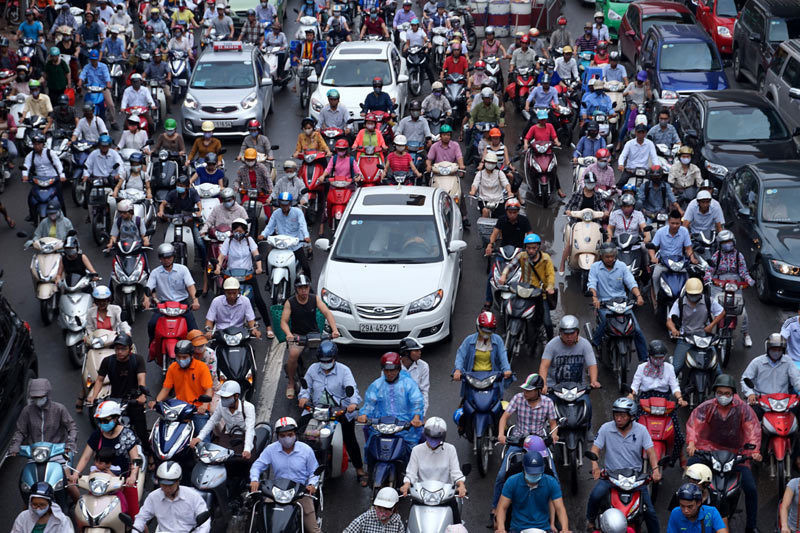
Vietnam currently has approximately 77 million motorbikes, a large proportion of which are older models using outdated internal combustion engine technology that no longer meets emissions standards.
Under Decision 13/2026, emissions testing for motorbikes will begin on July 1, 2027, in Hanoi and Ho Chi Minh City. It will expand to Hai Phong, Hue, Da Nang, and Can Tho from July 1, 2028. By July 1, 2030, the policy will apply to 28 provinces and cities, with the possibility of earlier implementation depending on local conditions.
Vu Diep
.svg)
