 Vietnamnet.vn

 Podcast



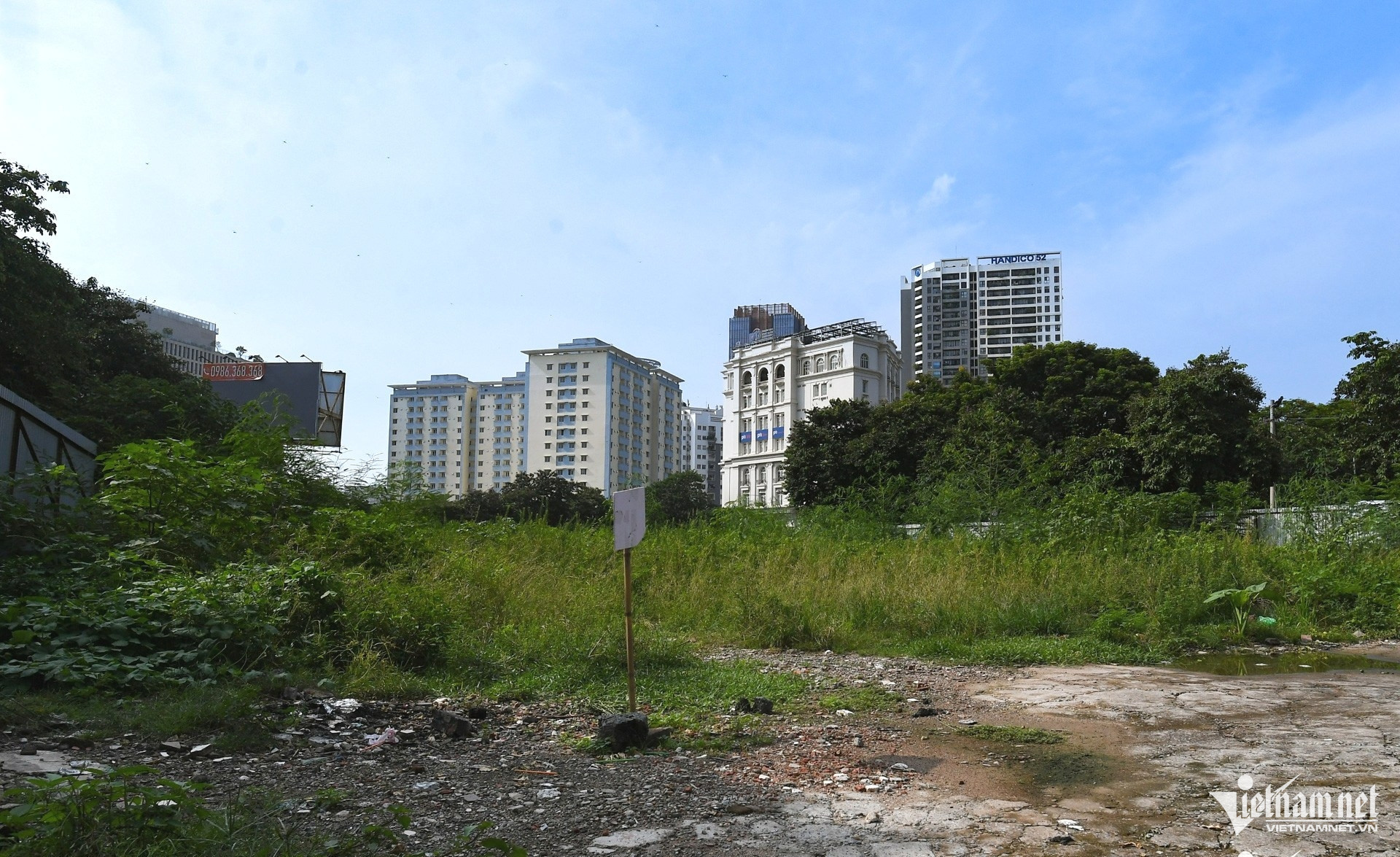
On that basis, the Ministry of Finance has worked with other ministries and agencies to prepare amendments to the relevant tax laws for submission to the Government.
The proposed 0.2% rate would apply to land left idle, land not yet put into use and land whose development has been delayed.
"The 0.2% rate is equivalent to the tax currently imposed on illegally occupied land under the Law on Non-Agricultural Land Use Tax. It is a relatively high rate, reflecting a stronger tax burden than that applied to other categories," Tuan said.
Under existing legislation, residential land within the statutory land-use quota is taxed at 0.03%. The rate rises to 0.07% for land exceeding the quota by no more than three times, and to 0.15% for land exceeding three times the quota.
Determining exactly what constitutes unused land, land awaiting development or land whose use has been delayed remains a central issue in the proposed policy.
Tuan said the matter had been extensively discussed during the drafting process.
According to him, Government Notice No. 54, issued on September 28, instructed the Ministry of Agriculture and Environment to establish clear definitions and criteria for identifying unused land and land whose development has been delayed within Vietnam's land legislation.
These definitions would provide the legal basis for applying the proposed tax.
For now, the draft legislation submitted to the Government refers to the definitions of unused land and delayed-use land under existing land laws.
"We will coordinate closely with the Ministry of Agriculture and Environment to establish the criteria for identifying unused land, land not brought into use and land whose development has been delayed, providing a basis for implementing the tax policy," Tuan said.
Speaking to VietNamNet, economist Le Ba Chi Nhan said the proposed 0.2% rate might not appear particularly high relative to land values. Its significance, however, lies in creating a financial cost for those who hold land without putting it to productive use.
Land is a finite resource, he noted. When large areas are left idle or held for long periods without projects moving forward, valuable economic resources remain effectively frozen, even as demand for housing, manufacturing, commercial development and infrastructure continues to grow.
Taxation could therefore become an economic tool that encourages landowners to make a choice: develop their land, transfer it to someone capable of using it, or bear the financial cost of keeping it idle.
"However, I believe the 0.2% rate will only be effective if there are very clear criteria for determining what constitutes unused land, what qualifies as delayed development and, most importantly, why those delays have occurred," Nhan said.
He stressed that authorities must distinguish between developers deliberately holding land for speculation and projects delayed by circumstances beyond investors' control.
Such circumstances may include planning complications, land clearance difficulties, investment approval procedures, land-related administrative requirements or delays caused by government agencies failing to complete their responsibilities.
A rising tax burden for land left idle
According to Nhan, a 0.2% tax could send an initial economic signal, but whether it would be sufficient to change landowners' behavior remains an open question.
This is particularly relevant in cases involving speculative landholding or deliberate delays in bringing land into use.
For example, a plot with a taxable value of approximately $3.85 million (VND100 billion) would incur an annual tax of about $7,700 (VND200 million) at the proposed 0.2% rate.
For a financially strong company expecting land prices to continue rising, that expense might not be enough to influence its decision.
If the anticipated gains from retaining the land substantially outweigh the tax burden, speculative landholding could continue despite the new policy.
Nhan therefore argued that the tax system should be designed to change behavior rather than simply generate revenue.
The 0.2% rate could serve as a starting point, with higher rates imposed as land remains unused for longer periods.
For instance, where land continues to sit idle without a legitimate reason, the tax rate could progressively increase to 0.3%, 0.5% or even higher, depending on the length of the delay and the circumstances involved.
"The policy should create a kind of 'cost clock,' where the longer land remains unused, the more expensive it becomes to hold," Nhan said.
In his view, a tax structure that increases over time would give landowners stronger incentives to begin production or commercial activities, proceed with development, or transfer their property to investors capable of putting it to productive use.
Such an approach could also promote greater fairness between those who use land efficiently and those who hold it for extended periods without generating economic value.
However, Nhan again emphasized the importance of distinguishing between deliberate land speculation and delays resulting from external circumstances.
Projects stalled by planning issues, administrative bottlenecks, land clearance problems or other factors beyond investors' control should not automatically face the same tax penalties as deliberately neglected land.
For these cases, the policy would need clear provisions for exemptions, reductions or exclusions, supported by transparent monitoring and enforcement mechanisms.
Nhan believes the most suitable approach would combine an initial tax rate with progressive increases based on how long land remains unused, while carefully accounting for the reasons behind each delay.
"The ultimate goal is not to collect more tax revenue, but to reduce the amount of land that remains frozen, improve land-use efficiency and bring land resources back into productive use to support economic growth," he said.
How much could landowners pay?
For a 200-square-meter plot of unused land, the proposed annual tax would depend on the property's taxable land value.
If the taxable value were approximately $385 per square meter (VND10 million), the annual tax at 0.2% would be around $154 (VND4 million).
If the taxable value rose to approximately $770 per square meter (VND20 million), the annual tax would double to about $308 (VND8 million).
The calculation is straightforward:
Annual land tax = Land area × Taxable value per square meter × 0.2%
At 0.2%, the proposed rate would be approximately 6.7 times the existing 0.03% rate for residential land within the statutory quota, 2.9 times the 0.07% rate and 1.3 times the 0.15% rate.
These comparisons assume the same taxable land value.
The 0.2% rate remains a proposal, and the figures above are illustrative. Actual tax liabilities would be calculated using the legally determined taxable land value, which does not necessarily reflect the property's market transaction price.
Nguyen Le
.svg)
