 Vietnamnet.vn

 Podcast



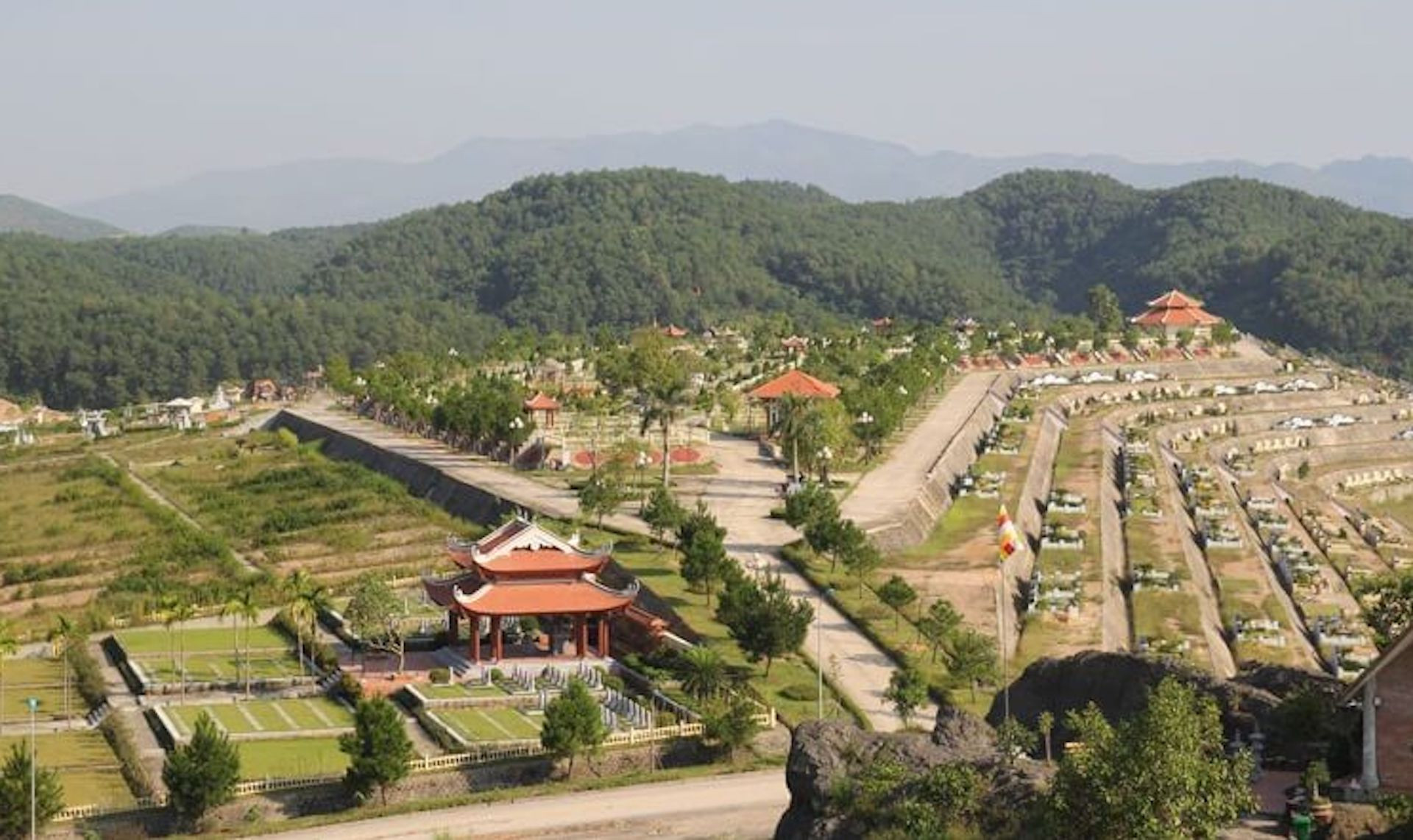
As demand for resting places rises against increasingly limited land funds, "spiritual real estate" is forming a distinct market, yet it faces risks of speculation and price inflation.
Pham Thi Mien, Vice President of the Vietnam Association of Real Estate Brokers Market Research Institute (VARS IRE), said that “spiritual real estate" is a specialized asset class tied to culture, religious beliefs, and land use rights.
Mien noted at a recent seminar that the spiritual real estate market comprises three main groups: traditional burial graves and family tombs; centralized cemeteries combined with cremation and ash storage; and planned cemetery parks featuring integrated landscapes, infrastructure, memorial spaces, and long-term care and management services.
Surveys indicate that newer models have emerged but have developed unevenly.
In the North, cemetery park projects in Tuyen Quang and Phu Tho span from tens to hundreds of hectares. A single grave costs VND45–75 million, whereas family burial plots range from VND800 million to VND3 billion.
In the South, numerous large-scale cemetery parks are concentrated in Dong Nai. Single graves range from VND98 to VND180 million, while family plots measuring 100–300 sqm command prices of VND1.3–5 billion.
A cemetery land broker around Hanoi noted that the market is shifting toward well-planned cemetery park projects. In Phu Tho, Hoa Binh, and Vinh Phuc, products are listed at VND25–35 million/sqm. These projects are designed as "miniature urban areas," offering single graves, double graves, family plots, and ash storage facilities.
The North is seen as a relatively vibrant market. Major projects like Lac Hong Vien and Thien Duc Vinh Hang report consumption rates exceeding 70 percent. Demand is strongly influenced by customs, beliefs, and family culture, particularly the need to gather family graves and bury relatives within a single compound.
Plots measuring 24–30 sqm are favored, while products increasingly focus on landscaping, synchronized planning, and services.
In the South, Dong Nai develops high-end cemetery parks priced at VND8–46 million/sqm, though occupancy rates remain lower than some Northern projects.
According to Mien, the market's appeal primarily comes from actual demand. A large population means demand for final resting places is always present and difficult to postpone. This is also why many businesses have begun paying attention to and investing in the segment.
Land, infrastructure and services
Mien believes that spiritual real estate operates under market rules; as demand grows, profit-seeking investors step in.
However, he noted that investment activities must be distinguished from speculative and price-manipulative practices. Purchasing products for actual use or asset holding differs from collecting large volumes, creating artificial scarcity, spreading rumors, or driving up prices abnormally for profit.
Mien stated that while investment activities cannot be stopped, speculation can be curbed through clear legal regulations, transparent product information, and controlled transfer activities.
Projects must publicly disclose planning details, legal status, product types, buyer rights, and developer responsibilities. Selling prices, management fees, maintenance costs, contingent expenses, and transfer conditions must also be clearly published.
Lawyer Hoang Ngoc, Head of Nhiet Tam & Partners Law Office, suggested that with increasingly constrained land funds, resting compounds priced at tens of millions of VND per sqm will become even more attractive to investors.
He proposed publicly disclosing prices, service charges, management, and maintenance fees to prevent scenarios where low land procurement and infrastructure costs are marked up excessively before reaching the public.
In the short term, pending specific mechanisms for issuing separate ownership certificates for each plot, contracts should be standardized to clearly stipulate prices, rights, and obligations of all parties.
Vu Sy Kien, Deputy Director of the Department of Land Management (Ministry of Agriculture and Environment), argued that curbing speculation requires first defining the product clearly.
Spiritual real estate encompasses not only land, but also infrastructure, management, operation, and maintenance services. Therefore, each component must be explicitly detailed in the contract.
"How much for land, how much for infrastructure, and how much for services must be clearly shown in the contract. Transparency reduces speculative opportunities and makes oversight easier for regulatory authorities," Kien stated.
According to Kien, land planning must also forecast demand. When infrastructure projects necessitate cemetery relocations, local authorities should prepare land funds in advance to prevent panic buying driven by fear of site shortages.
In the long run, Kien suggested forming product chains that combine spiritual real estate with tourism, eco-resourting, and related services. Concurrently, professional entities are needed for long-term management, operation, and maintenance.
Hong Khanh
.svg)
