 Vietnamnet.vn

 Podcast



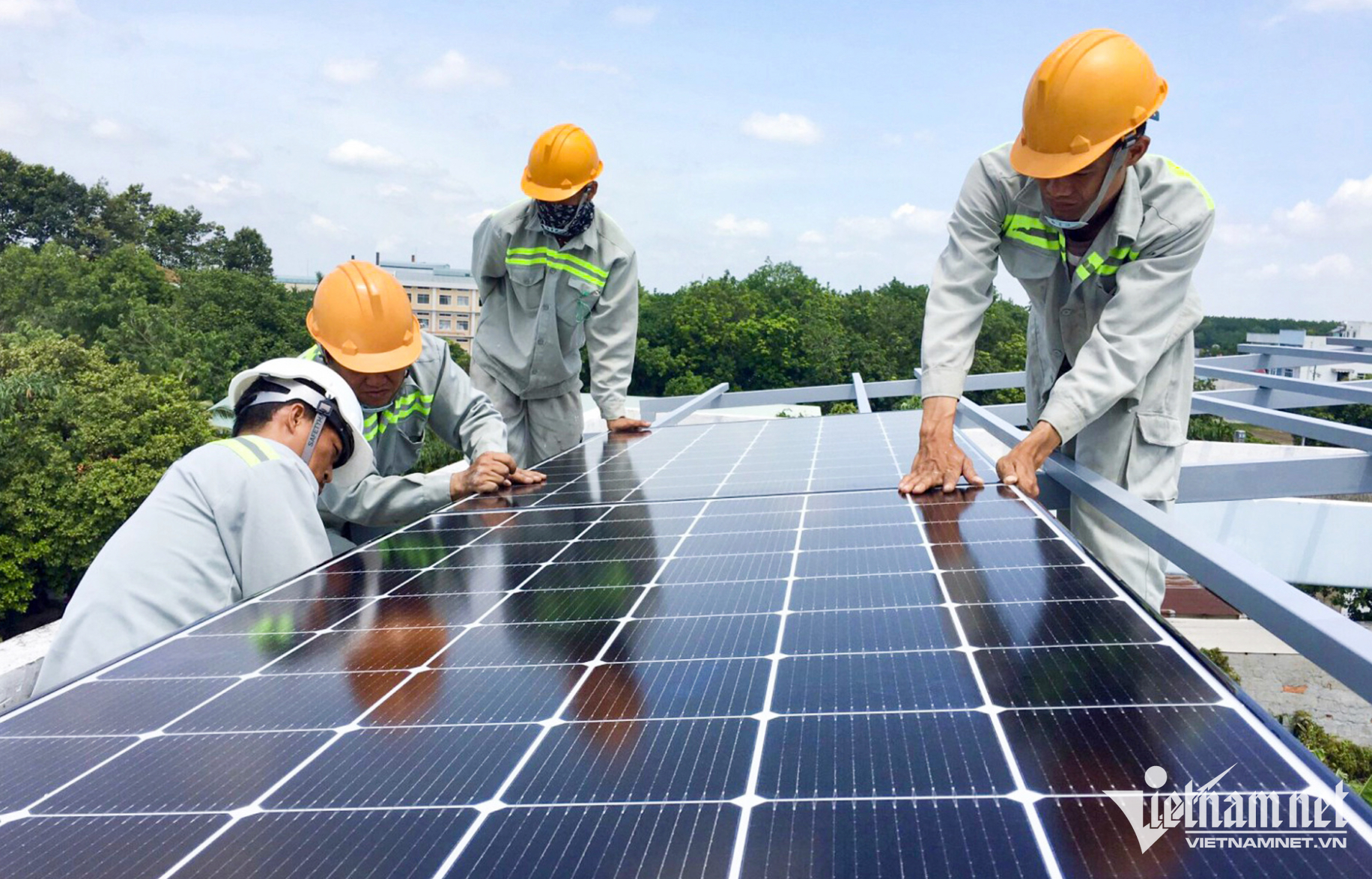
The third draft of the revised decree, submitted to the Ministry of Justice for review, amends Decree 57/2025 on direct power purchase mechanisms and Decree 58/2025, which outlines implementation details of the Electricity Law related to renewable and new energy development.
Surplus power sales allowed - up to 50%
One of the key changes in the draft is a revised policy on surplus power sales from rooftop solar systems. Under the new proposal, households using standalone residential buildings, systems connected to the national grid at low-voltage levels, or installations in mountainous, border, and island areas where the grid exists but is not yet integrated, will be allowed to sell excess electricity.
The draft also permits installations on public facilities to sell surplus electricity, provided such transactions align with their designated functions and legal responsibilities.
This marks a shift from the second draft, which presented two options: a full ban on surplus sales, or allowing it only under a resolution from the National Assembly. The new version proposes that households and other eligible entities may sell up to 50% of their total solar output - calculated based on solar radiation - under mutual agreements. Payments will cover electricity generated directly as well as from storage systems, where applicable.
The increased cap - from 20% to 50% - aims to encourage rooftop solar deployment in line with Vietnam’s national power development plan through 2030.
Market-based pricing with price ceiling
The draft sets the purchase price for surplus power at the average electricity market price from the previous year, as published by the market operator. However, this price must not exceed the ceiling rate for ground-mounted solar projects.
For mountainous, border, and island areas not yet connected to the national grid, the Ministry has proposed removing the cap on surplus sales altogether. In these regions, all electricity fed into the grid will be paid for based on meter readings at the buyer’s connection point.
Until December 31, 2030, eligible systems may be allowed to sell more than 50% of their output, depending on conditions.
Entities selling surplus power must obtain a power operation license, except in cases where licensing is waived under existing regulations.
Clear notification requirements for installation
The draft also clarifies the process for notifying authorities about rooftop solar installations.
Specifically, organizations and individuals installing systems with a capacity of 100 kW or more - and not connected to the national grid - must notify the local commune-level People’s Committee. Notifications must include the project owner’s name, installed capacity, location, timeline, and expected commissioning date.
For grid-connected rooftop solar systems operating at low-voltage levels, a standardized notification form must also be submitted to the local commune-level authority.
Installations with a capacity under 1 kW, based on inverter ratings, are exempt from this requirement.
Meanwhile, systems connected to the grid at medium voltage or higher - and not registered to sell surplus power - must notify the provincial Department of Industry and Trade.
If surplus power sales are registered, the commune-level authority must forward the notification to the provincial Department of Industry and Trade within five days.
Support policies in development
The Ministry emphasized that rooftop solar has several advantages: decentralized generation, no need for transmission infrastructure, minimal impact on the national grid, fast installation timelines, and localized power supply. As such, continued promotion is necessary to reduce system strain and mitigate short- and medium-term electricity shortages.
Implementation of Decree 58 has revealed persistent challenges in direct power sales from rooftop systems. In an earlier proposal, dated August 21, 2025, the Vietnam Electricity Group (EVN) recommended expanding surplus purchases to address supply gaps.
The Ministry of Industry and Trade is now developing a Prime Ministerial decision outlining support policies for households installing rooftop solar and energy storage systems during the 2026–2030 period.
If approved, households would receive financial and technical assistance, accelerating widespread adoption of self-consumed rooftop solar energy.
Tam An
.svg)
