 Vietnamnet.vn

 Podcast



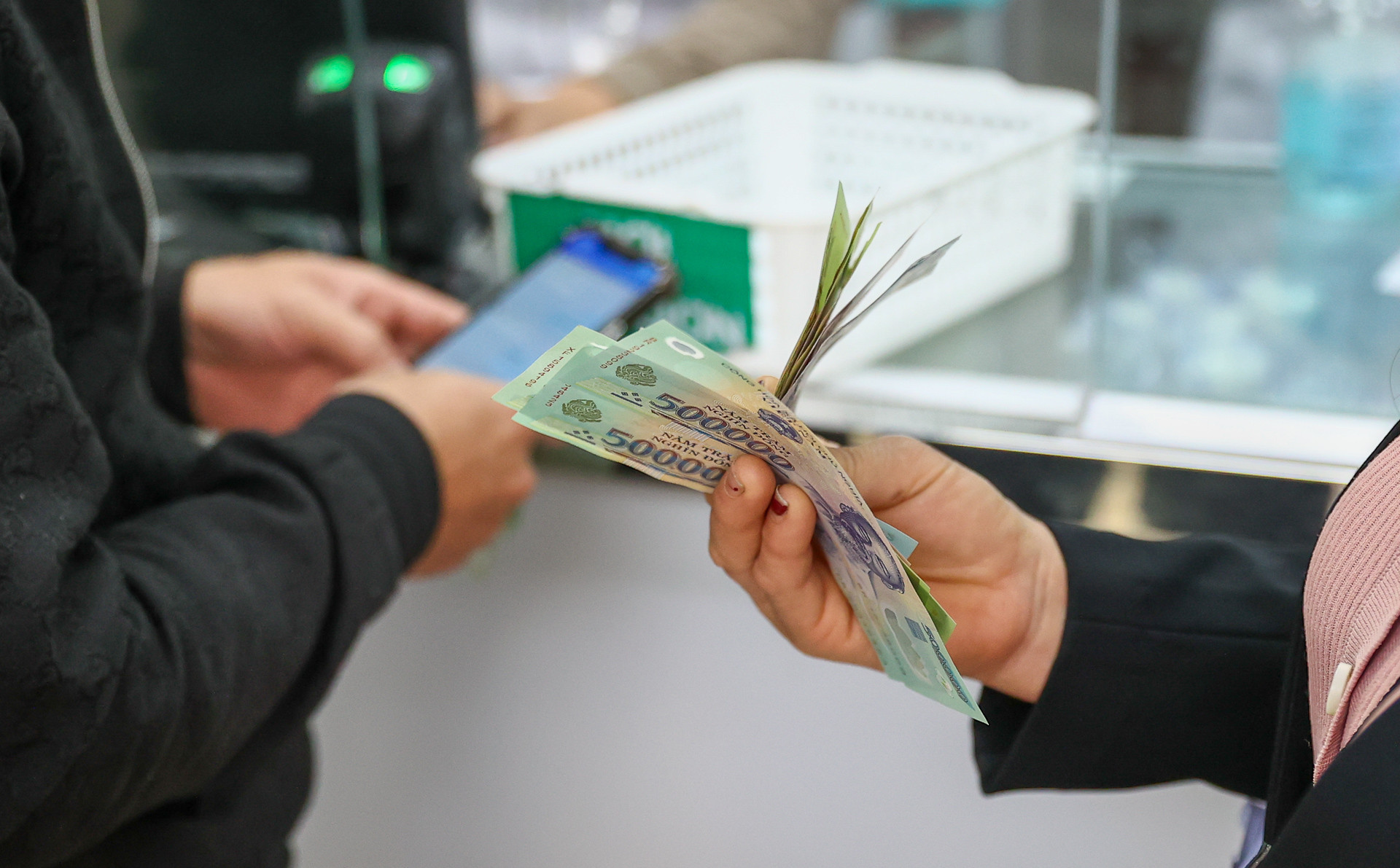
The adjustment is stipulated in Article 31 of Government Decree No. 335/2026/ND-CP, which takes effect on Oct. 5. The monthly social pension increases from VND500,000 ($19) to VND540,000 ($20.5) per person, a rise of VND40,000, or 8%.
The benefit is intended for elderly people who do not receive a pension or monthly social insurance allowance. About 2.5 million elderly people are currently eligible for the policy, according to estimates by the Ministry of Home Affairs.
Specifically, people aged 75 and above are eligible if they meet the prescribed conditions. Those aged from 70 to under 75 who belong to poor or near-poor households are also eligible if they satisfy the required criteria.
According to calculations by the Ministry of Health, the VND540,000 monthly payment is equivalent to only about 24.5% of the rural poverty threshold and 19.2% of the urban poverty threshold.
To receive the benefit, an eligible person or their guardian must complete the prescribed application and submit it directly to the commune-level People's Committee where they reside, by post or online.
Within 10 working days of receiving the application, the chairperson of the commune-level People's Committee must review, verify and standardize the applicant's information against the National Population Database before issuing a decision and arranging payment.
Eligibility begins in the month when the chairperson of the commune-level People's Committee signs the decision. If an applicant is found ineligible, authorities must provide a written response explaining the reason.
In addition to the benefit funded by the central government, some localities provide additional support to social pension recipients. Under the regulations, depending on local socioeconomic conditions and budget capacity, provincial-level People's Committees may propose that People's Councils at the same level approve payments higher than the amount set by the government.
The social pension is a new pillar of Vietnam's social security system introduced under the amended Law on Social Insurance, which took effect on July 1, 2025. In 2025, about 2.5 million elderly people received the social pension, with total expenditure of nearly VND7 trillion ($266 million).
Vietnam currently has nearly 16.5 million elderly people. By the end of the first quarter of 2026, about 3.53 million people were receiving pensions or monthly social insurance benefits, including approximately 2.35 million pensioners and 530,000 recipients of social insurance allowances. The total is projected to exceed 3.54 million by the end of 2026.
This means that in 2025, only about 6 million people beyond retirement age, equivalent to 42% of the elderly population, received pensions, monthly social insurance allowances or social pensions.
Health Minister Dao Hong Lan recently said her ministry is working with the Ministry of Home Affairs to study amendments and supplements to the Law on Social Insurance, including a proposal to gradually lower the eligibility age for the social pension to 70, depending on socioeconomic conditions and the government's budget capacity in each period.
"Any further reduction in the eligibility age for the social pension needs to be studied comprehensively, based on an assessment of the number of beneficiaries, policy impacts, budget resources and the sustainability of the social security system," Lan said.
Vo Thu
.svg)
