 Vietnamnet.vn

 Podcast



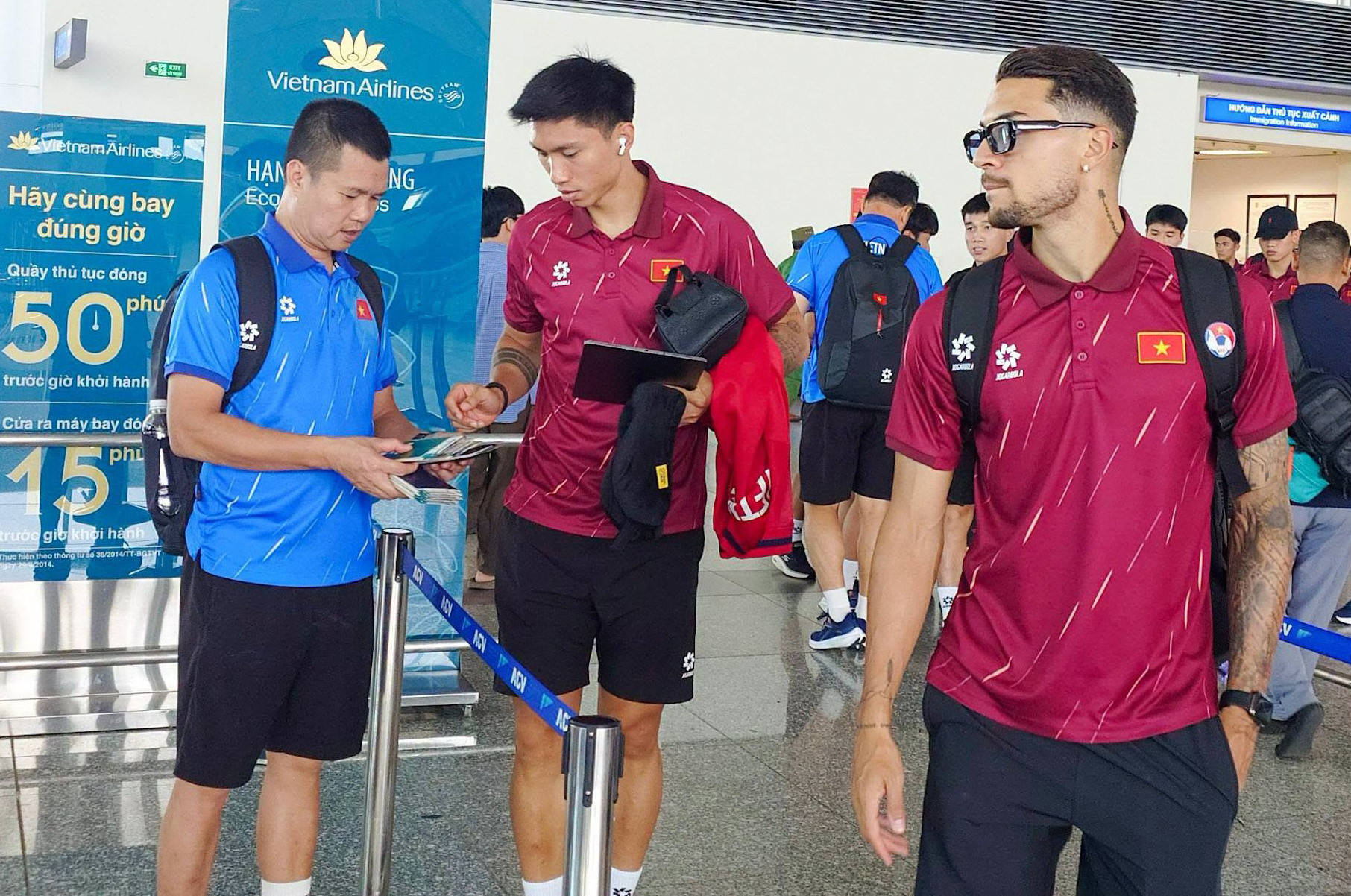
Vietnam had nine days to prepare for the semifinal, one more than Malaysia, giving Kim additional time to fine-tune both personnel and tactics.
Across four group-stage matches, the South Korean coach repeatedly adjusted his starting lineup, attacking options and transitions according to the opposition.
Against Timor Leste, Vietnam cruised to a comfortable victory. The goalless home draw against Singapore, however, exposed problems in breaking down a deep and disciplined defense.
That match proved valuable. It prompted Kim to make further changes, notably pairing Thanh Long with Hoang Duc in central midfield and adjusting his attacking selections, including the roles of Xuan Son, Tai Loc and Dinh Bac.
Vietnam then showed a very different side against Indonesia. Rather than seeking to dominate possession, they pressed selectively, defended with discipline and attacked decisively on the counter.
Against Cambodia, meanwhile, the emphasis shifted again toward speed, creativity and the quality of the final pass and finish.
That adaptability has increasingly become one of Kim’s strongest assets. His adjustments do not necessarily come only in the starting lineup; they can arrive late in the first half or during the second, depending on how a match develops.
Malaysia could demand another variation.
The hosts are likely to defend in numbers and wait for Vietnam to make mistakes, even with home advantage. That means patience could prove just as important as attacking quality.
Thanh Long emerges as a key piece in Vietnam’s midfield
One player who could have a major influence on the semifinal is Thanh Long.
When Kim announced his squad for ASEAN Cup 2026, the midfielder was widely regarded as a backup option. He did not feature in Vietnam’s opening two matches and had previously received relatively limited playing time under the South Korean coach, despite being regarded as one of the V-League’s leading defensive midfielders in recent seasons.
Vietnam’s early matches, however, revealed a problem.
Hoang Duc was being asked to dictate play, create chances and contribute defensively. The workload restricted his ability to influence the game further forward, leaving Vietnam in need of a midfielder capable of doing much of the defensive work behind him.
Thanh Long was the natural option, and Kim turned to him for the crucial group-stage meeting with Indonesia.
The decision paid off.
Thanh Long completed 43 of his 48 passes for a 90% success rate. More notably, all seven of his long passes found their targets, while 11 of his 12 passes in the final third were successful.
His contribution extended beyond breaking up opposition attacks. He also became an important starting point for Vietnam’s forward transitions, with his defense-splitting pass leading to Hai Long’s goal that put Vietnam 2-0 ahead.
That passing range could be particularly valuable in matches where Vietnam allow their opponents more possession and look to counter quickly.
From a reserve option, Thanh Long has emerged as a tactical piece Kim may find difficult to leave out. His presence can provide greater balance in midfield while freeing Hoang Duc to focus more heavily on creativity and giving attacking players such as Hai Long, Dinh Bac and Xuan Son more opportunities to exploit space.
Malaysia rebuild after naturalization controversy
Vietnam will nevertheless face a Malaysia side that has undergone a significant transformation.
Malaysia had placed considerable expectations on naturalized players as part of an effort to rapidly strengthen the national team. But irregularities involving naturalization documents triggered a major crisis and damaged public confidence.
ASEAN Cup 2026 presented another challenge because the tournament falls outside FIFA international windows, meaning clubs are not obliged to release players.
Coach Tan Cheng Hoe was therefore forced to reassess the resources available to him.
Eligible naturalized players such as Sergio Aguero and Mohamadou Sumareh returned, while Paulo Josue and Endrick dos Santos - who had previously found themselves pushed toward the bench amid the influx of new naturalized players - regained important roles.
Paulo Josue has been particularly influential, scoring three goals at the tournament. His brace inspired Malaysia’s 2-1 comeback victory over Myanmar, while he also opened the scoring against Laos.
Endrick scored in the 4-0 victory over Laos, while Sumareh and Aguero have added experience to a squad undergoing rejuvenation.
At the same time, younger players have been given opportunities.
Pavithran Gunalan, 21, played every minute of Malaysia’s four group matches. He produced two assists against Laos before scoring the only goal in the 1-0 victory over the Philippines that secured Malaysia’s semifinal place.
He was named player of the match twice, rapidly emerging from relative obscurity as one of the tournament’s discoveries.
US-born midfielder Wan Kuzain, now 27, has also taken his opportunity, scoring a free kick against Laos before providing the cross for Gunalan’s headed winner against the Philippines.
Together with younger players such as Ubaidullah Shamsul Fazili and 29-year-old newcomer Rodney Celvin, they have given Tan options Malaysia had previously used less frequently.
The rebuild remains incomplete. A 2-0 defeat to Thailand showed Malaysia’s limitations against an organized opponent capable of applying sustained pressure.
Even so, three victories from four group matches and nine points were enough to reach the semifinals. More importantly, Tan has begun reshaping a team forced by circumstances to reconsider its identity.
Malaysia have not abandoned naturalized players. Instead, they are combining eligible naturalized footballers with homegrown talent and players who had previously struggled for opportunities.
The result is a side with plenty of fighting spirit - one Vietnam cannot afford to underestimate.
Vietnam’s biggest concern may be themselves
For Kim, however, Malaysia’s strengths may not represent the biggest concern.
Vietnam have looked most convincing when they have not been forced to dictate the match.
Against Indonesia, when they entered a more balanced contest, the defending champions produced arguably their most complete performance. They defended patiently, waited for opportunities and punished their opponents through efficient counterattacks.
The situation was different against Singapore and Cambodia.
Vietnam dominated possession against Singapore and created opportunities but struggled to find a breakthrough, eventually settling for a goalless draw.
Against Cambodia, they controlled 76% of possession but had to wait until the closing stages to score twice and complete a 3-1 victory. In both matches, the defense also suffered lapses in concentration that allowed opponents to create dangerous chances.
The pattern suggests Vietnam are particularly comfortable when they do not carry the burden of immediately imposing themselves on a match.
Against Malaysia, that could become significant. The hosts may sit deep, concede possession and wait for errors, forcing Vietnam to demonstrate patience and precision as favorites.
The key question for Kim is therefore not simply how dangerous Malaysia can be, but whether Vietnam can remain composed, clinical and concentrated when the match unfolds outside their preferred scenario.
For the defending champions, that ability to adapt could ultimately determine whether they return to the ASEAN Cup final.
Dinh Bac chases a place in the record books
Vietnam also arrive in Malaysia with the tournament’s leading scorer.
Nguyen Dinh Bac has five goals after the group stage, having scored a hat-trick in Vietnam’s 7-0 victory over Timor Leste before adding a brace in the 3-1 win against Cambodia.
His nearest four-goal challengers, Baker of Indonesia and Win Tun of Myanmar, have already been eliminated. Among the players still competing are Malaysia’s Paulo Josue and Singapore’s Fandi with three goals each, while Thailand’s Teerasak, Khamyok and Burapha, along with Vietnam’s Hoang Hen and Xuan Son, have two apiece.
Dinh Bac therefore has an opportunity not only to win the ASEAN Cup 2026 Golden Boot but also to reach a significant milestone.
Two more goals would take him level with Xuan Son’s seven-goal tally at ASEAN Cup 2024, when the Brazil-born Vietnam striker finished as the tournament’s leading scorer.
Dinh Bac could go further. The 2004-born forward has a chance to become Vietnam’s highest scorer in a single ASEAN Cup campaign. Having already finished as top scorer at the 2026 AFC U23 Asian Cup with four goals, he could also become the first Southeast Asian player to claim two major tournament scoring titles in the same year.
Individual honors, however, remain secondary to Vietnam’s immediate objective.
The first leg against Malaysia kicks off at 8 p.m. on August 16. Immediately afterward, Vietnam will return home to prepare for the second leg at My Dinh Stadium at 8 p.m. on August 19.
With a full squad, tactical options and growing competition among their forwards, Vietnam head to Kuala Lumpur believing they have what it takes to win away from home - and move another step closer to defending their Southeast Asian crown.
Dai Nam - Duy Nguyen - Ngoc Huy
.svg)
