 Vietnamnet.vn

 Podcast



No universal model for religious policy
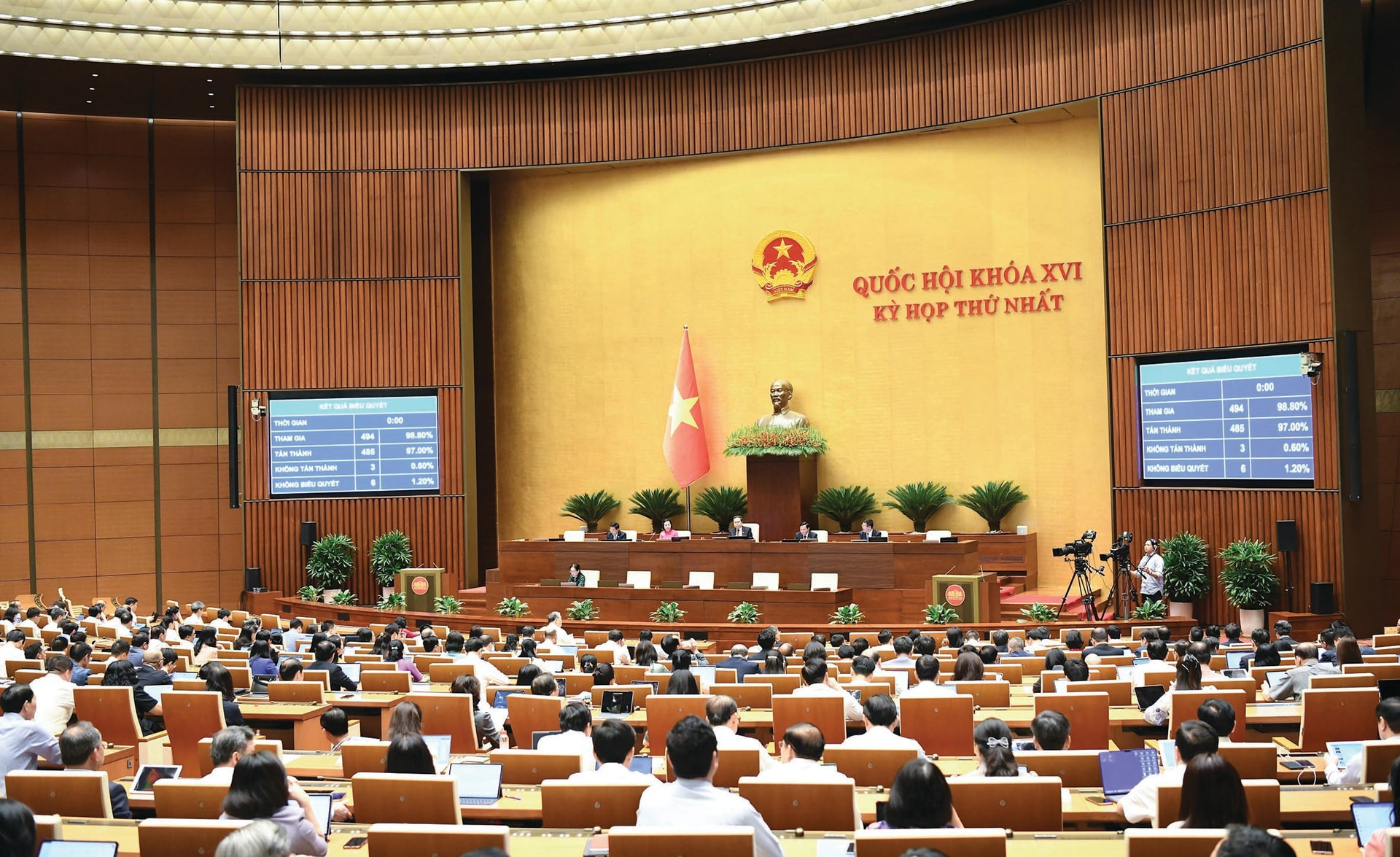
Vietnam's revised Law on Belief and Religion was passed by the 16th National Assembly on April 23, 2026.
Before being submitted to the legislature, the draft law underwent broad consultation organized by the Ministry of Ethnic and Religious Affairs, involving legal experts, policymakers, religious organizations, dignitaries, clergy and other religious representatives.
The ministry also studied religious legislation in a number of countries, selectively incorporating international experience considered relevant to Vietnam's circumstances.
According to Report No. 3061/BC-BDTTG, issued by the ministry on December 15, 2025, lawmakers examined legal frameworks governing freedom of belief and religion in several countries while preparing the revised legislation.
The review concluded that every country has developed its own approach to governing religious affairs.
In Germany, legislation distinguishes between individual religious freedom and collective religious freedom. Collective rights are recognized only for religious communities that possess their own constitutional framework and maintain stable membership over time.
France, by contrast, follows a secular model based on the principles of freedom of religion, equality among religions and state neutrality.
Italy, home to the Holy See and historically closely associated with the Catholic Church, nevertheless enshrines freedom of belief and religion and equality among religions in its 1948 Constitution, while maintaining no official state religion.
Protecting religious freedom while maintaining the rule of law
Although different countries adopt different approaches, most do not regard religious freedom as existing outside legal oversight.
Instead, freedom of belief and religion is generally exercised within a clearly defined legal framework.
Experience from other countries suggests that effective governance depends less on whether regulation is more restrictive or more permissive than on whether the legal framework is transparent, stable, practical and suited to national conditions.
In the United Kingdom, religious activities are governed through detailed legal provisions covering matters such as registration, places of worship and sanctions for violations.
Meanwhile, Russia and China place greater emphasis on preventing the misuse of religion in ways that could threaten national security, political stability or public order.
These examples suggest that effective governance depends not simply on administrative control but on laws that clearly define both rights and responsibilities.
In Vietnam, the Law on Belief and Religion, which came into effect in 2018, established an important legal framework for religious activities.
The law both protects citizens' freedom of belief and religion and strengthens the effectiveness of state administration in this field.
However, evolving social realities have created new challenges.
Religious life has become increasingly diverse, demand for religious practice continues to grow and Vietnam's deeper international integration has generated additional issues requiring further refinement of the legal framework.
Harnessing religious resources for social development
International experience also demonstrates that religion can contribute not only to people's spiritual lives but also to broader social development.
Several countries have established legal mechanisms enabling religious organizations to work alongside governments in providing social services, thereby easing pressure on public finances while strengthening social welfare.
Germany, for example, has developed a model of cooperation between the state and religious organizations to mobilize social resources in areas where public authorities alone may not fully meet community needs.
In Vietnam, religious organizations have increasingly participated in charitable and humanitarian activities, healthcare services, poverty reduction and disaster relief.
These contributions represent an important social resource that can continue to be encouraged through a legal framework that is transparent, appropriate and publicly accountable.
As religious life continues to evolve, the revised Law on Belief and Religion reflects Vietnam's effort to selectively incorporate international experience while adapting it to domestic realities.
This selective approach is presented not merely as a legislative technique but as part of Vietnam's broader approach to modern governance - respecting diversity, safeguarding human rights and freedoms, while ensuring that these rights are exercised within the framework of the law, national interests and social stability.
Sy Hao
.svg)
