 Vietnamnet.vn

 Podcast



The experiences of South Korea and China show that sustained double-digit growth stems not from luck, but from bold reform, a relentless focus on productivity, and smart use of resources. For Vietnam, 2026 could mark a historic economic turning point - if these lessons are applied well.
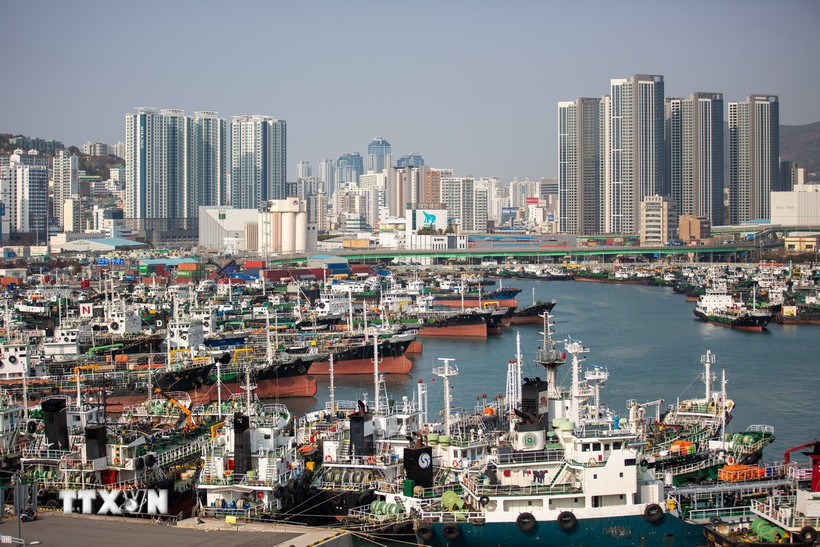
In 2025, Vietnam’s economy grew by approximately 8%, placing it among the fastest-growing economies in the region. For the first time, GDP surpassed $500 billion, and average per capita income crossed the $5,000 mark. These numbers reflect a significant leap forward.
However, the target for 2026 - over 10% GDP growth - raises not only the question of speed, but sustainability. How can growth be achieved both realistically in the short term and soundly in the long run?
Capital and labor: Resources nearing their limit
Vietnam’s growth model has long relied on expanding capital and labor inputs. But that strategy is reaching its limits.
In 2025, the labor force stood at around 53.5 million - an increase of less than 600,000 people from the year before, or just about 1%. Agricultural labor continues to shrink, meaning the supply of low-cost labor is drying up.
Meanwhile, capital efficiency remains a major bottleneck. Vietnam’s ICOR (Incremental Capital-Output Ratio) hovered between 5.8 and 6.0 in 2025 - significantly higher than the average for East Asian economies during their high-growth periods. In other words, Vietnam is “spending” too much capital for each unit of GDP.
TFP: The key to surpassing 10% growth
With capital and labor no longer growing robustly, total factor productivity (TFP) has become the most critical lever for high-quality growth.
In 2025, TFP contributed nearly 30% to GDP growth - a notable improvement from earlier years, but still modest when compared to the economies that once maintained double-digit growth.
If, in 2026, capital and labor can contribute only 6–7 percentage points, TFP will need to account for the remaining 3–4 points - meaning it must drive 30–40% of overall growth.
South Korea: High growth through capital efficiency and technology
During its peak growth years - from the 1970s through the early 1990s - South Korea often grew by 8–9% annually, occasionally exceeding 10%. TFP contributed about 35–40% to GDP growth.
What set Korea apart wasn’t just how much it invested, but how selectively it did so. Export-oriented industrialization, support for large corporate groups, education reform, and corporate governance improvements all helped increase capital efficiency.
As cheap labor ran out, Korea quickly transitioned to a growth model rooted in technology, innovation, and productivity - rather than stretching the old model further.
China: Reform fueled early gains, slowdown followed reform fatigue
China tells a similar story - on a much larger scale. Between 1990 and 2010, China’s GDP grew at nearly 10% annually on average, with TFP contributing around 30–35%.
Key drivers included institutional reform, market liberalization, FDI attraction tied to technology transfer, and state-owned enterprise reform. These boosted both capital and labor efficiency.
But when reforms slowed after 2010, TFP declined markedly - and GDP growth dropped to around 5–6%. The lesson is clear: sustained high growth is impossible without continuous productivity gains.
Vietnam is at a familiar crossroads
Vietnam now stands where Korea was in the late 1980s and China in the early 2000s - capital and labor still offer some room, but not endlessly.
The difference? Vietnam can move faster if it applies the hard-won lessons of its predecessors, rather than retracing their slow paths of investment-heavy, scale-based growth.
Three key lessons
First, institutional reform to cut “invisible” costs.
Administrative procedures currently cost Vietnamese businesses an estimated 5–7% of their revenue. Strong reforms that reduce these burdens could create economic value equivalent to hundreds of trillions of dong annually - growth without spending a cent of capital, directly boosting TFP.
Second, improve capital efficiency.
South Korea and China reached high growth with low ICORs. If Vietnam reduces its ICOR from around 6 to between 4.8 and 5.0, that alone could lift TFP-driven growth by 0.6–0.8 percentage points.
Third, invest in technology and people.
Korea has long invested a high share of GDP into education and R&D. China leveraged both technology transfer and the scale of its domestic market. In contrast, only about 35% of Vietnamese enterprises engage in innovation, and only 29% of the workforce holds formal qualifications or certifications - evidence that Vietnam still has vast untapped potential to boost TFP.
Double-digit growth doesn’t come from luck
A 10% GDP growth rate in 2026 is not a fantasy. But it is only feasible if TFP becomes the centerpiece of the development strategy.
As Korea and China have shown, sustained high growth is the product of difficult, deliberate reform - of pushing productivity and using resources more intelligently. For Vietnam, 2026 could be a breakthrough year - if the timing, commitment, and approach align.
To Van Truong
.svg)
