 Vietnamnet.vn

 Podcast



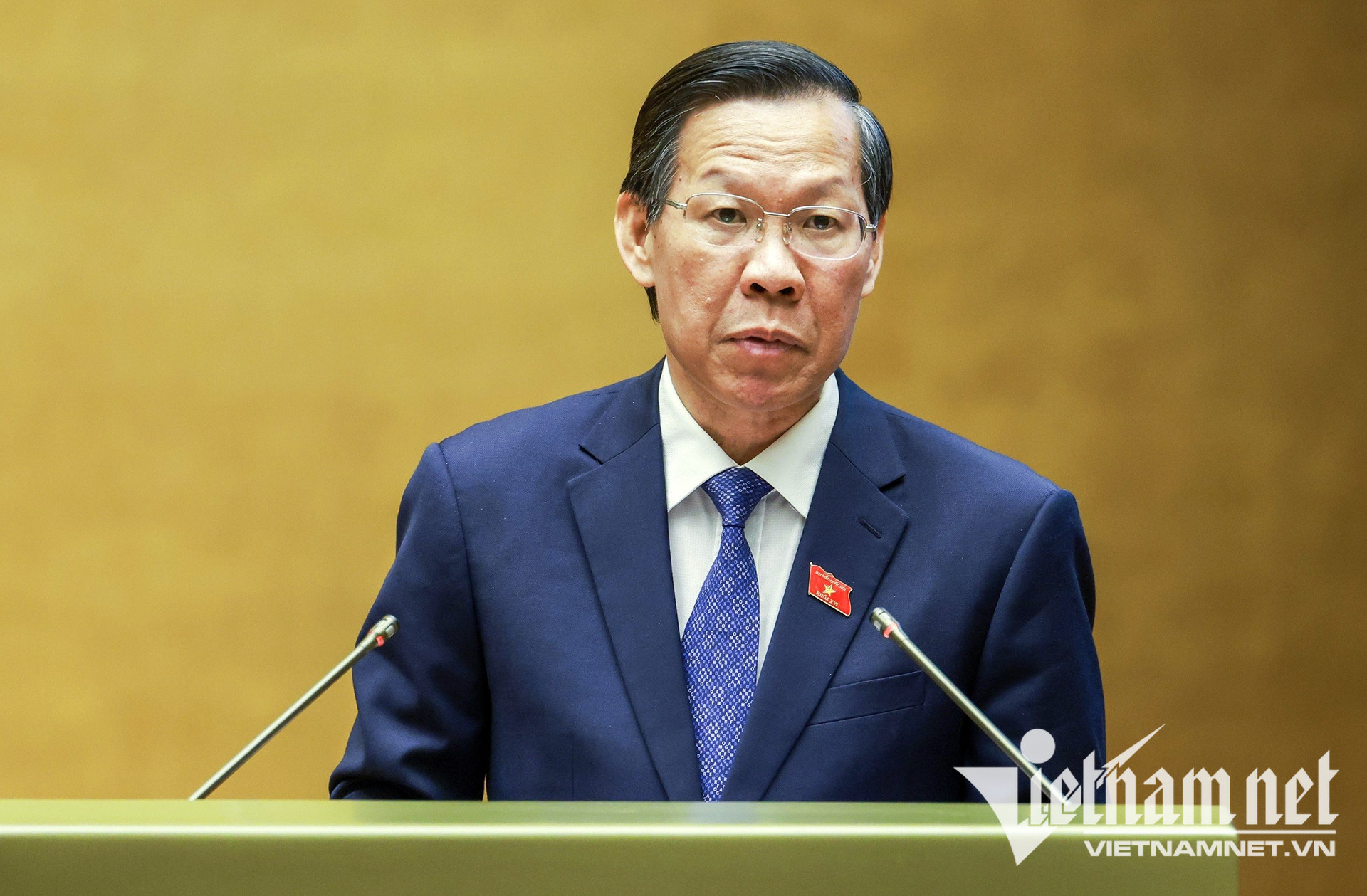
Phan Van Mai, Chairman of the National Assembly's Economic and Financial Committee, presented an appraisal report on the implementation of the 2026 socio-economic development plan and the proposed plan for 2027 at a session this morning.
The committee commended the Government and Prime Minister for their decisive and flexible leadership, as well as the efforts of ministries, sectors and local authorities.
It described the achievements recorded in the first year of the new term as significant, demonstrating Vietnam's adaptability and ability to maintain macroeconomic stability amid considerable uncertainty.
"In particular, strategic decisions on institutions, infrastructure, science, technology and administrative restructuring have begun to take effect, strengthening confidence and establishing an important foundation for acceleration and breakthroughs during 2026-2030," Mai emphasized.
Turning investment resources into productivity and production capacity
Despite these achievements, the Economic and Financial Committee identified several critical issues requiring greater attention in economic management.
First, although economic growth remains high, its underlying foundations are not yet sufficiently robust.
Notably, Vietnam's four largest local economies - Ho Chi Minh City, Hanoi, Hai Phong and Dong Nai - collectively account for nearly 47% of the country's gross regional domestic product (GRDP), yet all are projected to miss their 2026 growth targets.
Private investment has also failed to achieve a significant breakthrough, while labor productivity improvements remain slow.
Second, pressure on macroeconomic stability and financial security is increasing.
The average consumer price index (CPI) rose 4.52% during the first nine months, already reaching the full-year target of approximately 4.5%.
In the third quarter alone, CPI increased 4.80%.
Prices of essential goods and services have continued to rise, while the recovery in real purchasing power remains sluggish.
Third, substantial investment resources have been mobilized but have been slow to translate into productive capacity and new growth drivers.
Public investment disbursement reached 62.9% of the annual plan in the first nine months.
However, unrecovered advance payments accounted for as much as 37% of the amount disbursed.
Meanwhile, investment procedures had been completed for only approximately 58% of the central government budget allocations announced for the 2026-2030 period.
Fourth, institutional reforms have accelerated, but implementation remains a major bottleneck.
The two-tier local government model is generally operating smoothly, although administrative performance remains uneven, particularly at the commune level.
In some localities, decentralization and delegation of authority have not been accompanied by adequate financial resources, personnel or clearly defined implementation responsibilities.
This risks shifting administrative bottlenecks from higher levels of government to the grassroots level.
Fifth, businesses and household enterprises continue to face considerable difficulties.
Sixth, social development outcomes remain uneven.
Challenges include shortages of highly skilled workers, a large proportion of informal employment and persistently high youth unemployment.
The committee said that, beyond external factors, policymakers must fully recognize structural weaknesses in productivity, domestic economic capacity and policy implementation.
For the remainder of 2026, the most important priority is not simply mobilizing additional resources.
Instead, Vietnam must improve the efficiency of resource allocation and utilization, converting available resources into higher productivity, stronger production capacity and greater economic competitiveness.
Linking performance to the accountability of leaders
Regarding the proposed 2027 socio-economic development plan, the committee cautioned that economic management scenarios must account for the delayed effects of shocks experienced in 2026.
Particular concerns include the possibility of persistently high energy prices and accumulated inflationary pressures emerging as tax and fee support measures are adjusted.
The committee therefore recommended contingency plans and clearly defined response thresholds for adverse scenarios.
It warned against allowing ambitious growth objectives to undermine the policy flexibility needed to maintain stability and support development over the medium term.
Key socio-economic targets for 2027
GDP growth of at least 10%.
Consumer price index growth of approximately 4.5%.
GDP per capita of US$6,100.
Average social labor productivity growth of 8.6%.
A reduction of 1-1.5 percentage points in the poverty rate under the multidimensional poverty standard.
The committee reiterated that targeting GDP growth of 10% or higher demonstrates strong determination but presents substantial challenges.
Vietnam's growth foundations remain fragile, while inflationary pressures and demand for investment capital and energy continue to increase.
Some committee members called for greater clarity on growth scenarios and specific measures for individual sectors, localities and emerging growth drivers.
They also recommended more realistic assessments of the growth potential of major economic centers, the room available to keep CPI growth around 4.5%, and the consistency and feasibility of key macroeconomic balances.
According to Mai, achieving growth of at least 10% will depend less on introducing additional policy measures than on identifying the right strategic breakthroughs.
The decisive factors will be improving implementation efficiency, productivity and the economy's capacity for self-reliance.
The Economic and Financial Committee therefore proposed six priority areas.
The first is to maintain macroeconomic stability as an essential prerequisite for sustained high growth.
The second is to transform the growth model toward greater productivity and higher domestic value added.
A particularly urgent task is to finalize mechanisms and policies that will enable the international financial centers in HCM City and Da Nang to operate effectively and deliver tangible results, helping attract international capital flows.
The committee also emphasized prioritizing strategic infrastructure and energy security.
Investment in science, technology, innovation and digital transformation must shift away from a primary focus on financial and other inputs toward developing practical applications, improving productivity and commercializing research outcomes.
Institutional reform should likewise move beyond measuring the number of legal documents issued and focus instead on the effectiveness of implementation.
High economic growth must also be accompanied by cultural and social development.
Stressing that implementation is the decisive factor, the committee called on the Government to clearly define responsibilities, deadlines, resources and expected outcomes for each task.
It also recommended strengthening inspection and supervision while linking implementation results directly to the accountability of agency and institutional leaders.
"The overarching requirement is to combine high economic growth with macroeconomic stability, sustainable development and tangible improvements in the material and spiritual well-being of the people," Mai emphasized.
Thu Hang
.svg)
