 Vietnamnet.vn

 Podcast


Vietnam's National Assembly on November 10 discussed investment plans for three expressway projects totaling approximately 430.5 kilometers, with a combined preliminary cost of VND 162.39 trillion (about $6.2 billion).
The projects include the 179.5-kilometer Moc Chau - Son La - Dien Bien Expressway, the 119-kilometer Bao Ha - Lai Chau Expressway and the 132-kilometer Quang Ngai - Kon Tum Expressway.
According to the government's proposal, the expressways will have four lanes, with design speeds ranging from 80 to 100 kilometers per hour. Land clearance will be carried out to accommodate the planned four-lane configuration.
The projects are expected to require approximately 4,583 hectares of land, including around 1,155 hectares of forestland proposed for conversion to other uses. Compensation, assistance and resettlement costs are estimated at VND 19.06 trillion ($733 million).
Of the total investment, the Moc Chau - Son La - Dien Bien Expressway accounts for VND 63.12 trillion ($2.43 billion), the Bao Ha - Lai Chau Expressway VND 50.99 trillion ($1.96 billion), and the Quang Ngai - Kon Tum Expressway VND 48.28 trillion ($1.86 billion).
National Assembly deputy Pham Van Hoa of Dong Thap province supported the investment plans but called for greater attention to land clearance and resettlement.
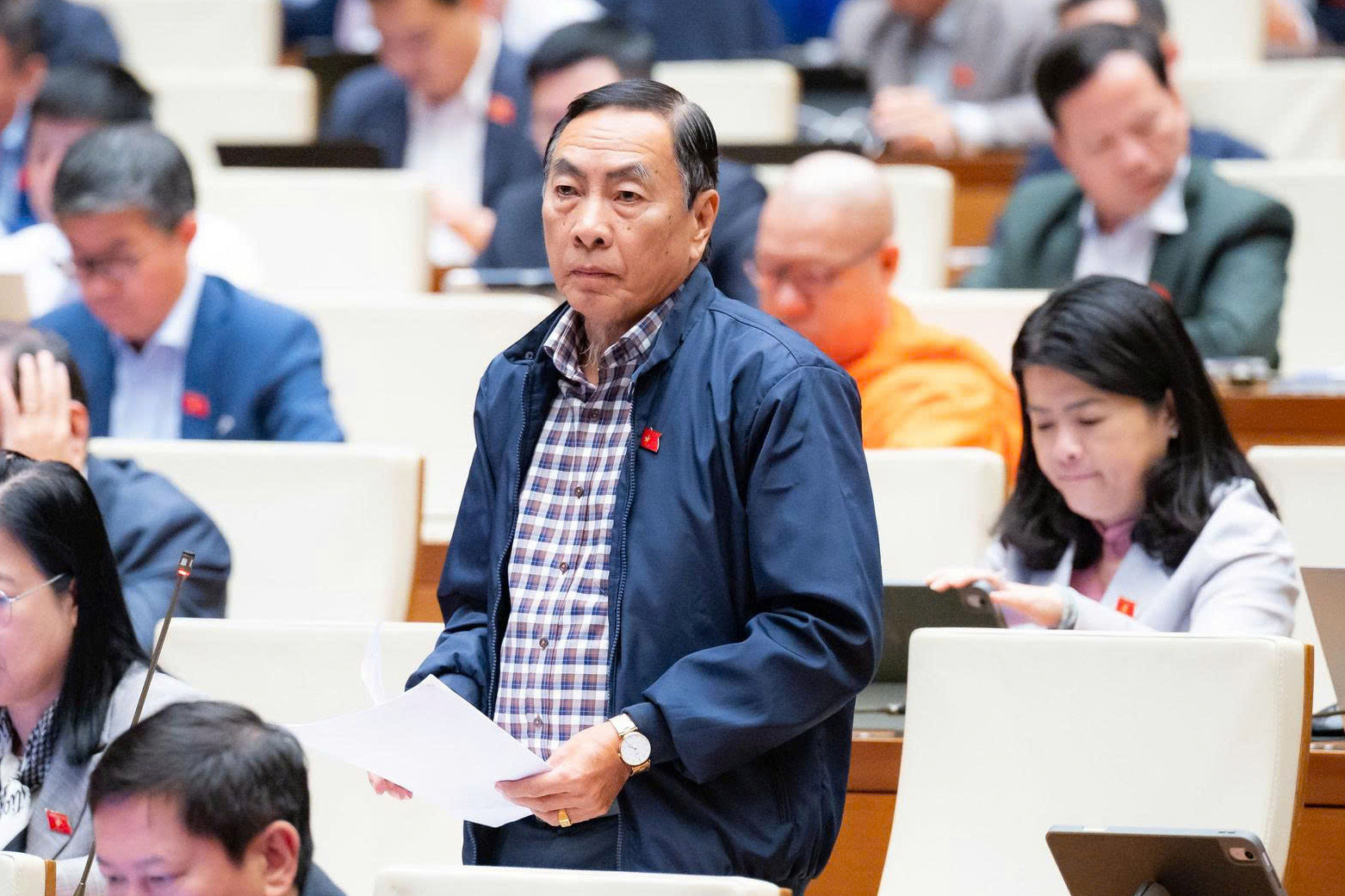
Given the scale of the projects and the number of residents affected, he urged local authorities to minimize the acquisition of forestland and rice-growing areas.
"In some places, more than 1,000 households will be affected, with many requiring resettlement. Local authorities must pay close attention to these issues to ensure the expressways deliver the greatest possible benefits," he said.
Deputy Nguyen Thi Viet Nga of Hai Phong raised concerns about the financial burden on Lai Chau province, urging the government to reconsider the level of local budget contributions in light of the province's limited resources.
While supporting the principle of sharing investment costs between central and local budgets, she argued that Lai Chau's contribution should be carefully assessed against its financial capacity and essential spending commitments.
Under the proposed financing arrangement, Lai Chau would contribute approximately VND 2.004 trillion ($77 million).

Preliminary figures covering seven locally managed expressway projects show that this amount represents 38.7% of the province's planned local budget capital for 2026-2030, the highest proportion among the seven projects.
Nga warned that allocating such a substantial share of local resources to expressway construction could reduce funding available for schools, healthcare facilities, clean water supplies, rural infrastructure and poverty reduction programs.
She called on the government to thoroughly review Lai Chau's fiscal capacity and consider increasing support from the central budget, potentially covering the entire project cost if conditions permit.
Deputy Nguyen Dang An of Lang Son shared these concerns, saying the government should determine provincial contributions based on the actual financial capacity of each locality, particularly those with limited annual budget revenues.
Deputy Duong Khac Mai of Lam Dong also noted that Lai Chau and Quang Ngai remain economically disadvantaged provinces.
Requiring them to contribute thousands of billions of dong, including Lai Chau's more than VND 2 trillion commitment, would place considerable pressure on their budgets, he said.
Mai proposed that the National Assembly and government consider using central government funds to cover all or most land clearance costs in these provinces.
Construction minister explains funding and expressway design speeds
Responding to lawmakers' concerns, Minister of Construction Tran Hong Minh said all three expressway projects comply with applicable technical regulations and design standards.
He explained that mountainous terrain, steep gradients and substantial elevation differences make lower design speeds necessary for safety and engineering reasons.
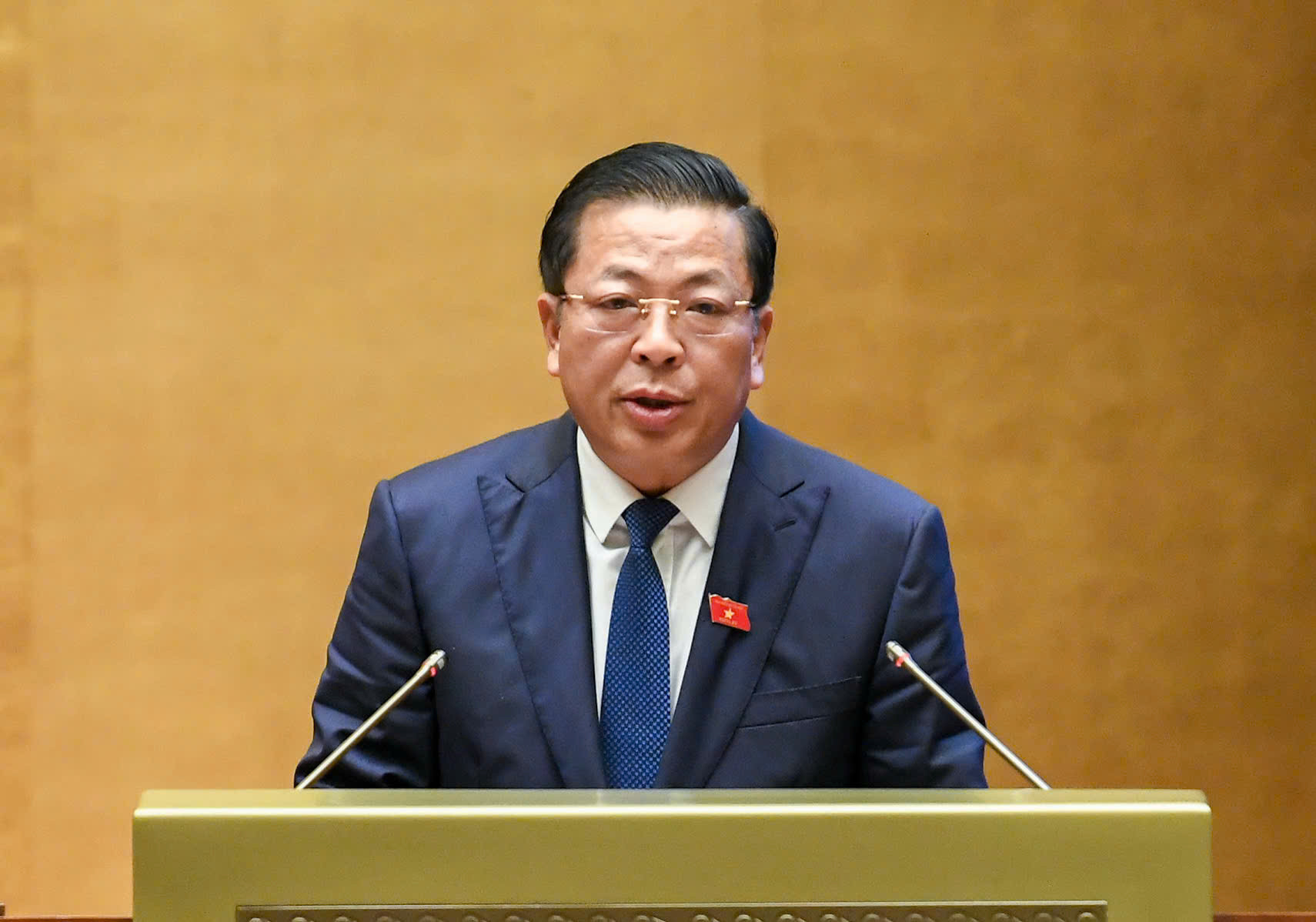
The Moc Chau - Son La - Dien Bien route, for example, passes through terrain with elevation differences exceeding 1,000 meters.
For such mountainous sections, the four-lane expressways are designed for speeds of 80 kilometers per hour, while sections crossing flatter terrain can accommodate design speeds of 100 to 120 kilometers per hour.
Minh said the proposed routes were selected in accordance with approved planning, technical requirements and local terrain conditions.
The alignments were also designed to minimize impacts on environmentally and socially sensitive areas, scenic landscapes, national defense land and land clearance costs.
Addressing concerns about local funding capacity, the minister said the central government had already prioritized VND 119.398 trillion ($4.59 billion) for the three projects, representing approximately 75% of their combined estimated investment.
The government would continue examining arrangements to secure the remaining funding, he added.
Minh assured lawmakers and provincial authorities that they could be confident about the availability of funding for project implementation.
Regarding the role of local authorities as project owners and their financial contributions, the minister said 15 localities had been assigned responsibility for expressway construction projects, with all contributing funds from their own budgets.
He cited Hanoi, Ho Chi Minh City, Khanh Hoa, Dak Lak, Dong Nai, An Giang, Can Tho, Soc Trang, Gia Lai, Nghe An, Son La, Phu Tho, Ninh Binh, Cao Bang, Tuyen Quang and Dien Bien.
Some mountainous provinces, despite facing difficult economic conditions, had committed to covering between 50% and 100% of land clearance costs, he said.
Maintaining this cost-sharing policy would ensure consistency and equal treatment among localities during project implementation.
Minh added that Quang Ngai and Lai Chau, which are responsible for managing two of the proposed expressway projects, had agreed to contribute 50% of their respective land clearance costs.
Tran Thuong

