 Vietnamnet.vn

 Podcast


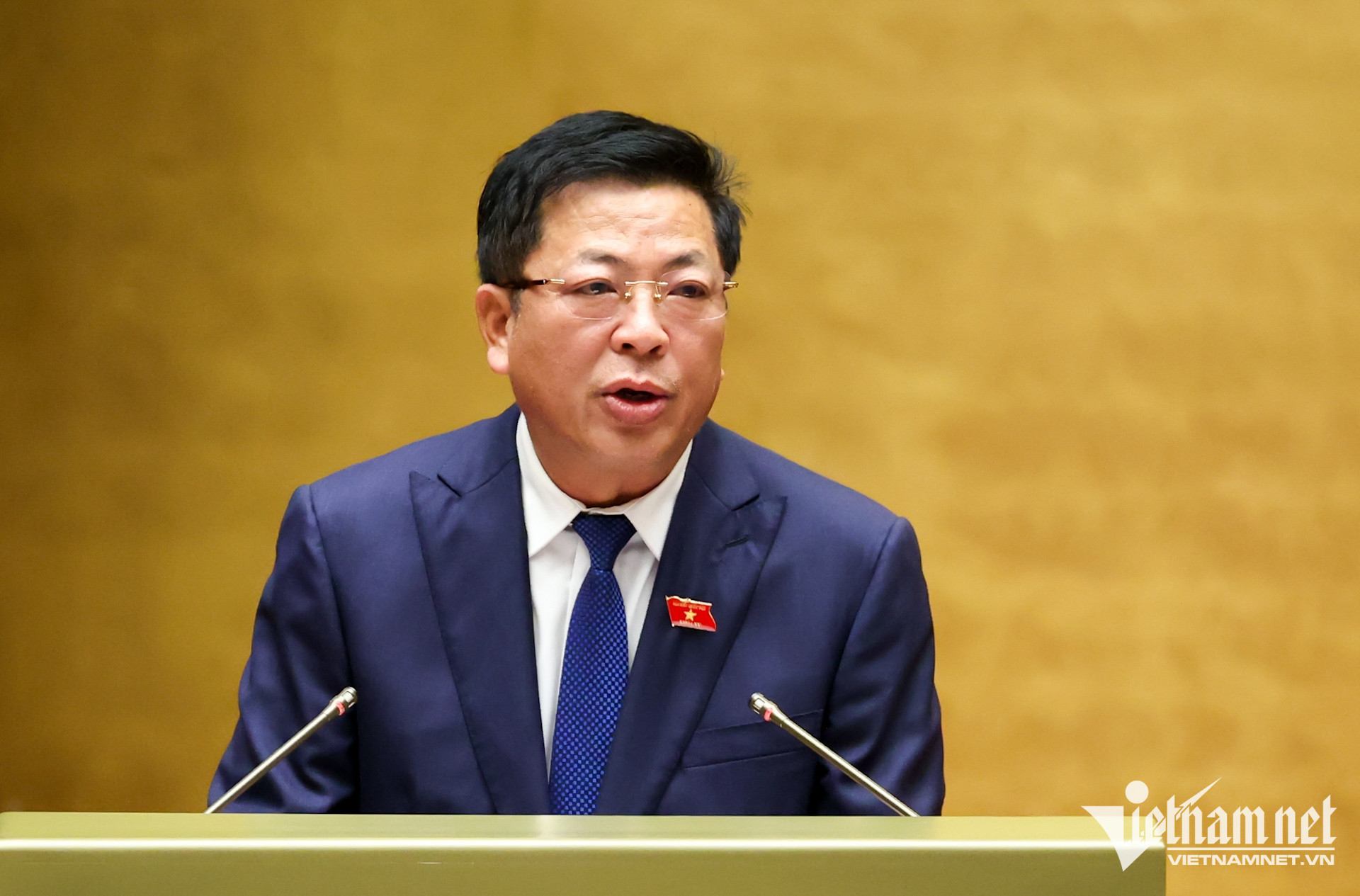
On November 7, Minister of Construction Tran Hong Minh presented the Government's proposal to the National Assembly seeking approval in principle for three expressway projects with a combined preliminary investment of VND 162.393 trillion (approximately $6.2 billion).
The proposed routes are the Bao Ha - Tan Phong section of the Bao Ha - Lai Chau Expressway, the Quang Ngai - Kon Tum Expressway, and the section of the Moc Chau - Son La - Dien Bien Expressway within Son La province.
Expressway network to reach all 34 provinces and cities
According to the Government's proposal, early investment in the three expressways is essential to achieving Vietnam's target of 5,000km of expressways by 2030.
The projects are also intended to meet growing transport demand, as existing national highways connecting Son La, Lai Chau and Quang Ngai provinces have limited capacity and relatively low technical standards.
Once operational, the new expressways are expected to reduce travel times by 50-60% compared with existing national highways.
Lai Chau remains the only province in Vietnam without an expressway passing through its territory. The Bao Ha - Lai Chau Expressway would complete expressway coverage across all 34 provinces and centrally governed cities.
The Moc Chau - Son La - Dien Bien Expressway will connect with adjacent expressway sections, helping establish a continuous Hanoi - Phu Tho - Son La - Dien Bien expressway corridor by 2030-2031.
Meanwhile, the Quang Ngai - Kon Tum Expressway will form an east-west transport corridor linking the eastern and western North - South expressways and connecting the Central Highlands with seaports along Vietnam's eastern coast.
The three projects have a combined length of approximately 430.5km, comprising:
Moc Chau - Son La - Dien Bien Expressway: 179.5km.
Bao Ha - Lai Chau Expressway: 119km.
Quang Ngai - Kon Tum Expressway: 132km.
All three expressways are planned with four lanes and design speeds of 80-100km/h. Land clearance will be carried out according to the planned four-lane configurations.
The projects are expected to require approximately 4,583 hectares of land, including around 1,155 hectares of forest land proposed for conversion to other uses.
Compensation, assistance and resettlement costs are estimated at VND 19.056 trillion (approximately $733 million).
The Government previously examined public-private partnership arrangements under build-operate-transfer (BOT) contracts.
However, financial calculations showed that even with state funding covering approximately 50-70% of total investment, a viable capital recovery period could not be determined.
The expressways will also pass through mountainous and border regions with significant ethnic minority populations and difficult economic conditions.
Given their essential interregional role in reducing transport costs and attracting investment, the Government has proposed implementing all three projects through public investment.
Minister Tran Hong Minh said the preliminary combined investment would reach VND 162.393 trillion (approximately $6.2 billion).
Of this amount, the Moc Chau - Son La - Dien Bien Expressway would require VND 63.120 trillion (approximately $2.43 billion), the Bao Ha - Lai Chau Expressway VND 50.990 trillion (approximately $1.96 billion), and the Quang Ngai - Kon Tum Expressway VND 48.283 trillion (approximately $1.86 billion).
The proposed funding structure includes approximately VND 158.342 trillion ($6.09 billion) from the central government budget and VND 4.051 trillion ($156 million) from local budgets.
Local contributions would cover approximately half of the compensation, assistance and resettlement costs in the two provinces assigned to oversee expressway construction components.
Lai Chau would contribute VND 2.004 trillion ($77 million), while Quang Ngai would provide VND 2.047 trillion ($79 million).
The Government expects to allocate approximately VND 119.398 trillion ($4.59 billion) from the central budget during 2026-2030, ensuring sufficient funding for the projects to be substantially completed by 2030.
According to the proposed schedule, investment preparation will take place during 2026-2027.
Compensation, resettlement and construction are expected to begin in 2027, with substantial completion targeted for 2030 and operations scheduled to start in 2031.
The Government has also asked the National Assembly to authorize special mechanisms and policies similar to those previously approved for nationally important infrastructure projects.
These include five policies covering authority to adjust investment approvals, compensation and resettlement, direct contractor appointments, planning adjustments and construction waste disposal sites.
Minimizing impacts on natural forests and protected areas
Presenting the appraisal report, Phan Van Mai, Chairman of the National Assembly's Economic and Financial Committee, said the committee supported investment in all three expressway projects.
Regarding the 163km Bao Ha - Lai Chau Expressway, the Government plans to prioritize construction of the 119km Bao Ha - Tan Phong section.
The committee requested clarification of the investment roadmap for the remaining section extending to the Ma Lu Thang border gate.
It also called for further optimization of the route alignment to minimize land acquisition, reduce impacts on natural forests and protected areas, and safeguard local livelihoods.
Regarding funding, the committee requested clarification of why Lao Cai province would not contribute to compensation, assistance and resettlement costs.
It also asked the Government to assess Lai Chau province's ability to provide its proposed VND 2.004 trillion ($77 million) contribution.
For the Moc Chau - Son La - Dien Bien Expressway, the appraisal body said many members supported building the project to a complete four-lane expressway standard with a design speed of 80km/h.
This approach was considered consistent with long-term transport demand and would help avoid unnecessary costs and difficulties associated with future upgrades or expansion.
Regarding the proposal to finance the project entirely through the central government budget, the Government explained that Son La is a financially constrained border province.
The province has already allocated available resources to 17 other connecting roads and the Hoa Binh - Moc Chau Expressway, leaving it unable to provide additional counterpart funding.
The committee urged the Government to continue reviewing the proposed funding arrangements to ensure their feasibility at each implementation stage.
Tran Thuong

