 Vietnamnet.vn

 Podcast



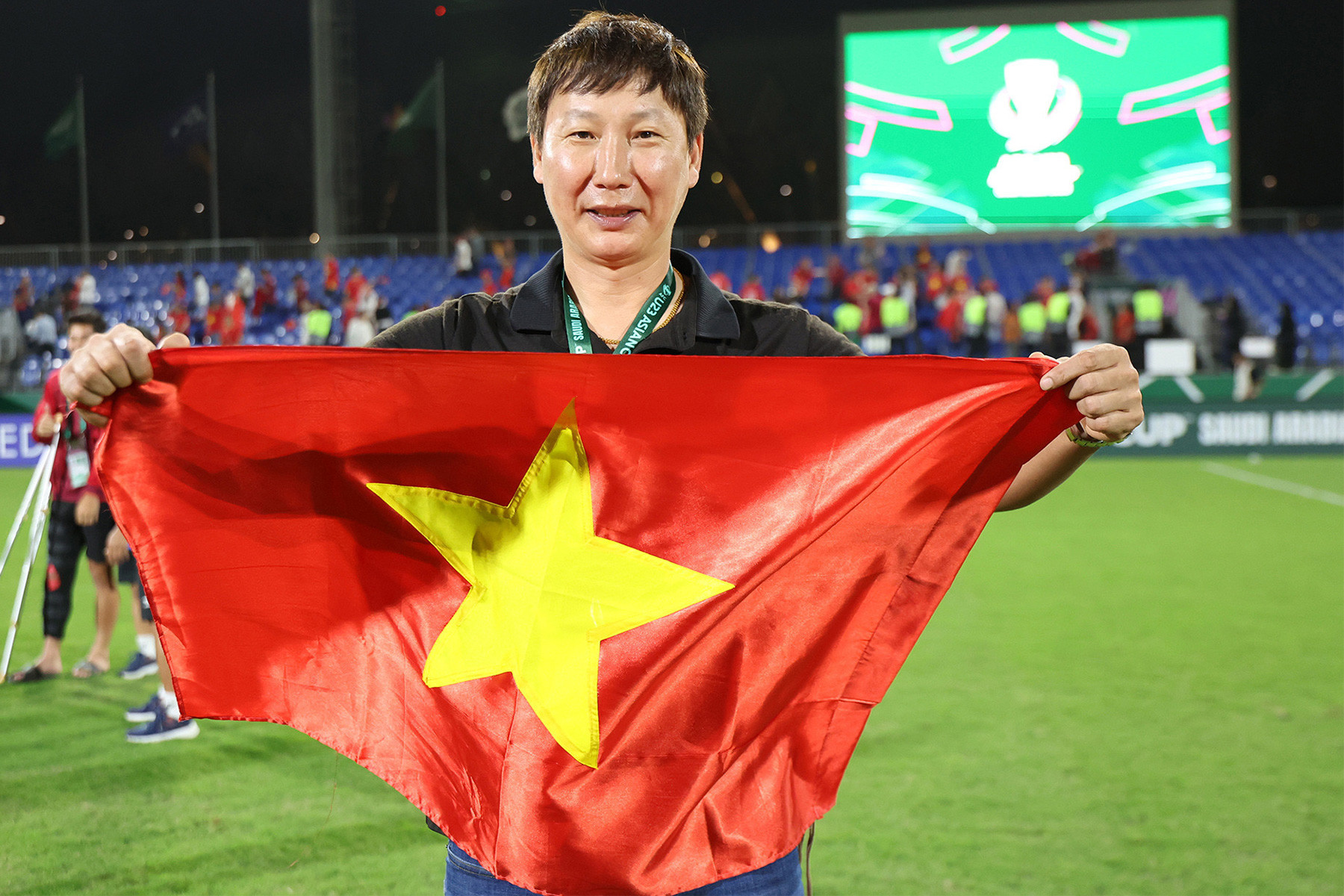
A year of opportunity
Rarely has Vietnamese football faced such a dense and high-quality schedule as this year. Within a short span, the team will compete in the Asian Cup 2027 qualifiers, the ASEAN Cup and the FIFA ASEAN Cup - a newly introduced regional tournament.
This demanding sequence is not only a physical test but also a valuable opportunity for Kim Sang Sik and his players to accumulate experience, with a broader aim of reaching the Asian Cup finals, the continent’s premier stage, early next year.
In particular, the ASEAN Cup presents a historic chance. Should Vietnam successfully defend their title, Kim Sang Sik would achieve what his compatriot Park Hang Seo could not.
The opportunity is tangible. Excluding Indonesia, Vietnam are widely regarded as the strongest team in the region at present, especially after strengthening the squad with overseas Vietnamese and naturalized players. It is understandable that the coach is eager to seize this moment and leave his mark.
But caution is essential
Opportunity, however, comes hand in hand with risk. Kim Sang Sik’s ambition appears to extend beyond the senior national team to the U23 level, particularly with an eye on the Asian Games.
Reports suggesting a shift toward using more U23-aged players instead of a younger U21 core indicate that the coach may be attempting to pursue multiple targets simultaneously.
Ambition is necessary, especially as Vietnamese football looks to enter a new cycle of success, even nurturing hopes of qualifying for the 2030 World Cup.
Yet the challenge lies in resource allocation and timing peak performance. Competing across multiple tournaments risks stretching the squad too thin, potentially leading to fatigue and a loss of form at decisive moments.
For that reason, Kim Sang Sik must approach squad selection with careful judgment, avoiding over-reliance on key players. Equally important is identifying clear priorities.
At this stage, achieving strong results at the Asian Cup 2027 should arguably stand as the primary objective, rather than attempting to maximize success across every competition.
Sometimes, choosing to let go of one target is not a sign of failure but of strategic thinking. Without that clarity, Vietnam risk being caught in a cycle of short-term results at the expense of long-term development.
Conversely, with a well-calibrated plan and precise timing, Kim Sang Sik can guide Vietnam forward in a sustainable way - building progress that extends beyond a single generation of core players.
Duy Nguyen
.svg)
