 Vietnamnet.vn

 Podcast



Dong Duong Buddhist Monastery, located in Dong Duong commune in Da Nang, was once a prominent Buddhist center not only of the ancient Champa kingdom but also of the wider Southeast Asian region during the medieval period. It is considered a sacred site due to the vast scale of its architectural remains and its cultural influence on surrounding areas.
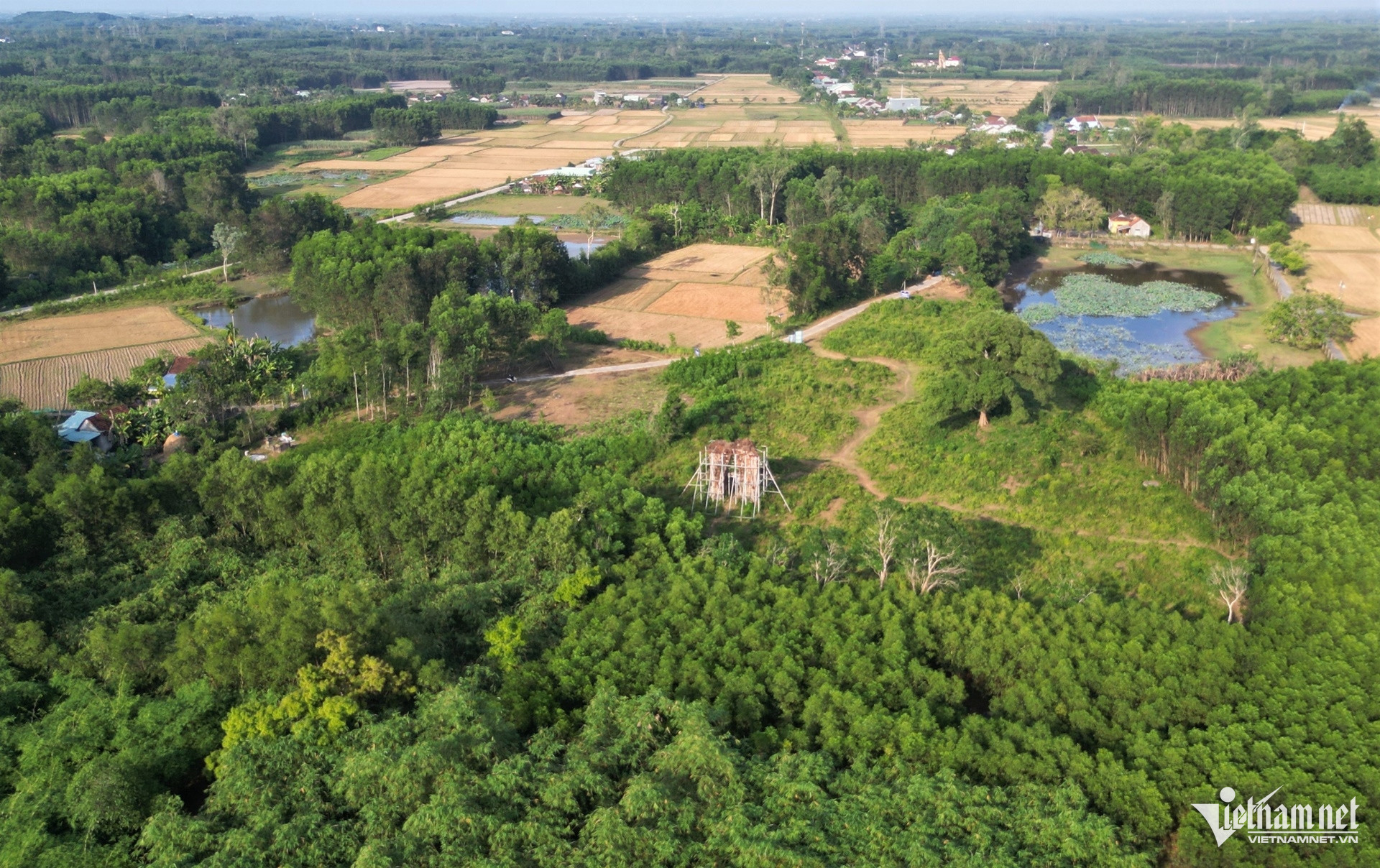
After 1,151 years, many structures of the monastery have faded into traces scattered across fields and vegetation.
According to inscriptions found at the site, the complex was commissioned by King Indravarman II in 875 to worship Laksmindra - Lokesvara, the bodhisattva protector of the dynasty. The entire complex was arranged along an east-west axis stretching approximately 1,300 meters, comprising a vihara, the main temple, monks’ quarters, lecture halls, and numerous auxiliary structures.
The site once featured multiple layers of walls, temples, and monastic buildings, forming a large-scale Buddhist center of Champa at the time.
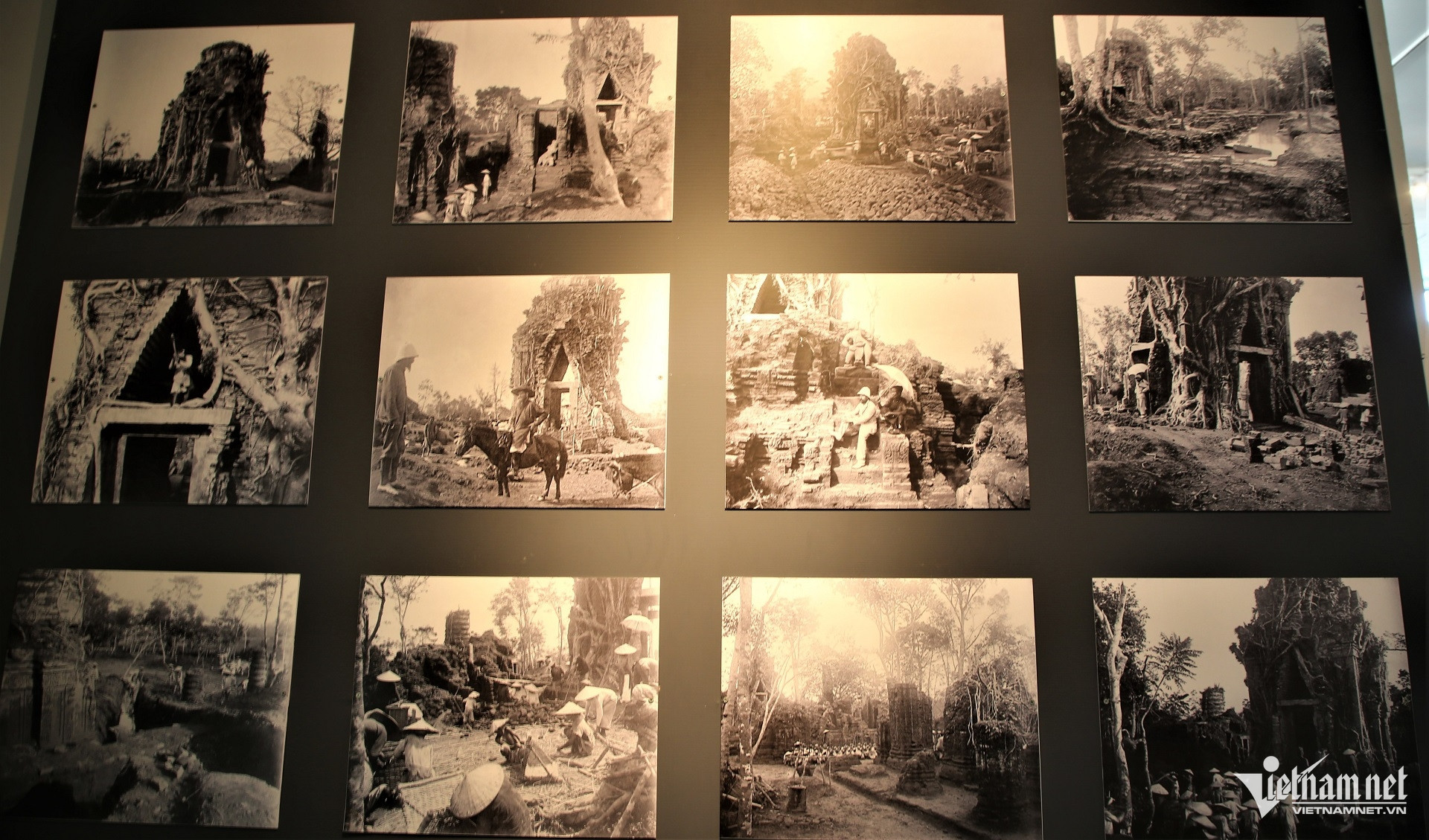
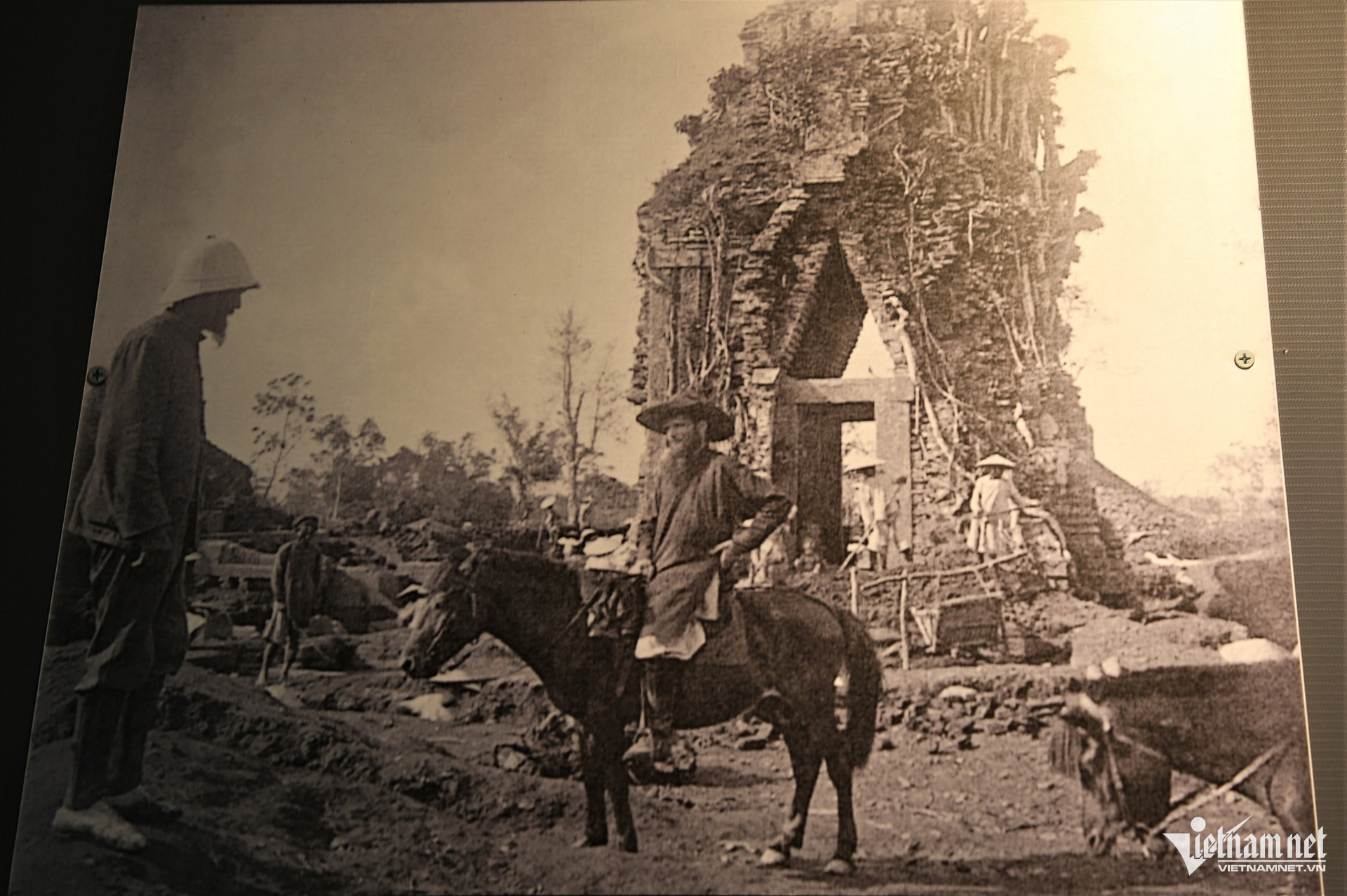
In the early 20th century, French archaeologists such as L. Finot and H. Parmentier conducted excavations at Dong Duong, uncovering hundreds of valuable Cham sculptures.
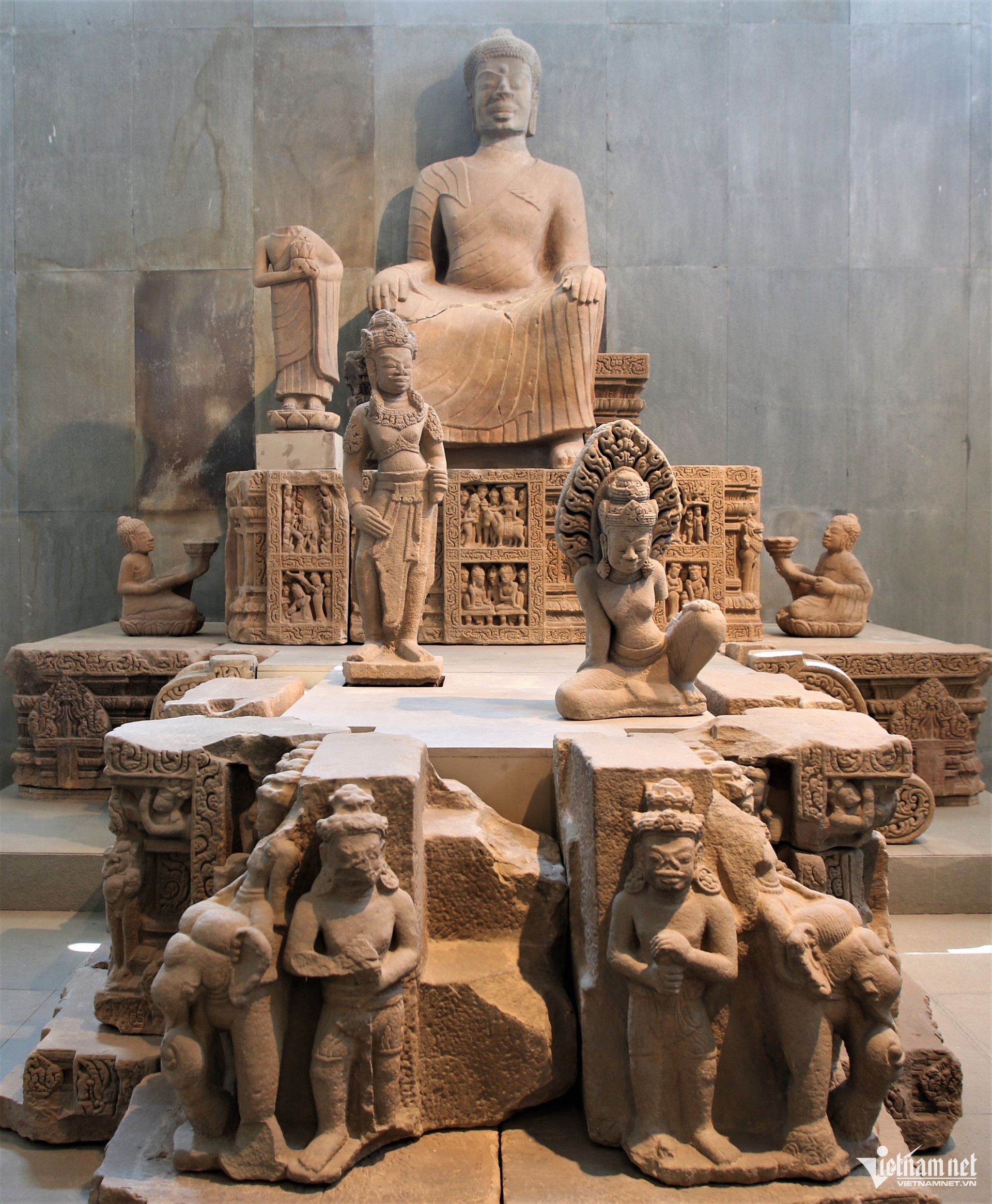
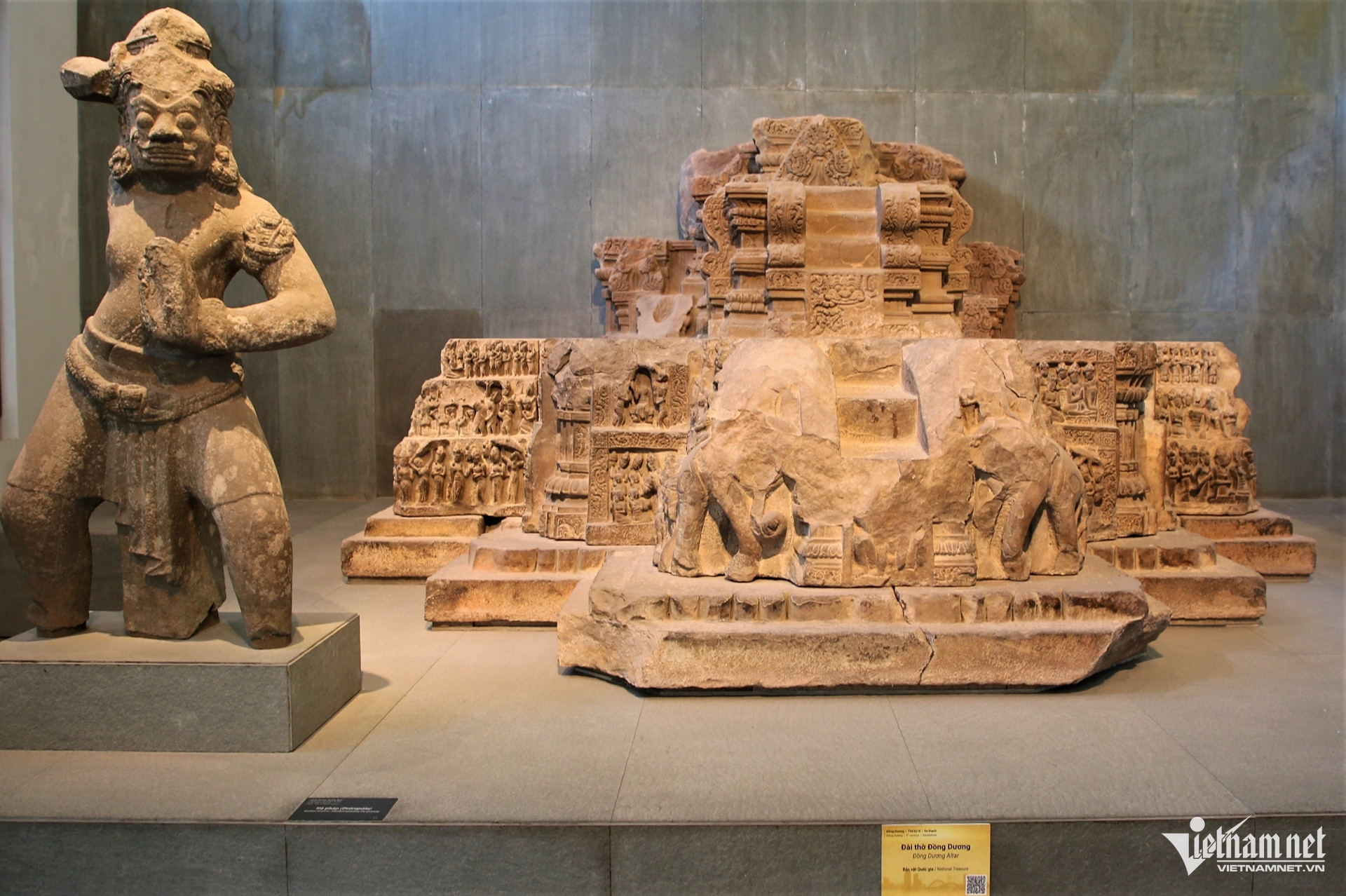
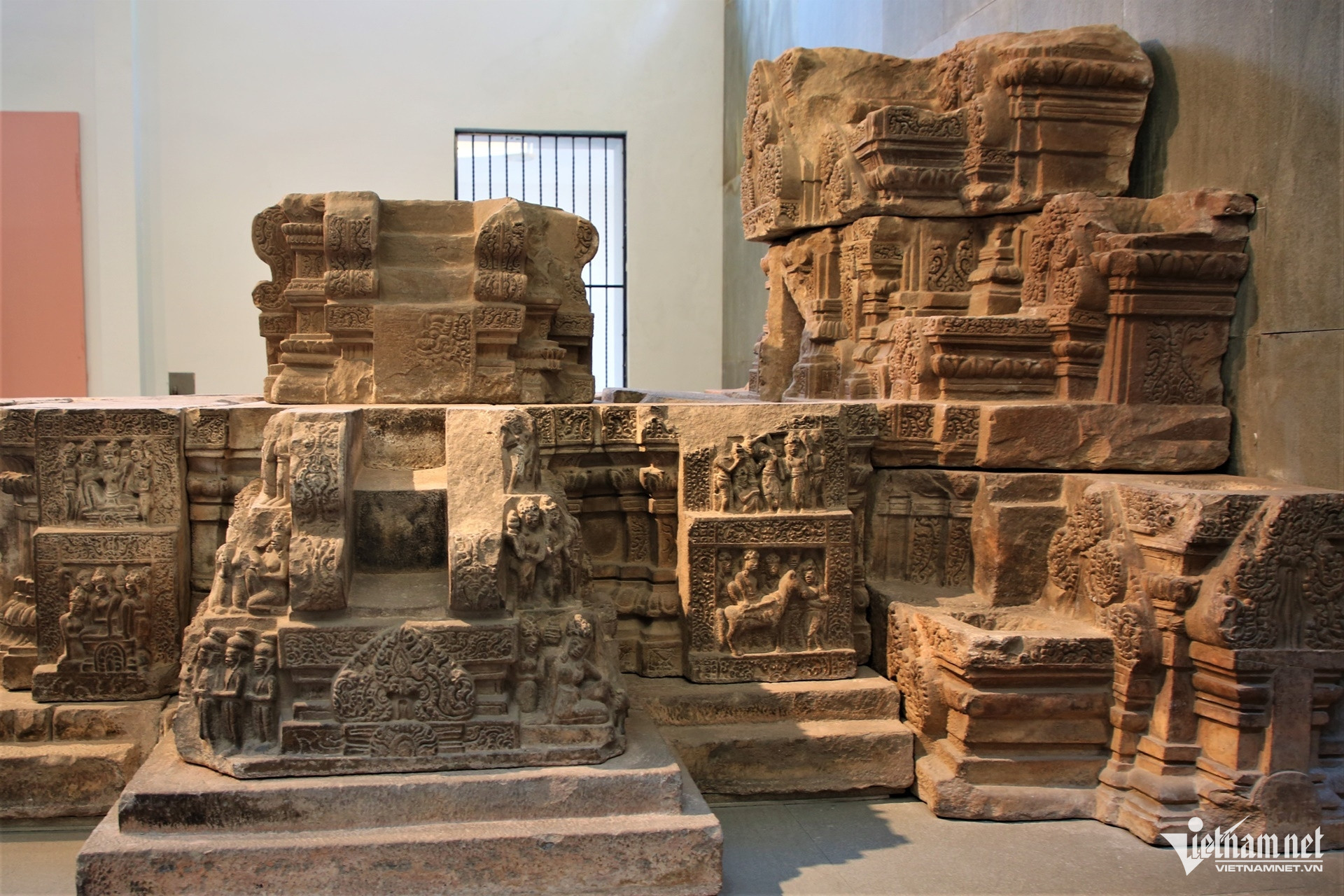
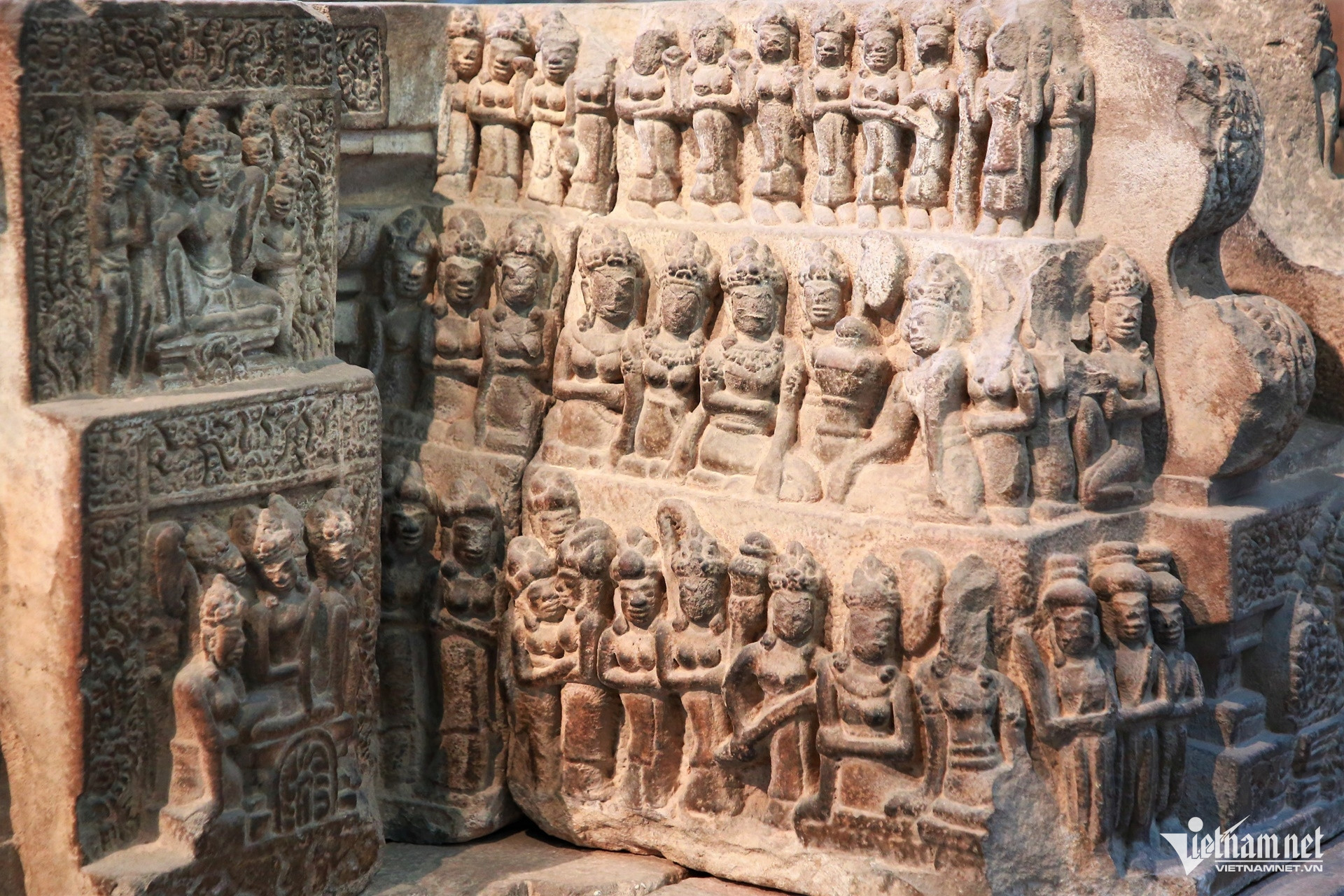
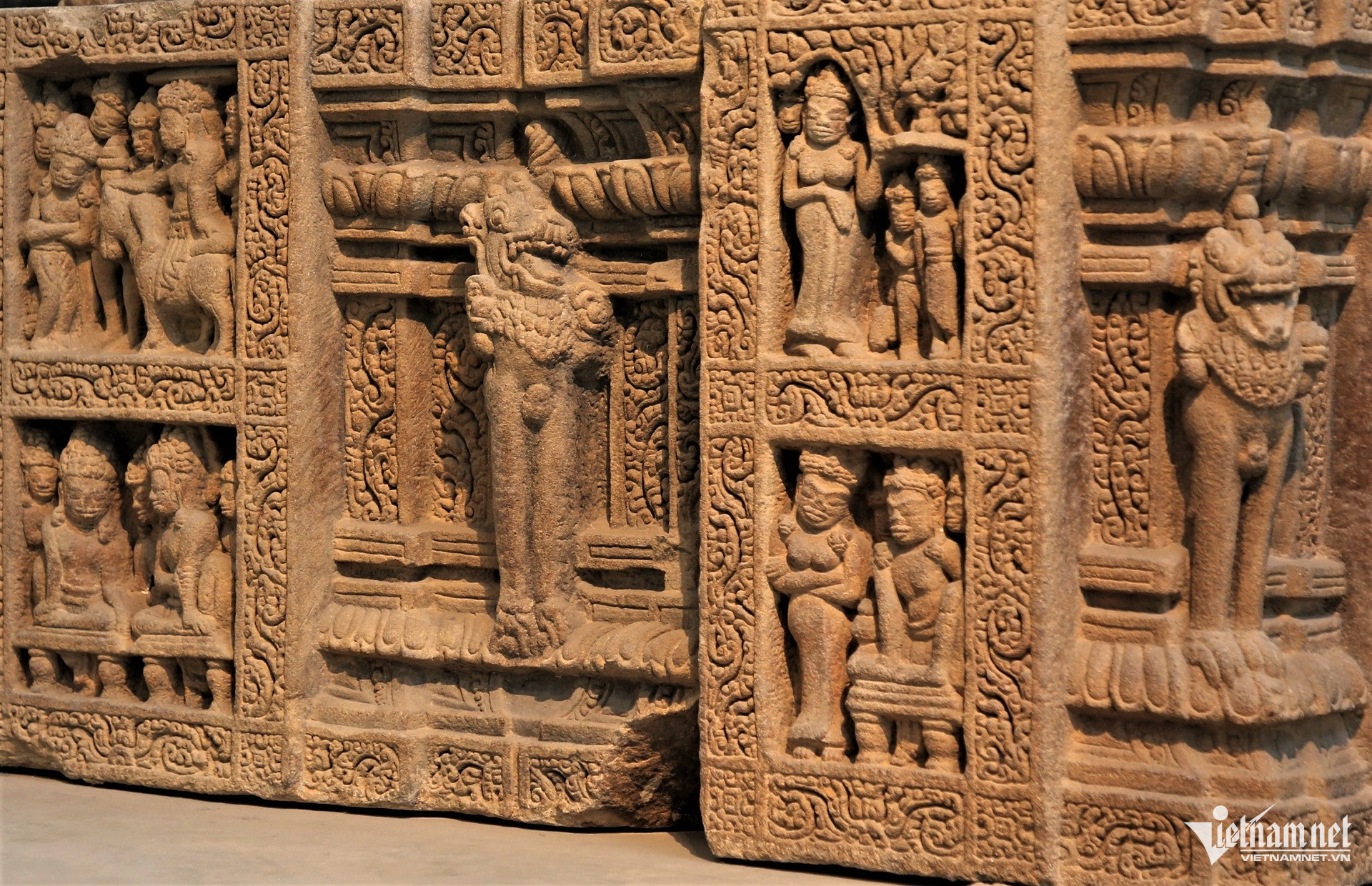
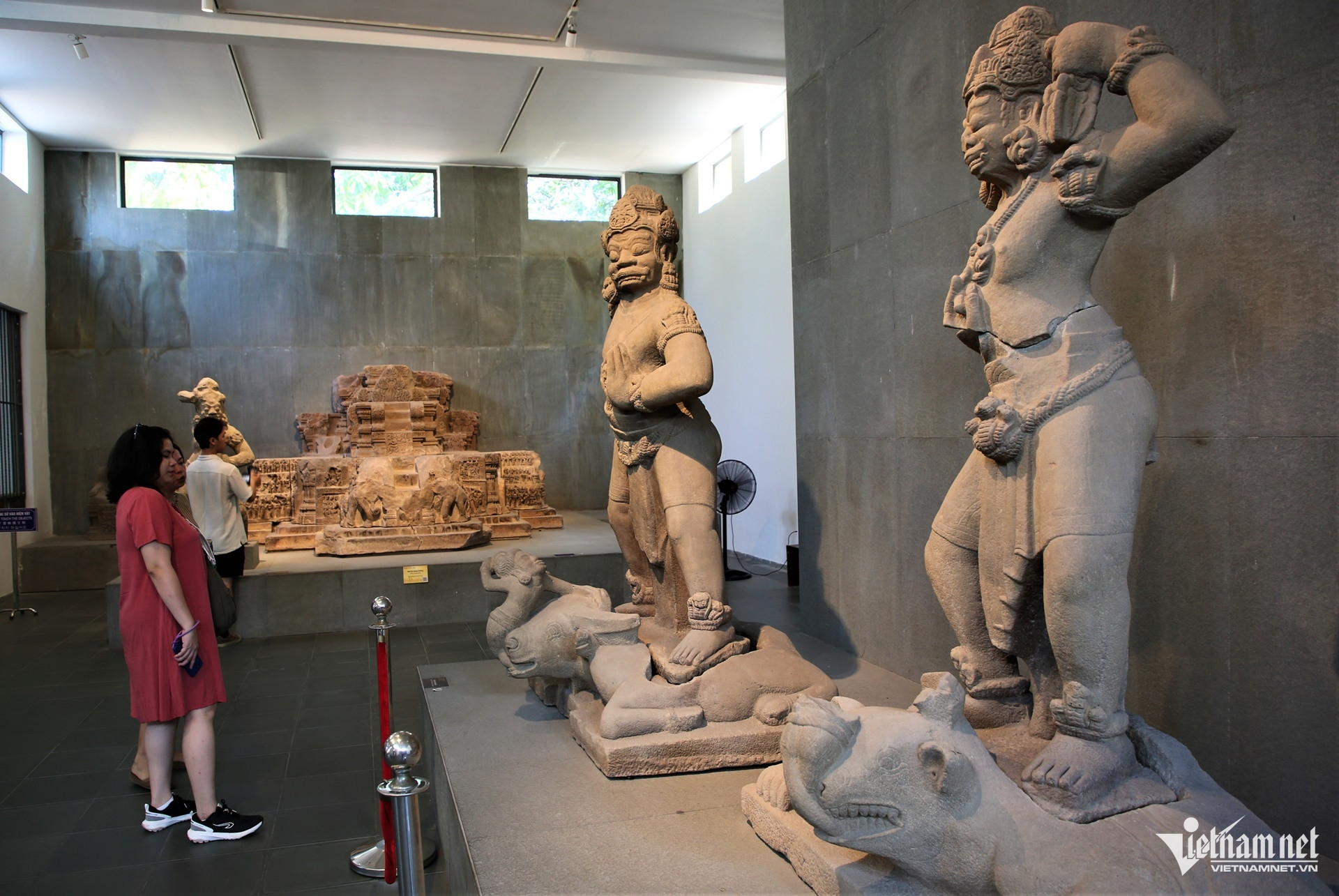
Archaeological findings suggest that Dong Duong developed a distinct artistic style, considered the pinnacle of Cham art in the 9th century.
The sculptures discovered here bear strong Mahayana Buddhist influences while blending Indian artistic elements with local creativity. Most artifacts are currently preserved and displayed at the Cham Sculpture Museum in Da Nang.
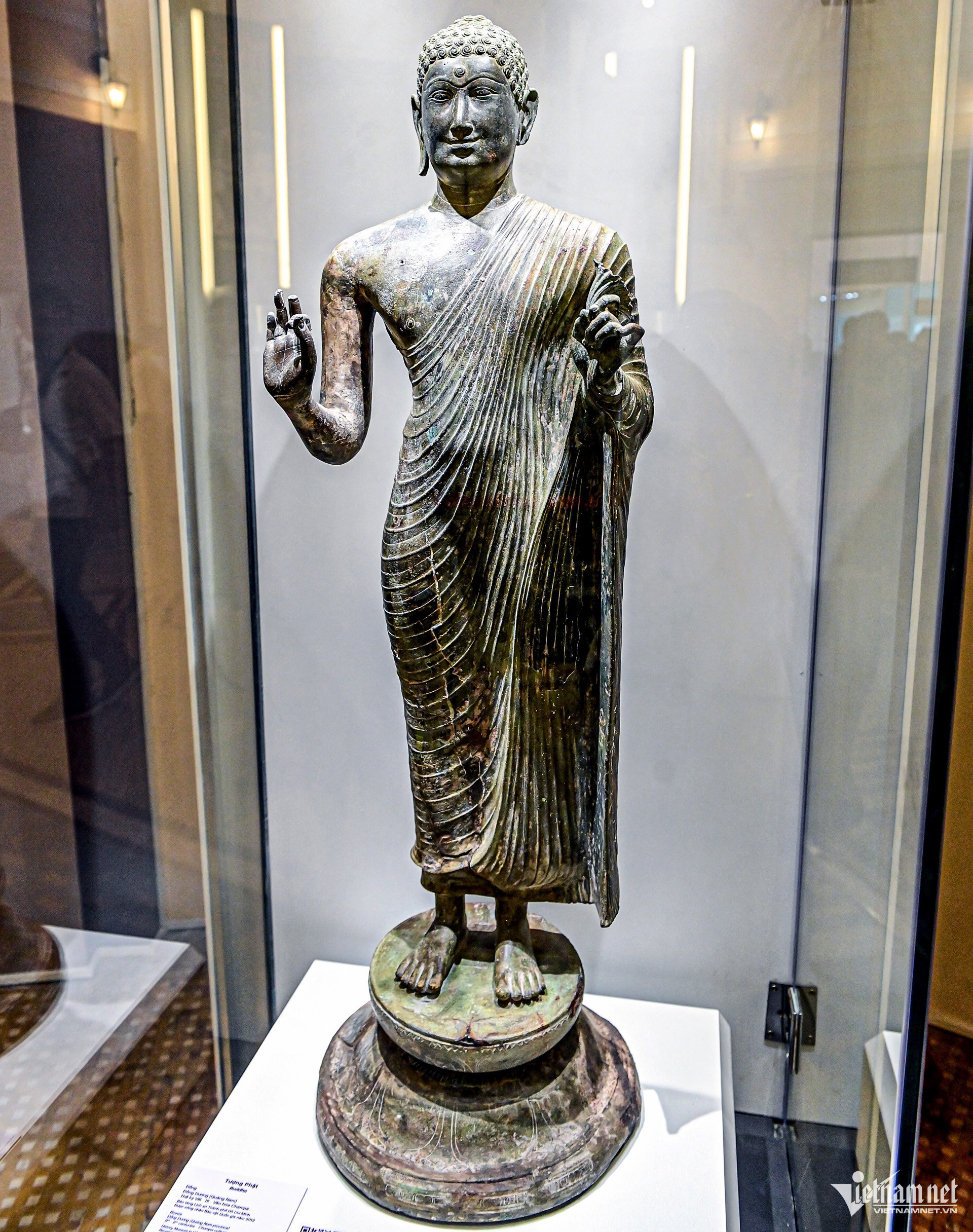
Among the hundreds of objects unearthed, three have been recognized as national treasures. The most prominent is a bronze statue of Buddha Shakyamuni, standing 108cm tall, discovered in 1911 by archaeologist Henri Parmentier.
Researchers date the statue to between the 5th and early 6th centuries. It reflects the Amaravati style of India and was likely brought to Champa via maritime trade routes, predating the Dong Duong Monastery itself.
The statue is regarded as one of the finest ancient Buddha sculptures in Southeast Asia and has been exhibited in several countries. During an exhibition in France, it was insured for US$5 million - the highest insurance value ever assigned to a Vietnamese statue displayed abroad.
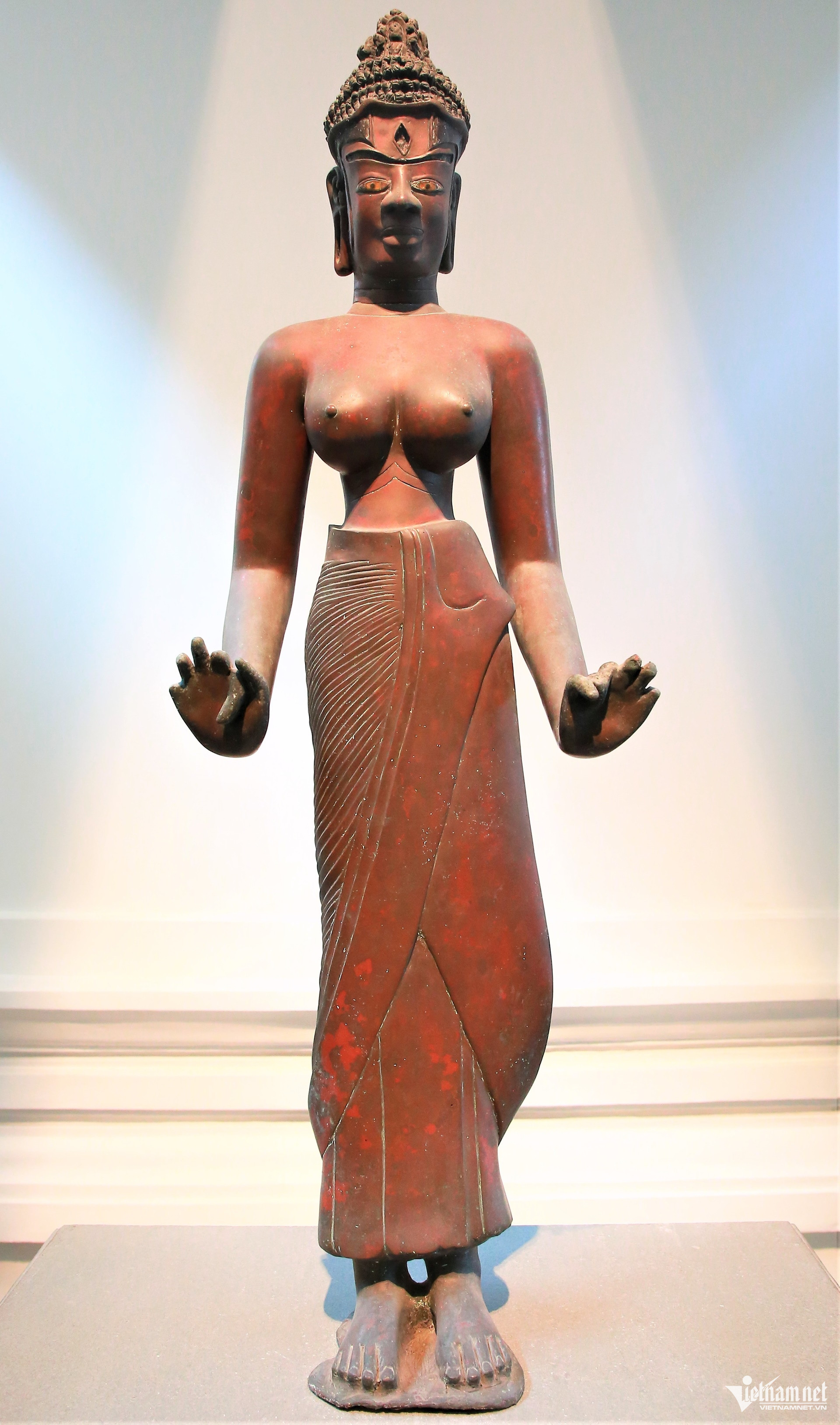
Another national treasure is a solid bronze statue of the bodhisattva Tara, standing 114cm tall, discovered by local residents near the main temple area in 1978. Archaeologists consider it not only the largest bronze sculpture of Cham art but also one of the most significant bronze works in Southeast Asia of its time.
In 2001, Dong Duong Monastery was recognized as a national relic, and in 2016 it was designated a Special National Relic.
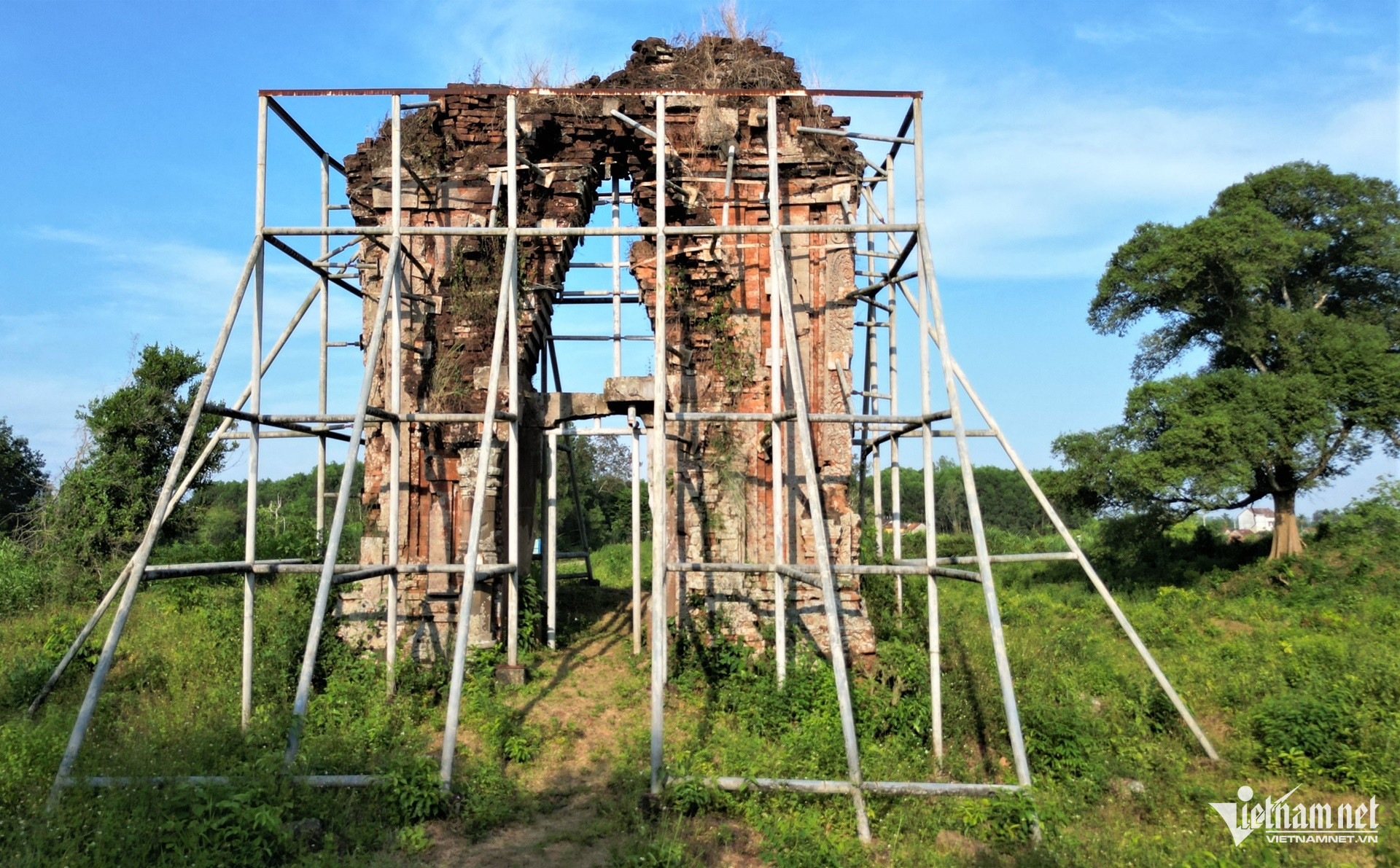
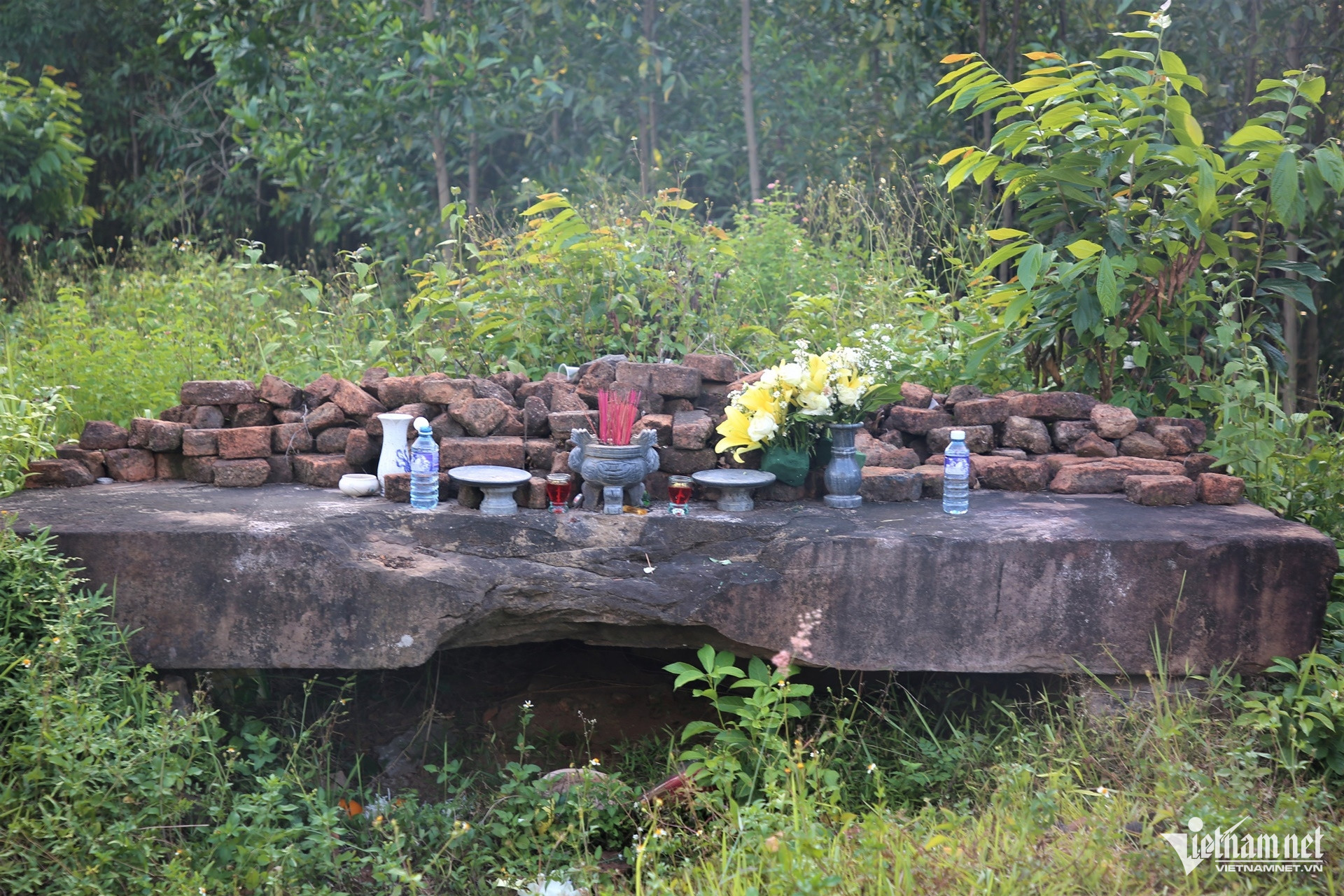
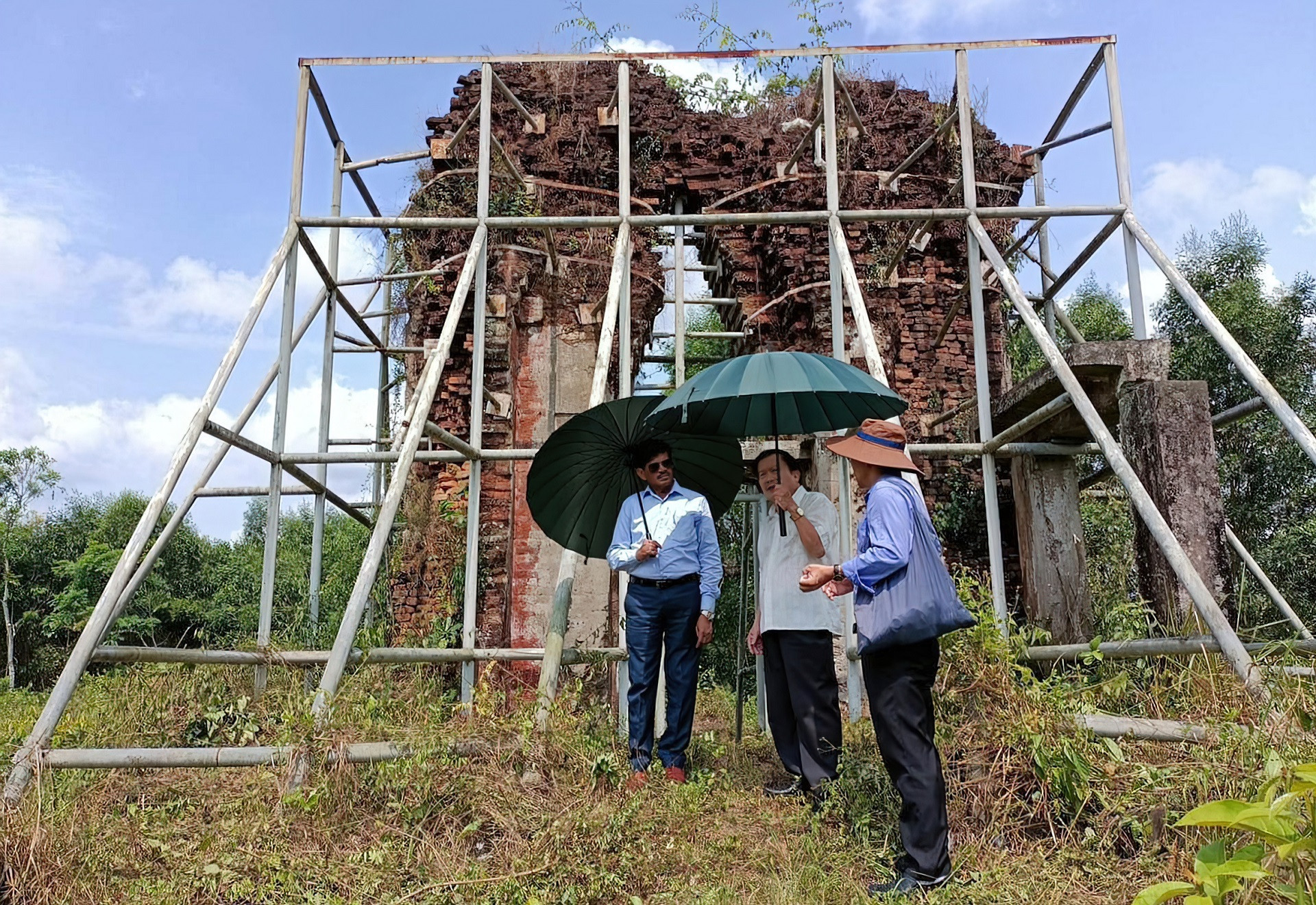
Once a thriving Buddhist center, the site has been largely reduced to ruins after more than ten centuries, compounded by the impacts of war and natural degradation. Of the once vast complex, only the Sang Tower remains standing today, though it too has deteriorated.
Local resident Tra Tan Kieu expressed hope that the site would soon be restored to preserve its historical value for future generations. Le Van Thoi, Chairman of the Dong Duong Commune People’s Committee, said the locality hopes the city and relevant agencies will soon move forward with restoration and conservation plans.
In 2023, experts from the Archaeological Survey of India collaborated with Quang Nam province (now Da Nang) to assess the current condition of the site. They collected data on its scale, history, and structure to support future conservation and restoration efforts.
In mid-January 2026, responding to voters’ concerns about restoration, the Da Nang Department of Culture, Sports and Tourism announced plans to implement several conservation projects. These include a project to reinforce and restore the Sang Tower with an investment of approximately VND12 billion (US$490,000), along with another project to preserve and promote the site’s value costing more than VND5 billion (US$205,000).
However, progress remains hindered by procedural requirements, as the site’s status as a Special National Relic necessitates the completion of an overall preservation and restoration plan before individual projects can proceed.
While awaiting approval, authorities are implementing urgent measures such as reinforcing and preventing erosion around the base of the tower.
On May 14 and 15, the Da Nang People’s Committee will coordinate with the Vietnam Buddhist Sangha, the Ministry of Culture, Sports and Tourism, the Vietnam Academy of Social Sciences, and the Ministry of Ethnic and Religious Affairs to host a national scientific conference on preserving and promoting the value of Dong Duong Monastery. The event is expected to bring together around 200 scientists, experts, and delegates from Vietnam and abroad.
The conference will focus on solutions for conservation, restoration, and enhancing the site’s value in connection with cultural tourism development and the application of science and technology in heritage management.
Ha Nam
.svg)
