 Vietnamnet.vn

 Podcast



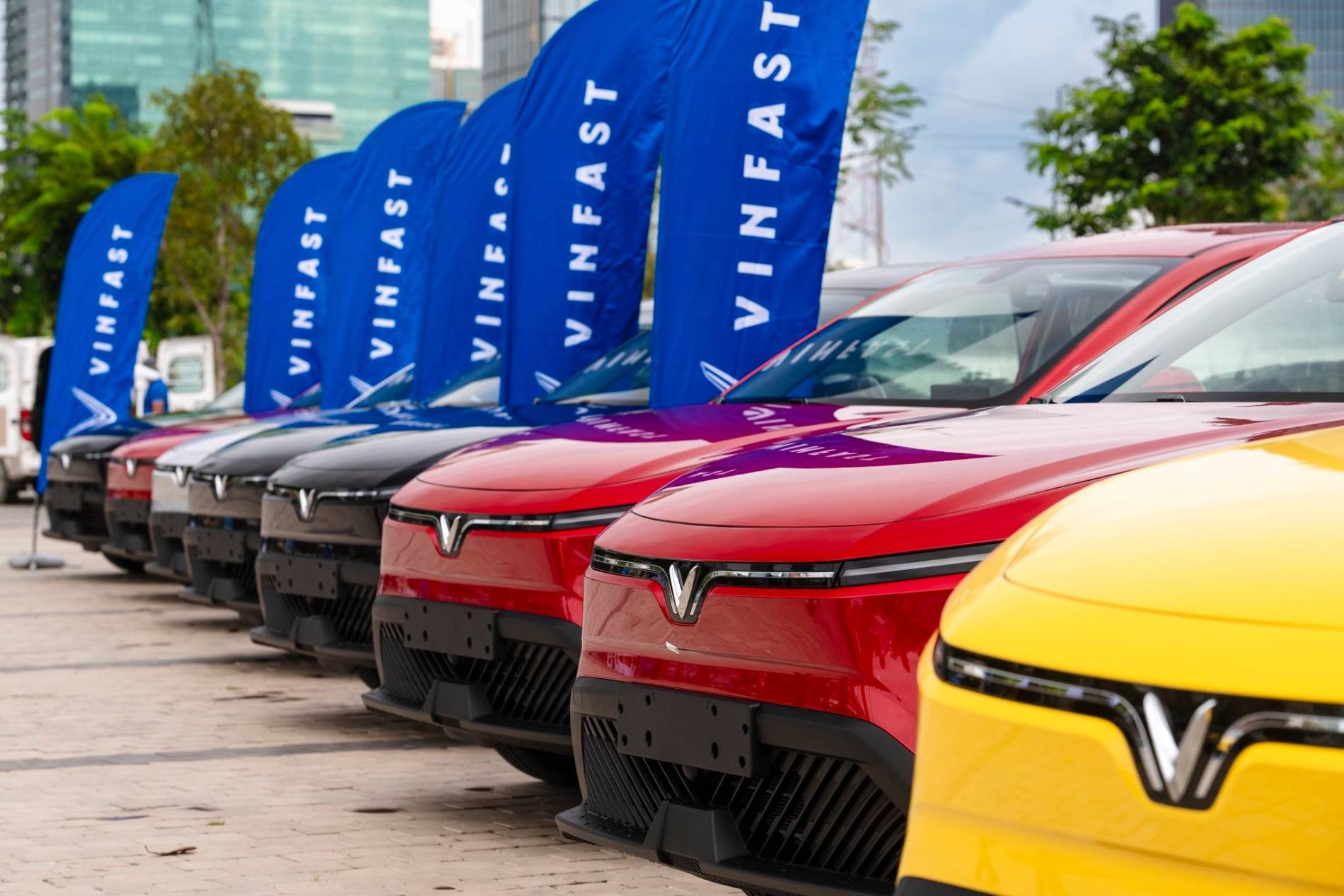
VinFast continued to dominate Vietnam's automotive market, accounting for more than one-third of all vehicle sales in the first half of 2026. Meanwhile, Toyota, Hyundai, Mitsubishi, Ford and several other major brands shared the remaining slice of the country's automotive market.
According to newly released data from the Vietnam Automobile Manufacturers' Association (VAMA), member companies and several vehicle importers sold a combined 187,833 vehicles during the first six months of 2026, up 15% from 163,021 units in the same period of 2025.
Including VinFast's sales of 115,916 vehicles and Hyundai Thanh Cong's 25,069 units, Vietnam's total automotive market is estimated to have reached 328,818 vehicles in the first half of 2026, representing a 29% increase from 254,794 units a year earlier.
Among individual brands, VinFast maintained its position as the undisputed market leader. The Vietnamese automaker delivered 115,916 vehicles during the first half of 2026, up 72% year-on-year and accounting for 35.3% of all vehicles sold nationwide. In other words, more than one out of every three vehicles sold in Vietnam carried the VinFast badge.
Notably, during the same period in 2025, VinFast had sold nearly 67,400 vehicles, representing a 26.4% market share. Within just one year, the company significantly increased both sales volume and its market share, expanding its presence by nearly nine percentage points.
VinFast's rapid growth has been driven by its expanding lineup of all-electric crossover and SUV models covering nearly every mainstream segment, from mini SUVs and A-, B-, C- and D-segment SUVs to MPVs. Among them, the Limo Green, VF 3, VF 5, VF 6 and VF 7 have consistently ranked among Vietnam's monthly best-selling vehicles.
Toyota (excluding Lexus) ranked second with 35,410 vehicles sold, up 20.9% from the first half of 2025. Despite maintaining positive sales momentum, the Japanese automaker's market share slipped to around 10.8%, down 0.7 percentage points year-on-year.
Toyota's broad product portfolio remains one of its biggest strengths, with models competing across nearly every mainstream segment, including sedans, MPVs, SUVs and pickup trucks. The Yaris Cross, Vios, Innova Cross, Veloz Cross and Corolla Cross all continued to deliver stable sales, creating a well-balanced sales mix.
Hyundai placed third with 25,069 vehicles sold, including commercial vehicles, representing modest growth of 3.6%. However, the South Korean brand's market share has fallen to about 7.6%, marking one of the few periods in which it has accounted for less than one-tenth of Vietnam's automotive market.
While Hyundai still offers products across a wide range of vehicle segments, sales of its core models have yet to regain the momentum seen in previous years. More recently, the brand's performance in Vietnam has largely relied on crossover models such as the Creta and Tucson, along with its commercial vehicle lineup.
Among the chasing pack, Mitsubishi overtook Ford to become the country's fourth-largest automotive brand with 21,617 vehicles sold, up 36.9% year-on-year and representing about 6.6% of the market. Much of that performance came from the Xforce and Xpander, two models that have consistently delivered strong monthly sales.
Ford, by contrast, fell short of expectations after selling 21,232 vehicles during the first half of 2026, down 2.2% from 21,700 units in the same period last year. The American automaker now holds roughly 6.5% of Vietnam's automotive market, placing fifth overall.
Sixth and seventh place belonged to Kia and Mazda, respectively, both assembled and distributed in Vietnam by THACO. Kia sold 15,732 vehicles while Mazda recorded 15,298 units, giving them market shares of 4.8% and 4.7%.
Honda ranked eighth with sales of 11,305 vehicles, accounting for approximately 3.4% of the market.
According to VietNamNet's calculations, all remaining automotive brands together sold 67,239 vehicles during the first half of 2026, representing 20.4% of total vehicle sales.
The figures suggest Vietnam's automotive market is becoming increasingly concentrated among a handful of major manufacturers, while the remaining brands continue to compete for a steadily shrinking share of the market.
Hoang Hiep
.svg)
