 Vietnamnet.vn

 Podcast



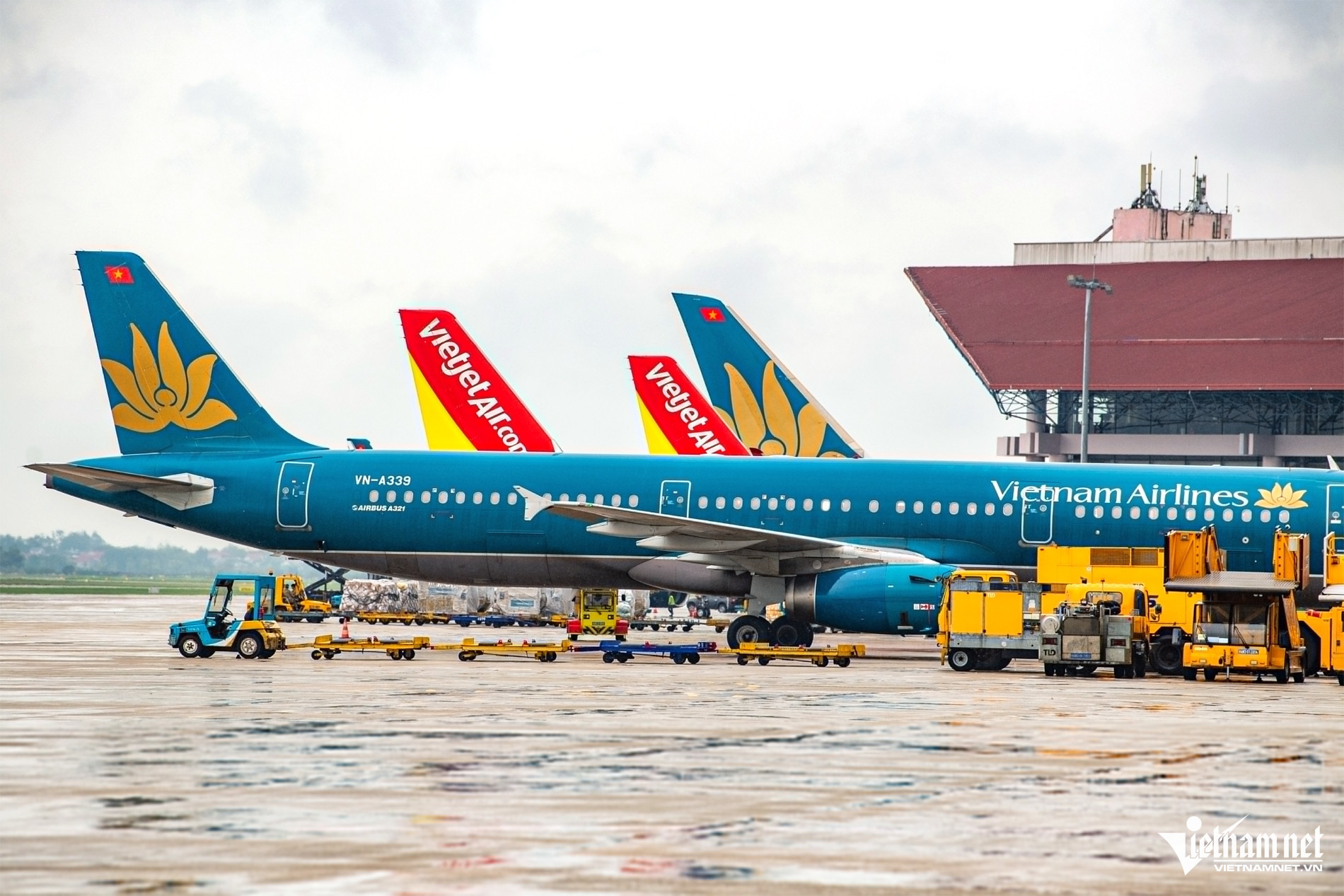
Comprehensive growth surpassing pre-pandemic levels
In line with the global aviation recovery, Vietnam’s air transport sector achieved remarkable results in 2025, reaffirming its role as one of the key drivers of the national economy.
According to the Civil Aviation Authority of Vietnam (Ministry of Construction), total air transport volume for 2025 is estimated at 83.5 million passengers and 1.5 million tons of cargo - up 10.7% and 18.5% respectively from 2024.
Compared with 2019, the pre-pandemic peak year, the size of Vietnam’s aviation market has now grown substantially in every measure.
This reflects not just recovery but a shift to a new growth cycle.
The most impressive progress came from international aviation.
In 2025, Vietnam served 46.6 million international passengers, up 12.6% year-on-year, while international cargo rose to 1.3 million tons, up 22.6%.
These figures far exceed those of 2019, when international passengers totaled about 38 million.
This surge is closely tied to the rapid expansion of international flight networks.
Vietnamese carriers now operate 113 international routes, strengthening the country’s position as a major aviation hub in the Asia-Pacific region.
Thanks to strong synergy between aviation and tourism, international arrivals to Vietnam surpassed 20 million in 2025 - a new all-time record.
The domestic market has also regained momentum after a slowdown caused by aircraft shortages.
Total domestic passengers reached an estimated 36.9 million, up 8.4% from 2024.
Vietnamese airlines currently maintain about 55 domestic routes connecting Hanoi and Ho Chi Minh City with 20 airports nationwide.
Airlines accelerate fleet expansion
Many airlines reported solid business results in 2025.
Vietnam Airlines transported about 25.67 million passengers, up 12.8% year-on-year, with revenue reaching 94.8 trillion VND (3.8 billion USD) - a 16% increase.
The national carrier retained over 46% of the domestic market share.
By the end of September, it operated 102 aircraft and plans to add 30 wide-body jets between 2028 and 2032.
Meanwhile, Vietjet Air received 22 new aircraft this month - its largest fleet expansion ever - amid global aircraft shortages and supply chain disruptions.
The delivery included nine Boeing planes for Vietjet Thailand, seven Airbus aircraft for Vietjet Air, four wet-leased planes for peak season operations, and two COMAC jets for the Con Dao route.
Bamboo Airways also welcomed new aircraft, marking a crucial step in rebuilding its fleet after returning to its former parent company, FLC Group.
The airline aims to add 8–10 aircraft annually, targeting a fleet of about 30 planes as licensed by the government.
At Vietravel Airlines, a major restructuring is underway.
The board of Vietravel Tourism has transferred 100% of its ownership to the new investor, T&T Group, paving the way for a comprehensive reorganization and brand repositioning.
Another major highlight of 2025 is the launch of Sun PhuQuoc Airways, the first new airline to enter the market in five years.
Unlike Vietravel Airlines, which debuted during the pandemic (2020–2021), Sun PhuQuoc Airways is joining a revitalized and competitive market.
Its arrival is expected to intensify competition, diversify services, and offer travelers more choices.
Challenges remain amid double-digit growth outlook
Despite strong results, Vietnam’s aviation sector still faces challenges.
Flight delays have been rising, especially during peak periods.
Causes include unfavorable weather, congestion at major airports, and about 10% of the commercial fleet being grounded (AOG) due to engine issues and global supply chain disruptions.
Financial constraints, high operating costs, and loan interest burdens also continue to pressure domestic airlines, slowing restructuring and investment.
Geopolitical risks, regional conflicts, foreign supply dependencies, and new security threats further test the industry’s resilience.
Even so, the 2026 outlook remains optimistic.
The industry aims to maintain momentum and achieve double-digit growth in transport volume.
Forecasts project nearly 95 million passengers and 1.6 million tons of cargo in 2026 - up 13.6% and 9.3% respectively from 2025.
These projections are supported by expectations of continued macroeconomic stability and strong GDP growth, which will boost consumption, tourism, and travel demand.
The new Civil Aviation Law and more open visa policies will also provide a solid legal foundation for further expansion.
Notably, major infrastructure projects - such as the Long Thanh International Airport nearing completion, and accelerated progress at Gia Binh and Phu Quoc airports - are expected to ease capacity bottlenecks that once limited growth.
Binh An
.svg)
