 Vietnamnet.vn

 Podcast



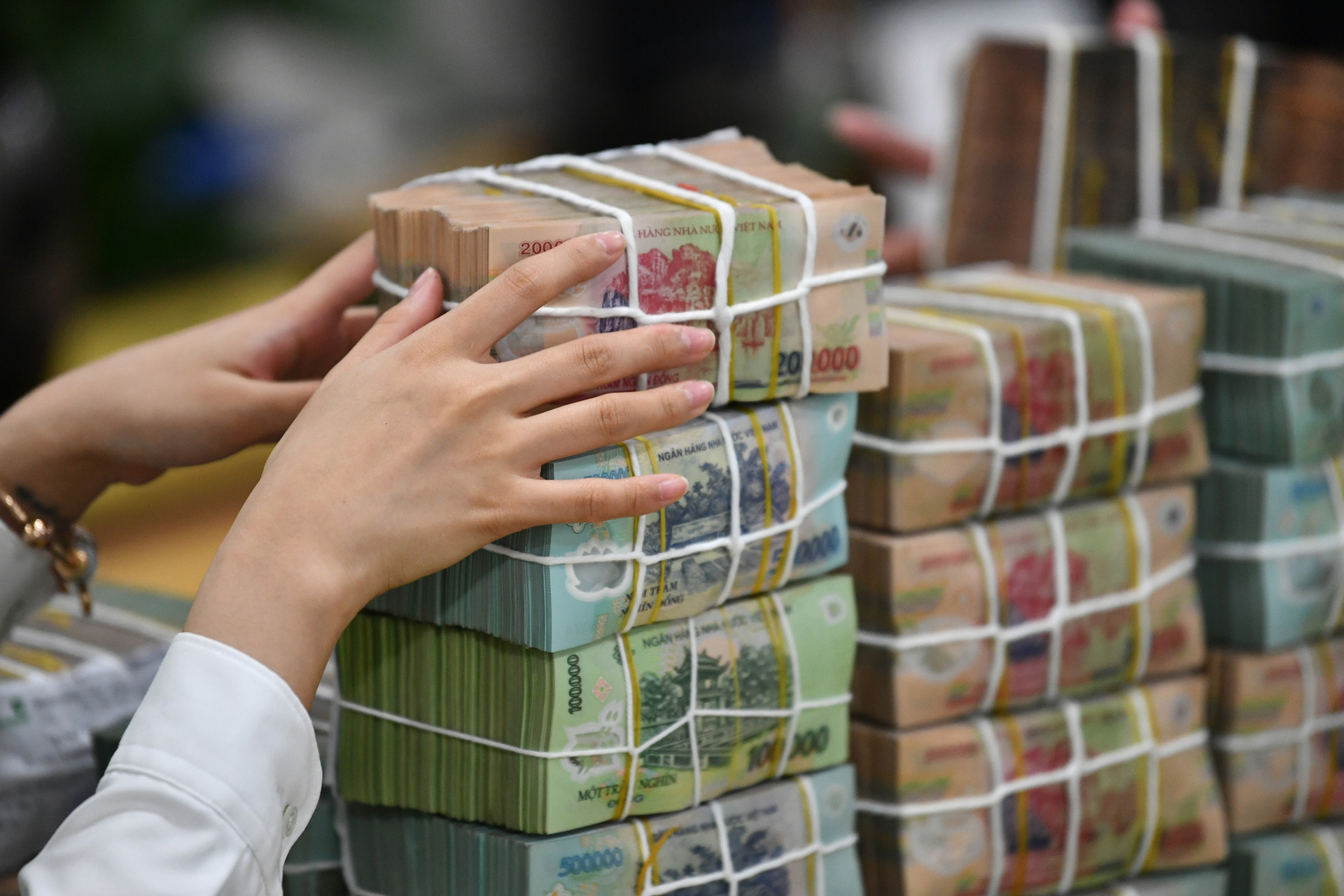
Average deposit rates rise 1.15 percentage points from late 2025
Speaking at a recent press conference on the banking sector's third-quarter performance, State Bank of Vietnam (SBV) Deputy Governor Pham Thanh Ha said total outstanding credit across the banking system had reached approximately $801 billion as of September 30, 2026.
The figure represented an increase of 11.59% from the end of 2025 and 16.69% from the same period last year, with approximately $85 billion in additional credit flowing into the economy since the beginning of the year.
By the end of August 2026, agriculture, forestry and fisheries accounted for 6.08% of total credit, while industry and construction represented 23.1%. Trade and services made up the largest share at 70.11%.
Turning to interest rates, Ha said that although upward pressure remained, the pace of increases was slowing, with rates largely stabilizing around a new level.
"As of September 20, 2026, the average deposit interest rate for newly initiated transactions stood at 6.38% per year, up 1.15 percentage points from the end of 2025," he said.
Against a backdrop of complicated developments in global financial and monetary markets, the SBV has implemented measures to stabilize market interest rates and support businesses and households.
In managing the exchange rate, the central bank has adopted a flexible approach to help absorb external shocks while coordinating monetary policy tools to maintain foreign exchange market stability, support macroeconomic conditions and keep inflation under control.
"As a result, the foreign exchange market has operated smoothly, legitimate foreign currency demand has been met fully and promptly, and the USD/VND exchange rate has moved flexibly in line with market conditions," Ha said.
Pham Chi Quang, director of the SBV's Monetary Policy Department, said global interest rates were rising rapidly, with another interest rate increase by the US Federal Reserve (Fed) possible before the end of the year.
Vietnam's interest rates cannot remain insulated from global trends, he noted, but the central bank will seek to strike a balance between interest rates and exchange rate stability.
"This is an issue the SBV will closely manage in the coming period," Quang said.
He added that the central bank would continue monitoring inflation developments to slow the pace of increases in the consumer price index (CPI).
Particular attention will be paid to exchange rate movements as global inflation rises, given Vietnam's highly open economy and extensive integration into international trade and financial markets.
Quang said a positive development was that the Vietnamese dong had remained relatively stable against the US dollar.
Credit measures to support economic growth
Regarding credit management, the SBV said it would continue adopting appropriate measures to help control inflation, maintain macroeconomic stability and support economic growth.
The central bank has introduced policies to create additional lending capacity for credit institutions, enabling them to finance priority economic activities and development needs.
At the same time, it has sought to facilitate lending to selected real estate segments consistent with government policies and broader national development priorities.
Specifically, when monitoring real estate credit growth, the SBV does not include increases in outstanding credit since the end of 2025 for social housing, industrial parks, export processing zones, restaurants, hotels, tourist areas, ecological tourism and resorts in the calculation of real estate lending growth.
The approach is intended to provide banks with greater flexibility to extend financing to projects and sectors considered important for economic development.
The central bank has also introduced measures to exclude certain newly extended annual credit from relevant lending limits and provide additional credit growth quotas to commercial banks financing major investment projects.
These include large-scale and strategic projects with significant spillover effects, regional connectivity benefits and the potential to stimulate economic development across provinces and localities.
The measures follow government directives aimed at supporting Vietnam's ambition to achieve double-digit economic growth.
In addition, the SBV has instructed credit institutions to implement targeted lending measures across selected industries and sectors, improving access to financing for businesses and individuals.
Banks have also been directed to actively implement government and prime ministerial instructions on providing capital for major infrastructure works and nationally important investment projects.
The banking sector is currently implementing several credit policies designed to help small and medium-sized enterprises (SMEs) secure financing for production and business activities.
Notably, in August 2026, the SBV instructed commercial banks to launch a credit program targeting key economic growth drivers and SMEs.
Under the program, eligible borrowers are offered preferential lending rates at least one percentage point per year below the lending bank's average interest rate for loans of the same maturity.
The measure is intended to reduce financing costs for businesses while encouraging investment, production and economic activity.
In a further move to strengthen the banking system, the SBV submitted a proposal that led to the Prime Minister's issuance of Decision No. 1890/QD-TTg on September 18, 2026.
The decision approved a scheme titled "Continuing the modernization of the banking system, addressing weak credit institutions and improving access to capital for enterprises, particularly small and medium-sized businesses."
The initiative forms part of broader efforts to strengthen financial institutions, improve credit accessibility and support sustainable economic growth.
Tuan Nguyen
.svg)
