 Vietnamnet.vn

 Podcast



Vietnam’s foreign policy in 2025 demonstrated a powerful shift toward proactive global engagement, with a record 75 major diplomatic activities conducted by top national leaders - nearly 1.5 times higher than the previous year.
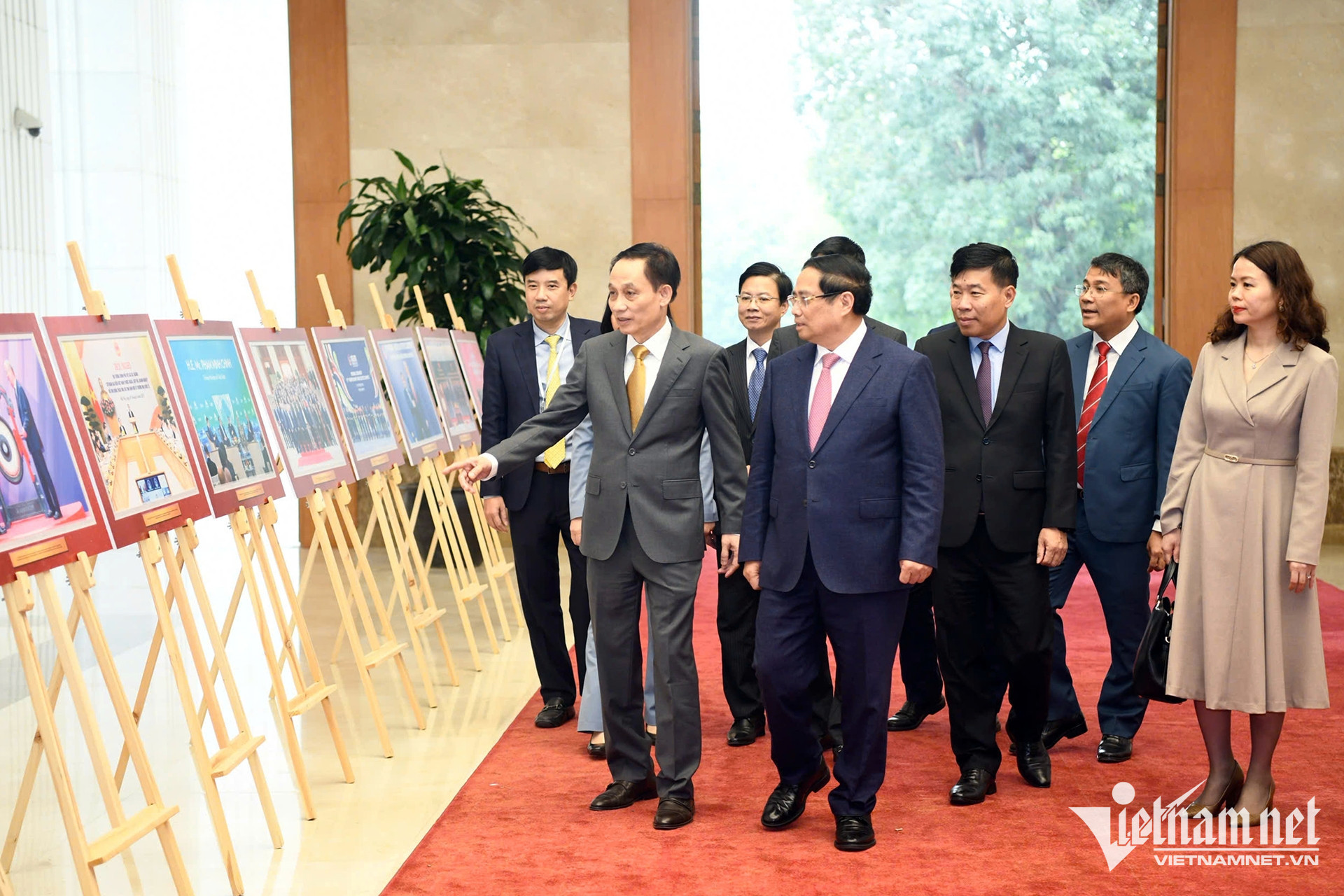
Prime Minister Pham Minh Chinh and foreign ministry leaders view a photo exhibition of diplomatic achievements.
At a national conference on December 29, Prime Minister Pham Minh Chinh affirmed that the foreign ministry had achieved significant success despite global uncertainties, playing a vital role in elevating Vietnam’s presence on the international stage.
The ministry’s progress was marked by three notable transformations: more substantive content closely aligned with strategic domestic goals; innovative diplomatic methods that leveraged sector-specific diplomacy; and a more efficient, streamlined organizational structure.
Throughout the year, Vietnam hosted or co-hosted several high-level multilateral events including the ASEAN Future Forum and the P4G Summit, and played an integral role in the signing of the UN Cybercrime Convention. Vietnam also maintained and reclaimed a seat on the UN Human Rights Council, reinforcing its global standing.
Facing “headwinds” with strategic resolve
In his keynote address, Prime Minister Pham Minh Chinh reflected on the challenges facing the global diplomatic landscape. “Despite more challenges than opportunities, we achieved strategic diplomatic victories,” he said, referring to Vietnam’s ability to navigate what he called “headwinds.”
He summarized the foreign ministry’s achievements using six thematic pillars encompassing 24 guiding words: “streamlined apparatus, adaptive timing, effective innovation, expanded cooperation, elevated position, development-driven.”
Vietnam’s diplomatic strategy in 2025 deepened international relationships with key partners while aligning with domestic priorities. For the first time, Vietnam now maintains relations at the Strategic Partnership level or higher with all five permanent members of the UN Security Council, all G7 nations, and 18 out of the 21 G20 members.
Enhancing Vietnam’s strategic profile
Vietnam also played an active role at global forums such as the World Economic Forum (WEF), the expanded BRICS summit, and the G20, where it introduced new initiatives and participated in shaping key global agendas.
This expanding presence is not only symbolic but substantive. By effectively leveraging multilateral platforms and adapting to external fluctuations, Vietnam successfully attracted foreign resources and capital, bolstering its domestic socio-economic development.
Redefining Vietnam’s international mission
The Prime Minister stressed that diplomacy must now serve as a pioneering, essential, and constant force in national strategy. He reiterated the vision articulated by General Secretary To Lam at the 15th Party Central Committee plenary session: Vietnam must now implement a “comprehensive and elevated foreign policy.”
At the event, the Prime Minister, Deputy Prime Minister Bui Thanh Son, and ministry officials inaugurated the new International Treaties Database - an important tool for international legal engagement and transparency.
Looking forward, Prime Minister Pham Minh Chinh called on the foreign ministry to uphold six strategic principles: “precise advisement, flexible adaptation, timely maneuvering, efficient transformation, community responsibility, and stable development.”
He also emphasized the importance of visionary leadership, intellectual capital, prudent timing, and people-centered governance. “Resources come from vision; momentum comes from innovation; strength comes from the people,” he said.
Building a resilient and globally connected Vietnam
The Prime Minister urged the ministry to proactively safeguard national development and security by preparing for complex, unexpected global shifts. This includes fostering deeper relationships with neighboring countries, major powers, strategic and comprehensive partners, traditional allies, and emerging actors.
Vietnam’s foreign policy must also fulfill an international mission: promoting peace, sustainable development, and equitable global order based on international law.
“Vietnam should project soft power rooted in its national identity and culture, showcasing an image of independence, cooperation, prosperity, and happiness,” the Prime Minister concluded.
He called for the continued modernization and professionalism of the diplomatic corps, advancing all three key pillars of Vietnam’s external relations: Party-to-Party diplomacy, state diplomacy, and people-to-people diplomacy.
Tran Thuong
.svg)
