 Vietnamnet.vn

 Podcast



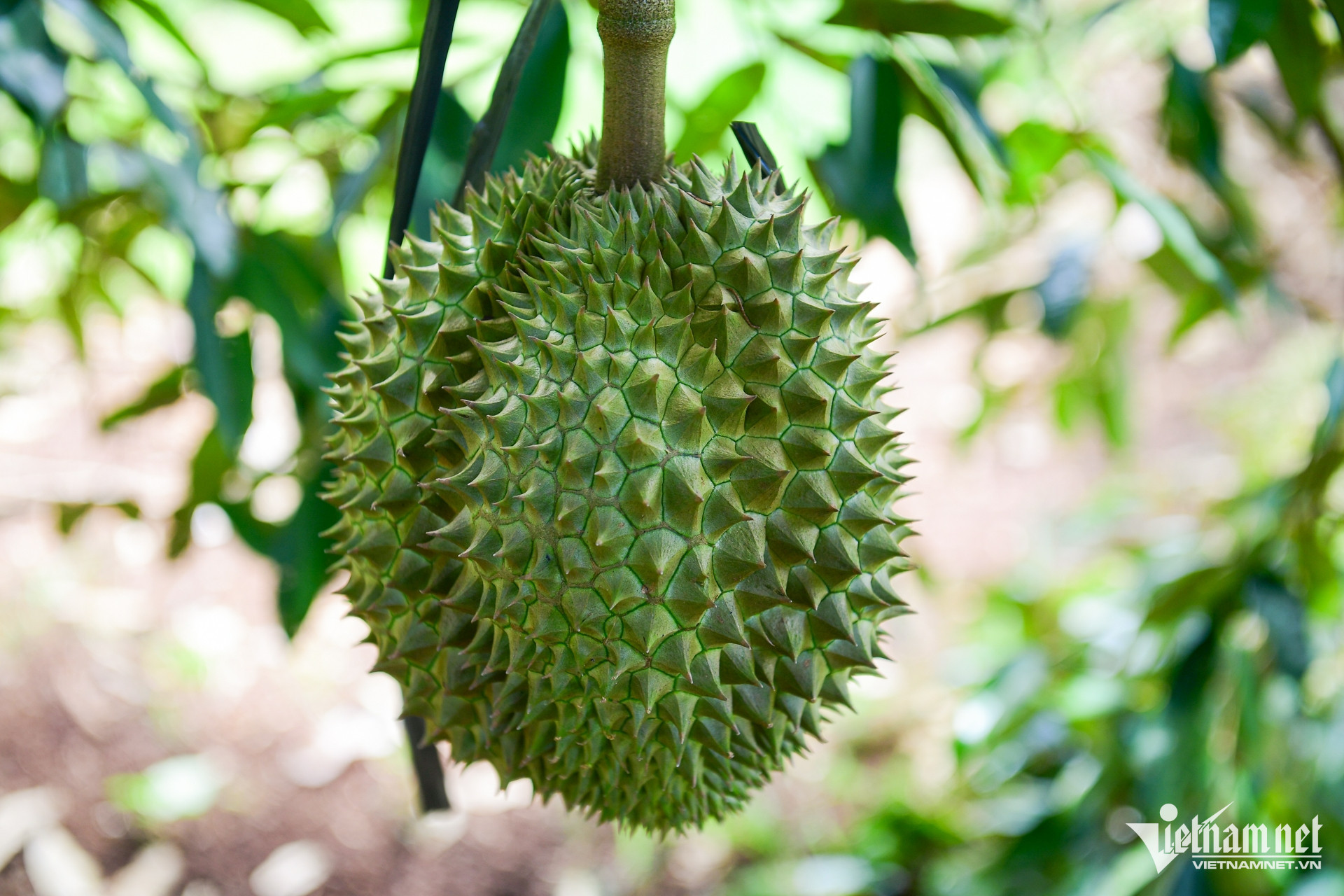
In the first 11 months of 2025, China spent nearly $7.2 billion importing fresh durians-a record high. Notably, Vietnam’s share in the Chinese durian market is rapidly closing in on Thailand’s, signaling a potential shift in market leadership.
Vietnam is expected to surpass Thailand in durian export volume to China by the end of 2025. Unlike Thailand, whose durian season ended earlier, Vietnam continued harvesting off-season durians in the Mekong Delta through December.
According to the Vietnam Fruit and Vegetable Association, the country’s durian export revenue is projected to reach $4 billion in 2025-an impressive jump from nearly $3.3 billion in 2024. China remains the driving force behind this historic milestone.
Chinese customs data revealed that between January and November 2025, fresh durian remained the top fruit import in China, with 1.79 million tons valued at approximately $7.18 billion. This represents a 17.2% year-on-year increase in volume and a 5% increase in value.
Thailand and Vietnam continued to dominate the Chinese durian market. Thailand retained its position as the top supplier with 903,610 tons worth $3.9 billion. However, this marked only a 13.5% increase in volume and a 0.8% decline in value from the same period in 2024.
Thailand’s share of China’s total durian imports dropped to 50.39%, down from 52.04% a year earlier.
In contrast, imports from Vietnam surged. China spent $3.24 billion importing 884,590 tons of Vietnamese durians during the same period-a 22.8% rise in volume and a 13.1% increase in value compared to the previous year.
Vietnam’s share in China’s durian imports rose to 49.33%, up from 47.08% in 2024. This upward trend highlights Vietnam’s strengthening position in the market.
Vietnamese customs data also confirms the trend. From January to November 2025, China accounted for 94.54% of Vietnam’s fresh durian export revenue, up from 90.94% in 2024.
Speaking with VietNamNet, Dang Phuc Nguyen, General Secretary of the Vietnam Fruit and Vegetable Association, forecast that durian exports could exceed $4 billion in 2026. With an anticipated 10–20% rise in output, Vietnam will have a stable supply for export.
He added that Thailand-the biggest competitor-has faced setbacks due to natural disasters, including flooding in the south, which damaged durian plantations and disrupted logistics, raising costs.
Vietnam, on the other hand, benefits from its geographical proximity to China, allowing cost-effective overland transport. Furthermore, the domestic durian supply chain has become more refined.
The Ministry of Agriculture and Rural Development has issued a new food safety control protocol for fresh durian exports-the first of its kind for any Vietnamese fruit.
At the end of December, the Ministry of Agriculture and Environment also launched a national agricultural product traceability system, starting with durians.
Nguyen emphasized that durian is a billion-dollar export and accounts for 40–45% of Vietnam’s total fruit and vegetable export revenue. With a properly managed supply chain and compliance with international standards, Vietnamese durians can continue building global trust and ensure sustainable export growth.
Tam An
.svg)
