 Vietnamnet.vn

 Podcast



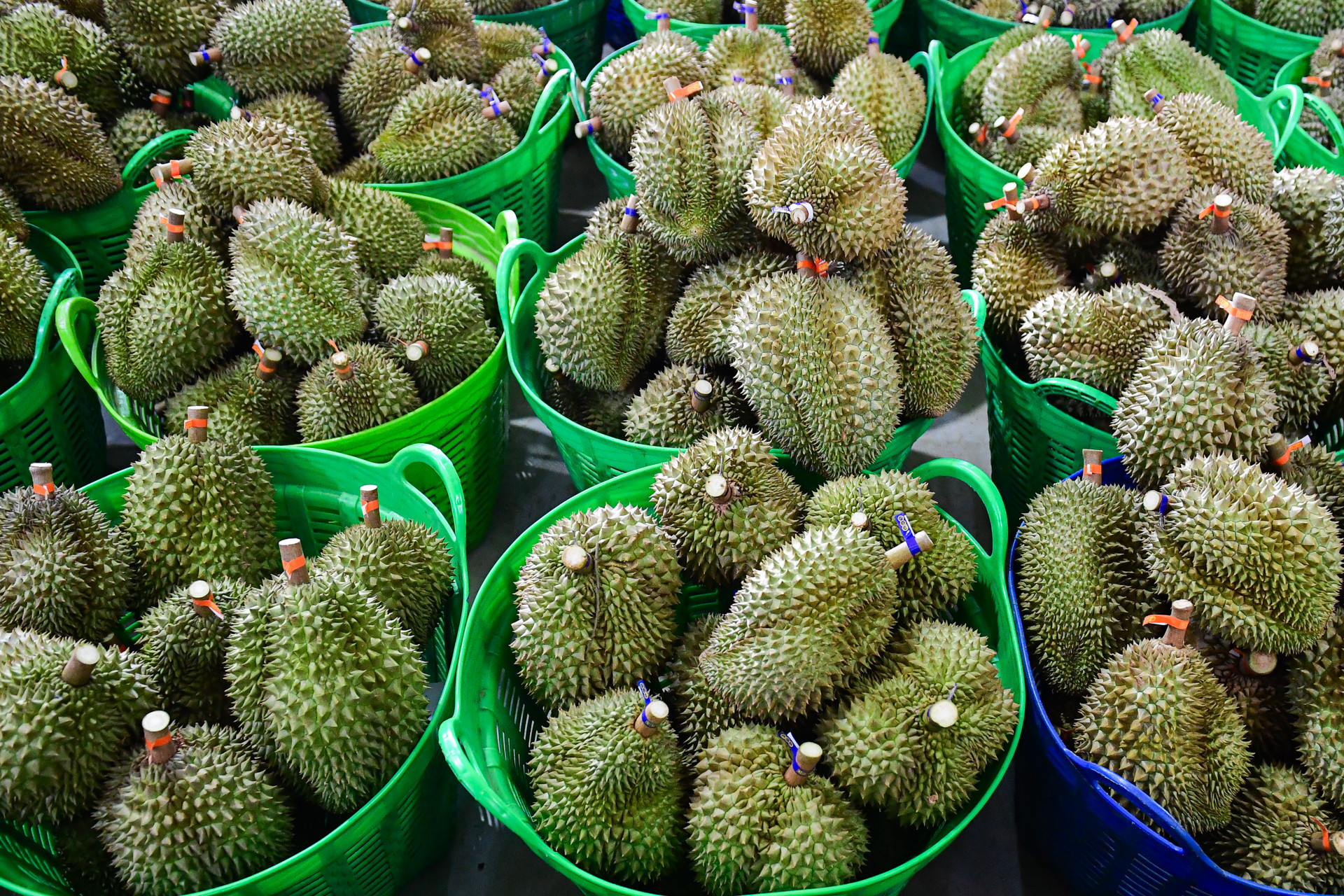
Late on July 28, Vietnam's Ministry of Public Security announced the latest developments in its investigation into a case involving allegations of offering bribes, accepting bribes, brokering bribes, violating accounting regulations causing serious consequences, abusing influence over officials for personal gain, and forgery in official duties.
The investigation involves the Testing, Certification and Quality Services Center, NhoNho Technology Co., Ltd., Thuy Fruit One Member Co., Ltd., and other organizations and individuals connected to durian exports to China.
According to investigators, Hoang Trung, Deputy Minister of Agriculture and Environment, and Nguyen Quang Hieu, Deputy Director General of the Department of Crop Production and Plant Protection, allegedly abused their authority by introducing unlawful administrative requirements, benefiting vested interests, directing subordinates to issue fraudulent inspection certificates and growing area codes, and facilitating the illegal trade of growing area and packing facility codes.
According to official statistics, Vietnam exported an estimated US$562 million worth of durians during the first five months of 2026. In 2025, exports reached a record US$3.86 billion, making durian the country's highest-value fruit export.
In recent years, China has continued to expand imports of Vietnamese durians while simultaneously tightening import standards. Shipments entering the Chinese market must carry officially approved growing area codes, packing facility codes, and laboratory certificates confirming compliance with requirements for Basic Yellow 2 (Auramine O) and cadmium residues.
Vietnam's Ministry of Agriculture and Environment has repeatedly warned that violations could result in China revoking growing area codes and laboratory approvals or even suspending imports.
Despite those warnings, fraudulent use of growing area codes has persisted in one of Vietnam's most valuable agricultural sectors.
Not long ago, the Vietnam Fruit and Vegetables Association (Vinafruit) issued an urgent warning condemning the fraudulent copying and unauthorized use of growing area codes and packing facility codes for exported durians.
According to the association, fraudsters used forged authorization agreements, counterfeit company seals and fake signatures to deceive exporters and evade regulatory oversight in order to profit from exports to China.
The chairman of the Dak Lak Durian Association also previously wrote to the Ministry of Agriculture and Environment highlighting the repeated suspension of laboratories approved by Chinese authorities to test for Auramine O and cadmium, creating significant disruptions to export inspections.
Temporary suspensions of testing laboratories have repeatedly caused hundreds, and sometimes thousands, of containers loaded with durians to remain stranded while awaiting inspection.
Following severe inspection bottlenecks earlier this May, the Ministry of Agriculture and Environment instructed testing laboratories to maximize resources, adopt more flexible working hours - including overtime when necessary - and accelerate testing procedures while maintaining accuracy and regulatory compliance.
Laboratories were also instructed not to delay or refuse testing without valid reasons and to ensure transparency in testing procedures, turnaround times and costs in order to prevent misconduct.
In October last year, after nearly 2,000 containers of durians from Dak Lak became stranded, the Vietnamese government ordered an urgent investigation into the causes of the disruption and the responsibilities of organizations and individuals involved.
Why growing area codes matter
In May 2025, Prime Minister Pham Minh Chinh issued an urgent directive on durian exports, instructing the Ministry of Public Security to investigate and strictly handle fraud involving growing area codes, packing facility codes, falsified export documentation and other illegal activities in durian production, processing and exports.
In early November 2025, the Police Department for Investigation of Corruption, Economic and Smuggling Crimes (C03) formally launched a criminal case involving the Testing, Certification and Quality Services Center (Retaq), NhoNho Technology Co., Ltd., Thuy Fruit One Member Co., Ltd. and several related organizations.
Investigators charged 17 suspects, including multiple business executives.
Authorities uncovered evidence of illegal trading in growing area codes and inspection certificates, along with accounting violations linked to durian exports from Vietnam to China.
Investigators said the alleged misconduct caused particularly serious losses to state assets, harmed legitimate businesses, enabled exports that failed to meet origin and quality requirements, and weakened the reputation and competitiveness of Vietnamese agricultural products, especially durians.
One consequence of weak oversight has been recurring cycles of oversupply and falling prices whenever exports encounter disruptions, leaving growers to bear the financial burden.
In a recent interview with VietNamNet, Nguyen Van Muoi, Deputy Secretary General of the Vietnam Fruit and Vegetables Association, said sustainable growth requires comprehensive improvements in product quality, beginning with stronger management of growing area codes.
Le Anh Trung, Chairman of the Dak Lak Durian Association, shared that view, noting that only 280 growing areas in the province have been granted official codes despite strong market demand.
He said accelerating digitalization, improving transparency in issuing growing area codes and strengthening product traceability are essential.
"The key is to enforce food safety requirements right from the growing areas and individual orchards. We must strictly comply with regulations because both domestic and export markets deserve the same level of consumer protection. State management agencies should also strengthen compliance inspections," Trung said.
Tam An
.svg)
