 Vietnamnet.vn

 Podcast



Two-lane expressways were once seen as vital arteries to unlock regional development. However, lacking hard medians and emergency lanes, many are now accident-prone stretches.
VietNamNet launches the series “Challenges of Two-Lane Expressways” to spotlight infrastructure bottlenecks, raise safety concerns, and push for improvements to ensure these major roads are truly safe for all travelers.
Part 1: Two-lane expressways emerge as Vietnam’s new traffic danger zones
Vietnam currently has over 2,000 km of expressways, including 654 km across 11 sub-projects of the North-South East Expressway (phase 1, from 2017 to 2020), which have recently opened to traffic.
In phase 2 (2021–2025), another 721 km of expressways are under development, with four sub-projects expected to be completed by year’s end.
According to the former Ministry of Transport (now Ministry of Construction), due to funding constraints, many phase 1 expressway segments were developed with just two lanes or four lanes without continuous emergency lanes.
During that time, infrastructure investment was just 2.18% of GDP - significantly lower than the 3.5–4.5% target set in the National Transport Development Strategy.
Meanwhile, Vietnam’s 10-year Socio-Economic Development Strategy (2021–2030) aims to expand the expressway network to 5,000 km by 2030. That requires building around 380 km per year - more than four times the pace of the previous phase.
A transportation expert told VietNamNet that investment pressure is immense, while funding a decade ago was limited. Thus, phased development was a practical solution to match planning needs, immediate traffic demands, and budgetary realities.
“Given those circumstances, we had to ‘cut the cloth to fit the coat.’ Responsibility shouldn’t be pinned on the authorities,” the expert emphasized.
Other countries also began with two-lane expressways
Le Kim Thanh, former Director of the Vietnam Expressway Administration, explained that Vietnam isn’t alone in starting with two-lane expressways. Many countries, including South Korea, Japan, and the United States, also initially built two-lane expressways during their early stages of development.
Once those countries’ economies matured and traffic increased, they upgraded to four lanes.
However, in Vietnam, operational challenges have emerged. Two-lane expressways often lack central barriers, posing traffic safety risks. Four-lane roads without continuous emergency lanes can become congested during incidents if not handled quickly. Many sections also fall short of expressway standards, with maximum speeds capped at 60–90 km/h - similar to national highways.
Dr. Khuong Kim Tao, former Deputy Chief of the National Traffic Safety Committee, acknowledged that traffic accidents on expressways - especially on two-lane roads without emergency lanes - have become a serious concern.
Major accidents have occurred on routes like Cam Lo - La Son and La Son - Tuy Loan.
Calls for upgrades and private-sector involvement
In response, the Government has directed ministries to study expansion plans, including the use of public-private partnerships (PPP), especially after several private firms expressed interest in participating.
Following this, the Ministry of Construction proposed expanding 15 North-South expressway segments under two phases (2017–2020 and 2021–2025), excluding the Cao Bo - Mai Son and Cam Lo - La Son sections already being upgraded.
According to national standard TCVN 5729:2012, expressways are classified by design speed into four levels:
Class 60: 60 km/h
Class 80: 80 km/h
Class 100: 100 km/h
Class 120: 120 km/h
Classes 60 and 80 apply to mountainous or difficult terrain; classes 100 and 120 apply to plains.
Lam Dong proposes emergency lanes on Vinh Hao - Phan Thiet expressway
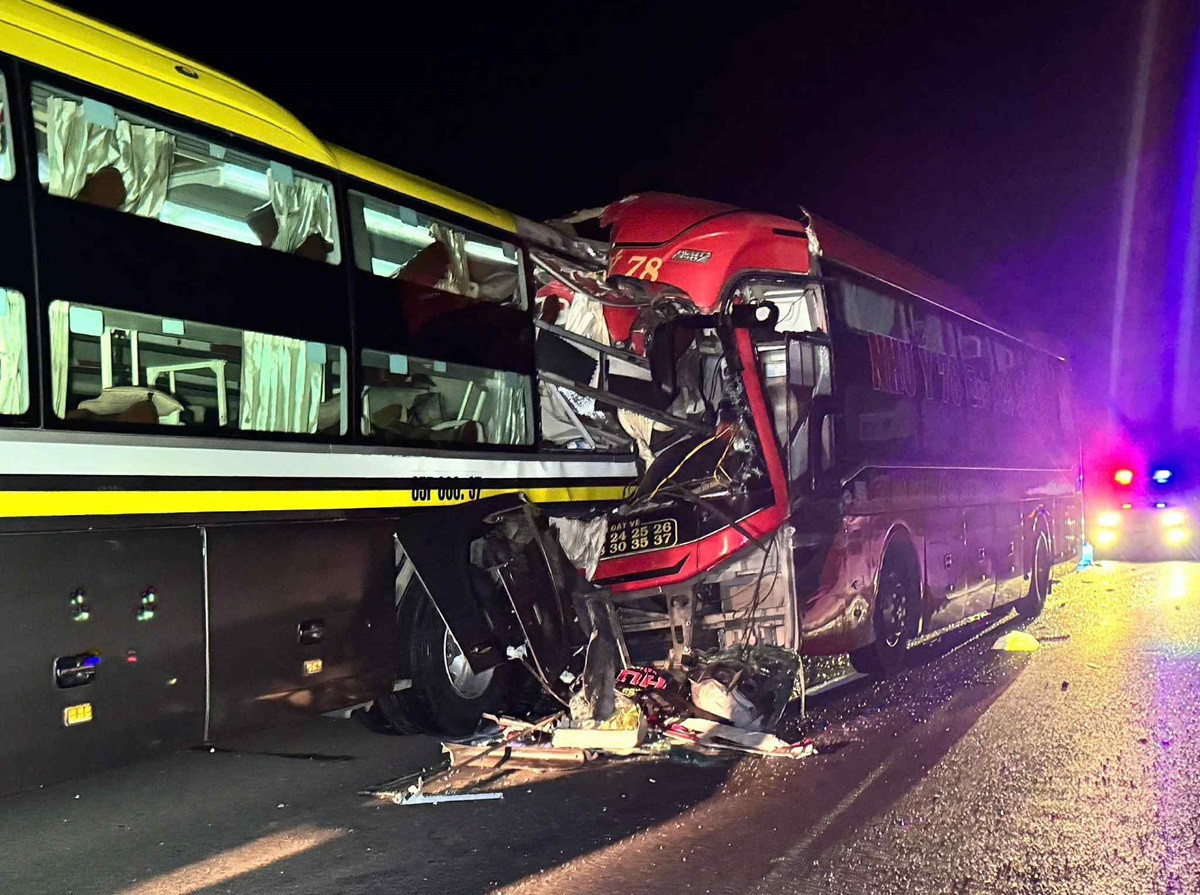
On July 15, Nguyen Hong Hai, Vice Chairman of Lam Dong Province’s People's Committee, submitted a proposal to the Ministry of Public Security and Ministry of Construction, calling for solutions following the deadly crash between two buses on Vinh Hao - Phan Thiet expressway, which left three dead.
Lam Dong authorities swiftly mobilized emergency response forces to handle the scene and ensure traffic safety.
To prevent similar accidents, the province asked the Ministry of Public Security to direct its Traffic Police Department (C08) to intensify speed monitoring - especially at night for sleeper buses - and to penalize illegal stopping and parking.
Lam Dong also urged investment in a full expressway-wide camera surveillance system to promptly detect and address violations.
More critically, the province proposed building continuous emergency lanes along the entire 100+ km Vinh Hao - Phan Thiet route. Currently, emergency stopping points are placed every 5 km, which leaves long gaps. Continuous lanes would allow vehicles in distress to stop safely without endangering others.
Lastly, the province asked the Ministry of Construction to instruct the Vietnam Road Administration and related units to inspect the entire traffic safety system, assess existing shortcomings, and propose effective remedies.
N. Huyen
.svg)
