 Vietnamnet.vn

 Podcast



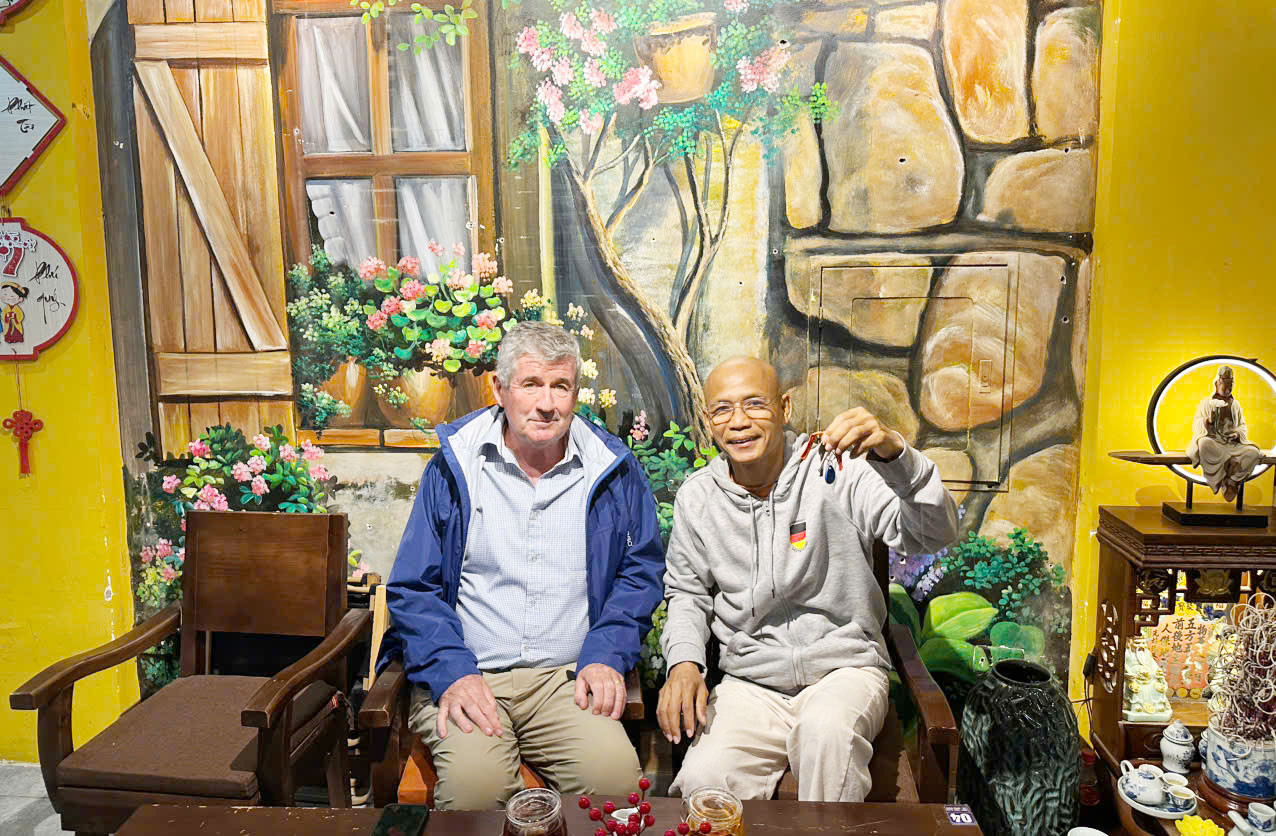
Thai Ha Books has launched Vietnam’s first Human Library in Hanoi - a unique reading space where the “books” are not printed pages but real people sharing their life stories.
The idea for the project had been nurtured for years by Dr Nguyen Manh Hung, CEO of Thai Ha Books. He said the concept was first considered when the company opened the Museum of Books and Reading Culture in Hanoi about five years ago.
On its opening day, the first two “human books” available for readers were Dr Nguyen Manh Hung himself and Donald Stark, director of DEE Publishing in New Zealand.
Both are also prolific authors. Dr Hung has written and published 16 books, while Stark has authored around 60 titles.
Speaking to VietNamNet, Dr Hung explained that the Human Library is a special library model in which books are neither printed volumes, e-books nor audiobooks, but real people with real-life stories.
Participants can “borrow” a human book to have a direct conversation and listen to their experiences for a set period of time. However, he prefers a more approachable name for the concept - the “living book library.”
“Here, books are volunteers who share their life stories and answer questions from readers. Each reading session usually lasts about 20 to 30 minutes in the form of a direct conversation,” he said.
According to Dr Hung, the Human Library is a community project designed to promote dialogue between people, helping foster empathy, understanding and a reduction in social prejudice.
In this model, the “book” is the storyteller, while the “reader” is the person who comes to listen and ask questions. The reading space thus becomes a two-way conversation, where readers can ask almost anything as long as the discussion remains respectful and civil.
In the early stages, most “living books” will be well-known individuals with influence and credibility in society.
Over time, however, the library plans to expand to include people from a wider range of backgrounds, especially those with unique life experiences.
Dr Hung said he hopes the library will feature truly meaningful “human books,” such as former drug addicts who have rebuilt their lives, transgender individuals, people with disabilities, migrants who moved from rural areas to cities, or those who have experienced major life challenges.
“Stories shared directly like this can help listeners understand life from another person’s perspective. That can change how we see the world and sometimes even change our own lives,” he said.
Hung also emphasized that the Human Library concept is not his own invention.
The model began in Copenhagen, Denmark, in 2000 when social activists Ronni Abergel, Danni Abergel, Asma Mouna and Christoffer Erichsen launched the initiative.
It was first introduced at the Roskilde Music Festival with the aim of combating violence and social prejudice.
Since then, the concept has spread widely and is now present in more than 70 to 80 countries worldwide.
“We are simply one of the organizations bringing this meaningful model closer to readers in Vietnam,” Hung said.
According to the organizers, the key difference of the Human Library is that readers do not passively receive information as they would from traditional books. Instead, they can ask questions, exchange ideas and engage directly with the storyteller.
Tinh Le
.svg)
