 Vietnamnet.vn

 Podcast



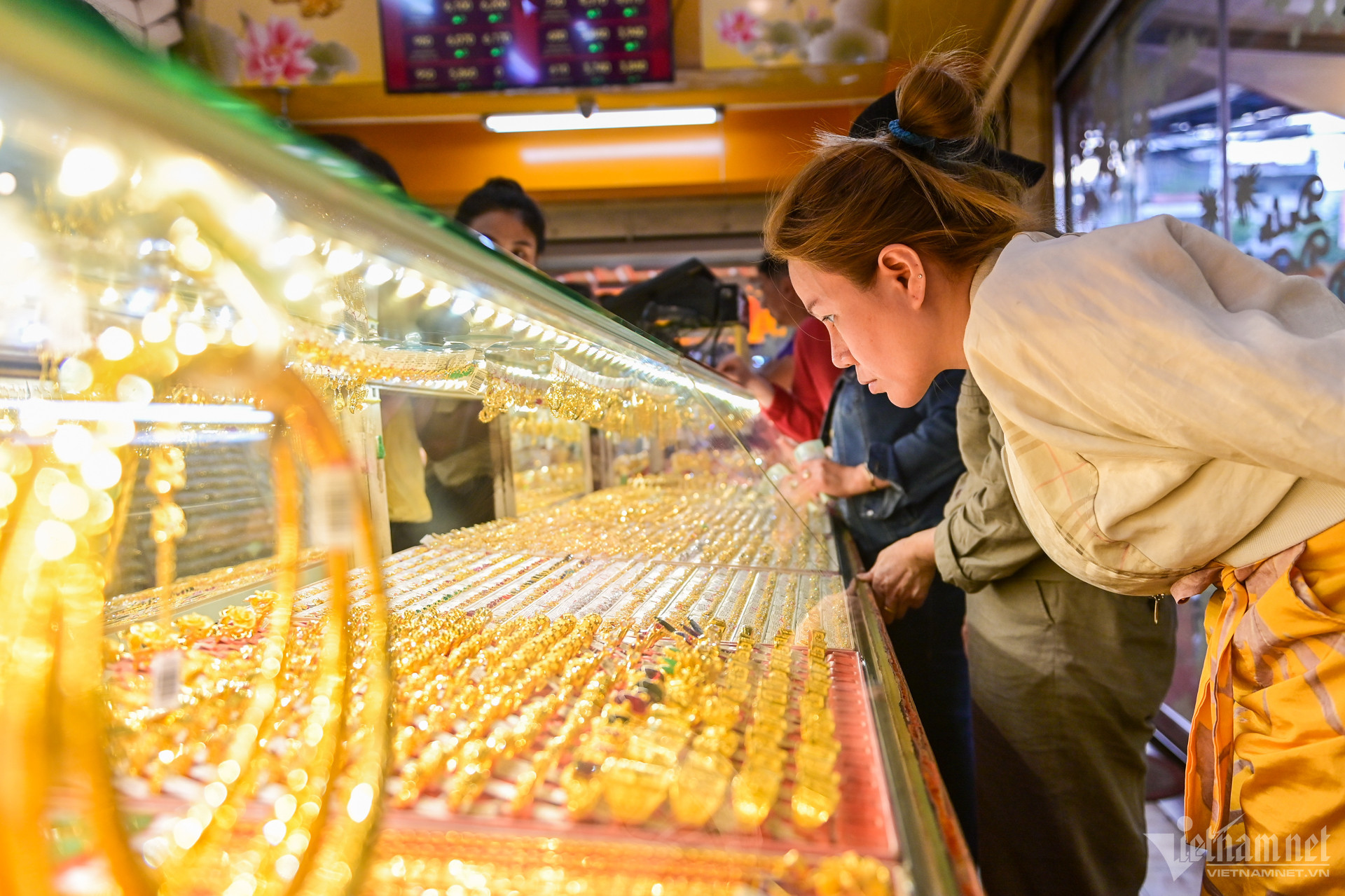
Global gold demand rose modestly in volume terms, but its value surged to US$193 billion in the first quarter of 2026.
Vietnam’s gold demand lowest in the region
The World Gold Council’s (WGC) Gold Demand Trends report for the first quarter of 2026 showed that total global gold demand, including over-the-counter (OTC) trading, reached 1,231 tonnes, up 2% from a year earlier. However, the value of demand surged 74% to a record US$193 billion as gold prices remained at elevated levels.
Shaokai Fan, regional director for Asia-Pacific excluding China and global central banks at the WGC, said geopolitical factors would continue to be the main driver supporting gold demand throughout 2026 and beyond.
According to Fan, this trend is helping maintain net gold purchases by central banks, strong inflows into gold exchange-traded funds (ETFs), and rising demand for physical gold products such as bullion bars and coins.
He added that high gold prices could continue to pressure jewelry demand, although purchasing activity in that segment is still expected to remain relatively stable.
Globally, demand for gold bars and coins jumped 42% year-on-year to 474 tonnes as retail investors were attracted by rising prices and gold’s role as a safe-haven asset.
China posted an especially strong increase of 67% to 207 tonnes, the highest level ever recorded and far above the previous record of 155 tonnes set in the second quarter of 2013.
Other major Asian markets including India, South Korea and Japan also saw stronger accumulation of physical gold, contributing to shifts in global demand structure.
In the US and Europe, demand for gold bars and coins rose 14% and 50%, respectively, highlighting gold’s broad appeal amid global uncertainty.
Across ASEAN, the first quarter saw robust gold investment activity. Indonesia’s demand doubled from the previous quarter to 23.6 tonnes, while Thailand recorded 10 tonnes, the highest first-quarter level since 2019.
In contrast, Vietnam recorded the sharpest decline in the region, down 24% year-on-year to 9 tonnes, although still up 31% compared with the final quarter of last year. Overall gold demand remained relatively weak due to the impact of record-high prices.
According to the WGC, soaring gold prices combined with limited domestic supply widened the gap between local and global prices. This accelerated the shift toward investment in plain gold rings.
Investment demand through gold ETFs also remained positive in the first quarter, with holdings increasing by 62 tonnes. The main driver came from Asian funds, which posted net purchases of 84 tonnes. However, capital outflows in March, mainly from the US market, partly slowed momentum during the early months of the year.
Meanwhile, central banks continued to play a key supporting role, purchasing a net 244 tonnes of gold during the quarter, exceeding both the previous quarter and the five-year average.
Although some institutions, including the central banks of Türkiye and Russia as well as the State Oil Fund of Azerbaijan, increased gold sales, the broader trend remained one of reserve accumulation.
These developments once again reinforced gold’s unique role as a strategic reserve asset, especially amid increasingly volatile global markets.
Jewelry demand plunges as prices remain high
In contrast to investment demand, global jewelry demand fell sharply by 23% year-on-year in the first quarter to 300 tonnes, mainly because persistently high prices made consumers more cautious.
Declines were recorded across major markets including China, down 32%, India, down 19%, and the Middle East, down 23%.
However, in value terms, jewelry demand still increased, indicating that consumers remained willing to spend on gold despite elevated prices.
Notably, part of the jewelry demand shifted toward bullion bars and coins, particularly in markets such as China and India where gold jewelry is also viewed as an alternative investment vehicle.
Across ASEAN, consumers increasingly favored products with lower gold content and clearer investment characteristics.
In Vietnam, although consumption volumes declined, the value of jewelry demand still reached a record US$472 million in the first quarter, up 28% from the previous quarter. This partly reflected the shift toward gold rings amid limited bullion supply.
Total gold supply in the first quarter rose 2% year-on-year to 1,231 tonnes. Mining production reached a new record for a first quarter, while recycled gold supply increased only modestly by 5% despite high prices.
This suggested that supply-side responses remained relatively constrained, adding further pressure to the tightening balance between supply and demand.
Louise Street, senior markets analyst at the WGC, said gold prices in 2026 had been highly volatile, reaching peaks above US$5,400 per ounce in January before correcting lower.
However, she noted that the combination of geopolitical risks and rising prices had continued to drive investment demand, particularly in Asia.
According to Street, geopolitical risk premiums are expected to continue supporting gold demand in the coming period, although high interest rates could create headwinds in Western markets.
Jewelry demand is forecast to remain stable in value terms, while supply may increase slightly but still faces risks, especially from energy costs.
Nguyen Le
.svg)
